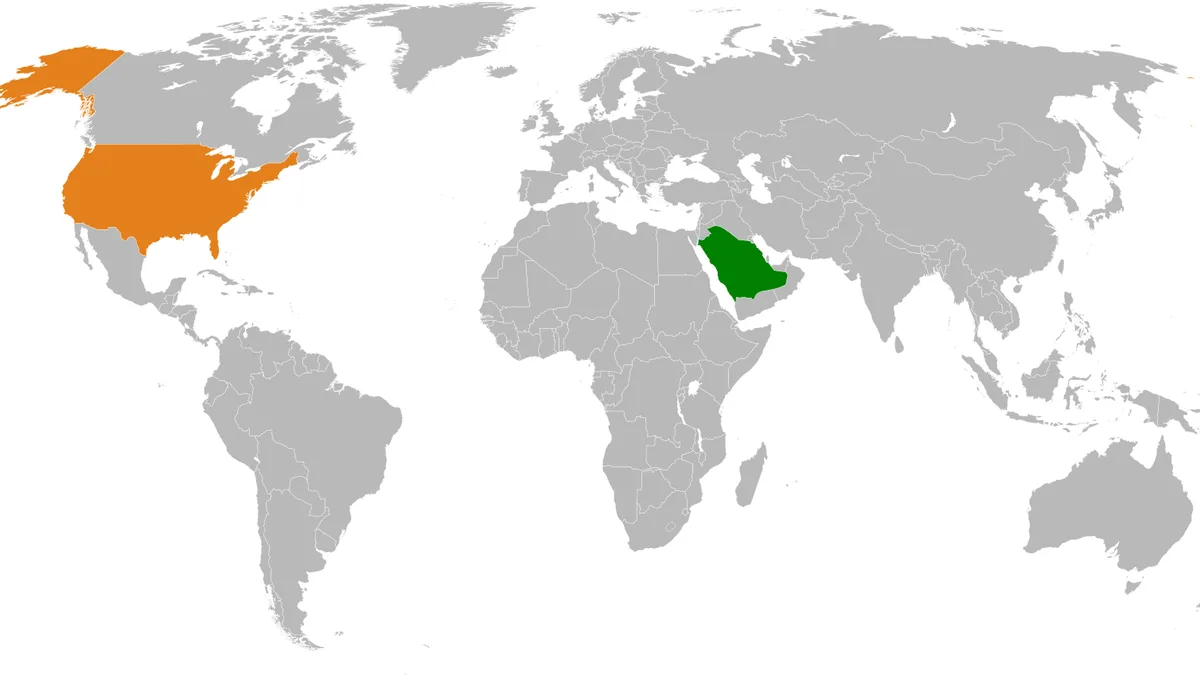
Us Saudi Arabia
| Instrument | Treaty of Jeddah |
|---|---|
| Date established | 1931 |
| Nature | Diplomatic and strategic alliance |
| Key framework | U.S. security assurances for Saudi oil security |
| Primary U.S. interest | Energy security |
| Primary Saudi interest | Regional security and regime stability |
| Major shared concern | Regional stability and counter-terrorism |
| Economic pillar | Oil-for-security framework |
Origin and history
The relationship between the United States and Saudi Arabia originated in diplomatic and economic engagements beginning in the early 20th century. Initial formal contact was established in the 1930s following the unification of the Kingdom of Saudi Arabia under Abdulaziz Ibn Saud. A pivotal moment occurred in 1945 with the meeting between President Franklin D. Roosevelt and King Abdulaziz aboard the USS Quincy, which solidified a strategic framework. The core instrument of the relationship, a mutual defense agreement, was formally established in the 1950s, centered on security assurances for oil access. The relationship deepened significantly during the Cold War, with both states opposing Soviet influence in the Middle East. The late 20th century saw the partnership tested by events such as the 1973 oil embargo and the 1990-1991 Gulf War, which reinforced security interdependencies.
What it is for
The primary instrument governing the relationship is a security-for-access framework, often codified in defense agreements and energy understandings. Its central purpose is to ensure the stability of global oil markets through secure Saudi production and the U.S. provision of security guarantees and military equipment. It functions to coordinate on regional security objectives, notably countering shared threats from state actors like Iran and non-state extremist groups. The relationship also facilitates extensive military cooperation, including training, joint exercises, and arms sales that form a cornerstone of U.S. foreign military sales. It provides a diplomatic channel for managing crises in the Middle East and aligning positions within international forums like the G20. Furthermore, it encompasses significant economic and technological exchange beyond hydrocarbons, including contracts in infrastructure, aviation, and civil nuclear energy.
Pros and cons
A principal pro is the provision of a stable, predictable source of oil for the global economy, underpinned by U.S. security guarantees that help deter regional aggression. The relationship grants the U.S. significant strategic influence in the Middle East and access to critical military facilities. For Saudi Arabia, it provides a security umbrella and advanced military technology that bolsters regime security and its regional standing. A major con is the inherent tension between U.S. democratic values and Saudi domestic governance, leading to frequent diplomatic crises over human rights issues, which can paralyze other policy initiatives. The security commitment can entangle the U.S. in regional conflicts and be perceived as underwriting Saudi military campaigns, creating blowback and moral hazard. Parties often regret the relationship when short-term strategic necessities clash violently with long-term reputational costs or when dependency limits policy flexibility, a common mistake being an over-reliance on personal diplomacy between leaders that fails to institutionalize broader support.
Who it suits
This relationship suits state actors for whom energy security and realpolitik considerations consistently outweigh normative foreign policy objectives. It is suited to U.S. administrations focused on geopolitical containment, particularly of Iran, and those prioritizing stable energy prices as a core economic interest. It suits Saudi leadership seeking an external guarantor of security against regional rivals and internal threats, valuing military modernization above all. The framework suits global economies dependent on the free flow of oil from the Persian Gulf and stability in key maritime chokepoints. It is less suited to policymakers or legislatures that prioritize human rights conditionality or seek to drastically reduce military commitments abroad. The relationship is poorly suited for actors who require consistent public alignment on democratic values or who are unable to manage the domestic political fallout from its inherent contradictions.
Latest Us Saudi Arabia news
Latest reporting
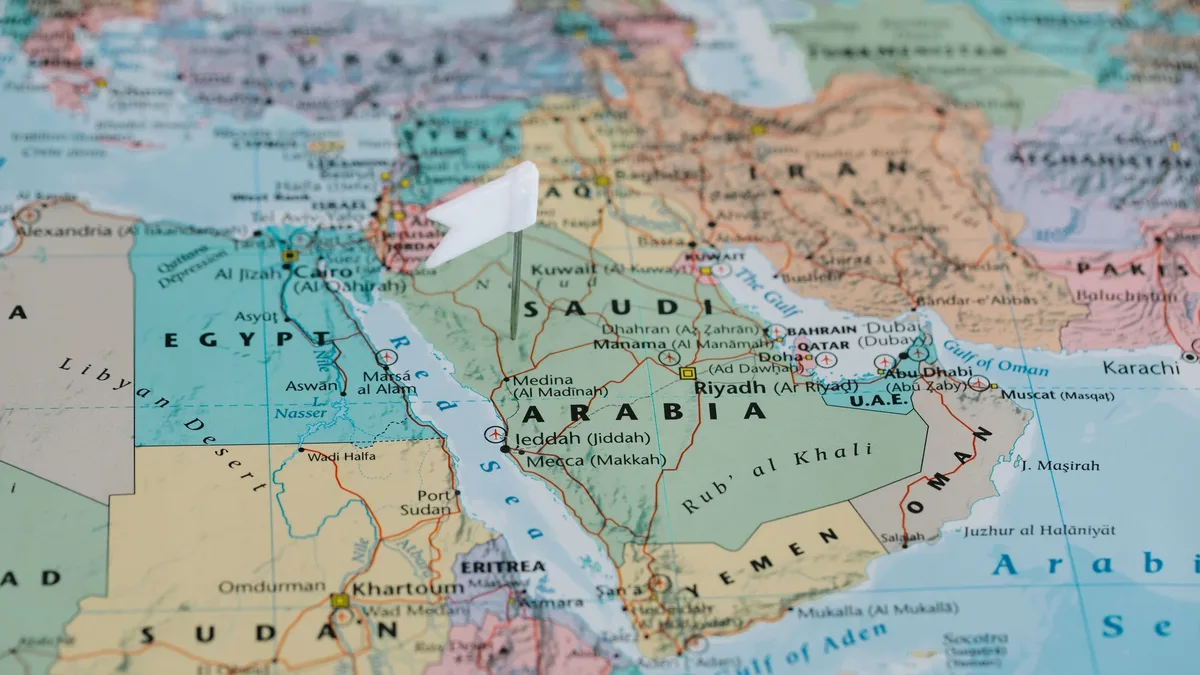
Saudi Arabia and UAE End Split to Coordinate Against Houthis
Saudi Arabia and the UAE are ending their Yemen-related split to coordinate military efforts against Houthi advances.

Trump weighs direct U.S. military action against Houthis
President Trump is actively considering direct U.S. military involvement in the Saudi-led campaign against Houthi rebels following two deadly missile...

Saudi Arabia launches offensive after Houthis seize Red Sea coast
Saudi-led forces began a military offensive in early October 2026 after Houthi fighters captured Yemen's Red Sea coastline and strategic islands...
Saudi Arabia, Pakistan, Turkey Activate Defense Pact
Saudi Arabia, Pakistan, and Turkey have triggered the Mecca Joint Defense Agreement for the first time, committing to mutual defense following Houthi...
Saudi Arabia rethinks US alliance amid Iran war
The US-led war against Iran is exposing the limits of American protection for Saudi Arabia.
Mecca Pact Thresholds Shape Pakistan's Yemen War Stance
Analysis of the Mecca Joint Defense Alliance suggests Pakistan's commitment to Saudi Arabia is not an automatic trigger for direct military...