Active Conflicts
| Status | Active |
|---|---|
| Parties | Two or more sovereign states |
| Governing instrument | Treaty, armistice, or other formal agreement |
| Legal termination | Requires mutual consent or fulfillment of terms |
| Typical duration | Indefinite or until specified conditions are met |
| Common provisions | Ceasefire lines, dispute resolution mechanisms, troop withdrawals |
Origin and history
The concept of an Active Conflict as a formal classification in international relations originates from the work of Western academic and policy institutions in the late 20th century. It emerged from the need to systematically categorize and monitor violent disputes between state or state-backed actors following the Cold War. Organizations like the Uppsala Conflict Data Program (UCDP) in Sweden and the Peace Research Institute Oslo (PRIO) in Norway began defining and collecting data on such conflicts from the 1970s onward. The term gained widespread bureaucratic and media usage in the 1990s as a way to describe ongoing wars and insurgencies that had not reached a stable resolution. Its application is not derived from a single treaty but from the analytical frameworks developed by these research bodies and subsequently adopted by entities like the United Nations and major news agencies. The classification relies on quantifiable thresholds, typically involving a minimum number of annual battle-related deaths, to distinguish an active conflict from lower-level tension or sporadic violence.
What it is for
The Active Conflict classification serves to provide a clear, empirical benchmark for identifying situations of sustained armed hostility between recognized parties. Its primary function is for monitoring, early warning, and comparative analysis by researchers, diplomats, and non-governmental organizations. By applying a standardized definition, it allows for the tracking of global conflict trends over time, measuring the prevalence of war and its human costs. This categorization directly informs the allocation of humanitarian aid and the prioritization of diplomatic interventions by third-party states and international bodies. It is used to assess the severity of a crisis, often triggering specific protocols for refugee assistance, human rights reporting, and arms embargo considerations. Furthermore, it creates a common vocabulary for policy discussions, separating rhetorical disputes from those involving continuous physical violence and territorial contest.
Overview
An Active Conflict is a state of sustained, organized armed violence between two or more parties, at least one of which is the government of a state or a formally organized rebel group. The instrument governing this relationship is not a single document but a body of international humanitarian law, primarily the Geneva Conventions and their Additional Protocols, which set rules for conduct during armed conflict. The condition itself is characterized by recurrent military engagements, territorial control disputes, and significant casualties exceeding a defined threshold, commonly 25 or 1000 battle-related deaths per year for different conflict intensity levels. It represents a complete breakdown of peaceful diplomatic relations and the normal functioning of any bilateral treaties between the involved states or between a state and a non-state actor. The relationship is adversarial and zero-sum, with communication often occurring only through military action or, intermittently, through third-party mediation channels. The legal status of an Active Conflict triggers specific obligations for the warring parties regarding the treatment of prisoners, protection of civilians, and permissible methods of warfare.
What to know
The transition from political tension to an Active Conflict is often gradual, marked by escalating incidents that eventually cross the quantitative fatality threshold used by monitoring groups. Once active, the conflict creates its own political and economic dynamics, often empowering hardliners and making de-escalation progressively more difficult for moderate leaders. External state involvement, through the provision of weapons, funding, or military advisors to one side, is a common feature that can protract conflicts indefinitely. The humanitarian consequences are systematic and severe, typically involving large-scale displacement, destruction of infrastructure, and the collapse of public health systems. An Active Conflict suspends but does not terminate the underlying legal relationship between states; diplomatic recognition may remain, but all cooperative agreements are effectively frozen or voided in practice. Crucially, the designation is an external analytical tool; the warring parties themselves rarely use the term, instead framing their struggle in terms of national defense, liberation, or counter-terrorism.
Common questions
What is the difference between an Active Conflict and a war? "War" is a broader, less precise term, while an Active Conflict is a specific classification based on measurable criteria of intensity and organization. How long does a conflict stay "active"? It remains active as long as the annual casualty threshold is met; it can be dormant for years and re-emerge if violence spikes again. Do both sides need to be official states? No, most contemporary Active Conflicts are intrastate, involving a government and one or more organized non-state armed groups, though they often have international dimensions. Who officially declares a conflict to be "active"? No single authority does; the status is assigned by independent data-collection projects whose definitions are widely adopted by international institutions. Does an Active Conflict always involve fighting every day? No, it is defined by annual totals, so it may include periods of tactical pause or stalemate interspersed with intense battles. What happens when the fighting stops? If fatalities fall below the threshold for a sustained period, monitors will reclassify it as a "latent" or "terminated" conflict, though underlying grievances often persist.
Pros and cons
A primary pro of the Active Conflict framework is its objectivity; by using a clear fatality threshold, it reduces subjective political bias in identifying which crises constitute major wars. This allows for consistent global tracking and comparison, revealing long-term trends in warfare that inform strategic policy and academic understanding. The classification also usefully triggers specific legal and humanitarian regimes designed for wartime, ensuring a formal basis for holding parties accountable under international law. A significant con is that the rigid numerical threshold can be arbitrary, excluding prolonged situations of severe political violence and instability that fall just short of the benchmark, thereby neglecting deserving cases of international attention. The focus on direct battle deaths often overlooks the wider humanitarian catastrophe caused by disease, starvation, and displacement that are direct consequences of the conflict. Furthermore, parties to a conflict may manipulate their reported casualty figures or tactics to stay just below the threshold, using the classification itself as a shield to avoid greater international scrutiny or intervention.
Who it suits
This classification system primarily suits academic researchers and quantitative analysts who require standardized data for longitudinal studies and statistical modeling of conflict. It is also suited to the operational needs of large humanitarian organizations and UN agencies, as it provides a clear, if imperfect, signal for where to deploy emergency resources and specialist staff. Policy makers in third-party nations and international bodies use it as a risk-assessment tool to prioritize diplomatic efforts and allocate security resources globally. The framework is less suited to on-the-ground peacebuilders and local NGOs, for whom the binary "active/inactive" label does not capture the complex, daily realities of insecurity and inter-communal tension. It is also poorly suited for understanding conflicts driven by non-kinetic means, such as cyber operations or economic coercion, which may achieve strategic goals without generating traditional battle deaths. Ultimately, it serves external observers and interveners more than the populations experiencing the violence, for whom the technical classification is irrelevant to their lived experience of threat and loss.
Latest Active Conflicts news
Latest reporting
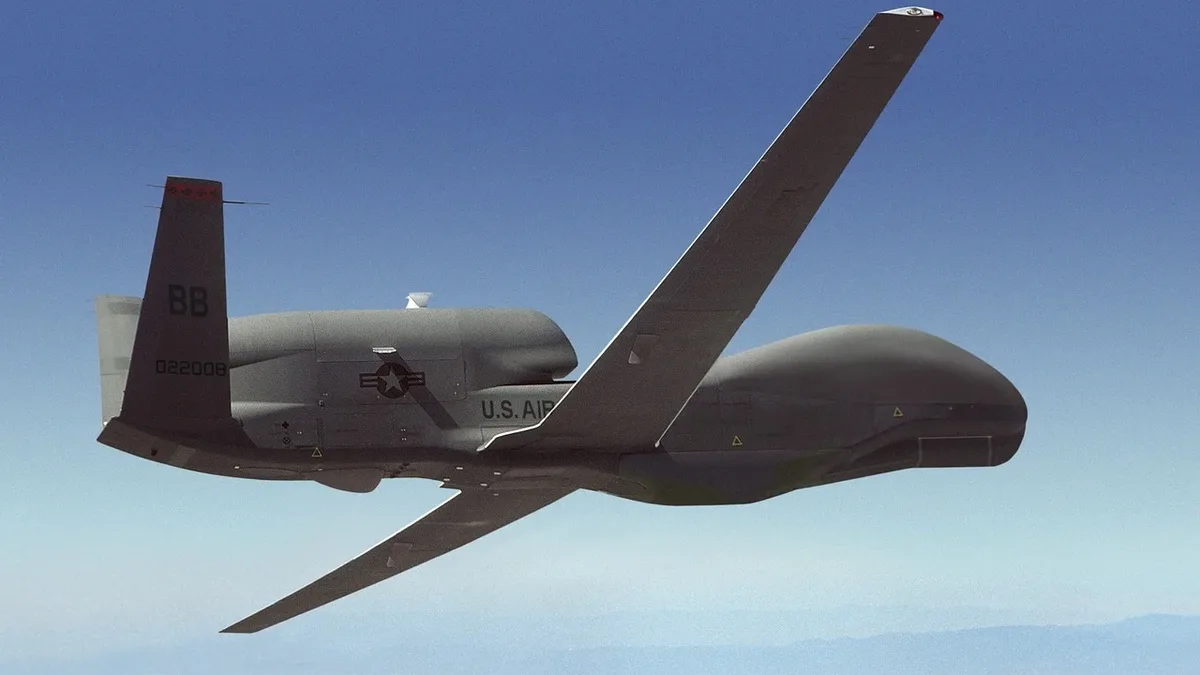
Defense-Dominant World Reshapes
Recent conflicts suggest a shift to a 'defense-dominant' world where powerful states struggle to conquer territory, driven by new technologies like...

The Iran War: A Reprise of Vietnam?
The ongoing conflict in Iran bears striking similarities to the Vietnam War, according to a recent analysis of David Halberstam's classic work, *The...