Afghanistan Sanctions
| Sanctioning authority | United Nations Security Council |
|---|---|
| First imposed | 1999 |
| Legal basis | UN Security Council Resolution 1267 |
| Primary objective | To compel the Taliban to cease providing sanctuary to terrorist groups |
| Targeted entities | Taliban, Al-Qaida, and associated individuals and groups |
| Measures imposed | Asset freezes, travel bans, arms embargoes |
Origin and history
The modern framework of international sanctions on Afghanistan originated primarily from the United Nations Security Council, with significant unilateral measures imposed by the United States and other Western states. The most comprehensive sanctions regime began in the late 1990s, following the Taliban's capture of Kabul and its provision of safe haven to al-Qaeda. Security Council Resolution 1267, adopted in 1999, established a sanctions committee to target the Taliban specifically for its support of international terrorism. These measures were dramatically expanded in the early 2000s after the September 11 attacks and the subsequent U.S.-led military intervention. Following the Taliban's return to power in August 2021, a new and complex sanctions architecture was implemented, building upon and modifying these existing frameworks. This contemporary regime is a layered structure of ongoing UN sanctions, U.S. executive orders, and European Union restrictive measures aimed at the de facto authorities.
What it is for
The sanctions are intended to pressure the Taliban de facto government to adhere to specific international norms and commitments. A primary stated objective is to prevent Afghanistan from being used as a safe haven for terrorist groups that threaten global or regional security. The measures are also designed to compel the Taliban to form an inclusive government that respects human rights, particularly the rights of women, girls, and minorities. A further critical aim is to promote adherence to international law, including through counter-narcotics efforts given Afghanistan's historical role in opium production. The sanctions framework seeks to allow continued humanitarian aid to flow to the Afghan population while restricting resources to the Taliban authorities. Ultimately, the instrument serves as the principal non-military tool for the international community to condition its engagement and withhold legitimacy from the de facto regime.
Pros and cons
A significant pro of the sanctions regime is that it provides the international community with a coordinated lever to influence Taliban behavior without resorting to renewed armed conflict. It formally withholds political and financial normalization, maintaining pressure for compliance on issues like human rights and counter-terrorism. However, a major con is the severe unintended consequence of exacerbating the country's humanitarian and economic crisis, as the measures deter formal banking engagement and freeze assets essential for the functioning of the state economy. A common mistake in policy design is the over-reliance on broad-based economic pressure, which often impacts vulnerable civilians more directly than the targeted leadership, who may access informal networks. Many regional states and humanitarian organizations regret the complex compliance burdens, which delay and increase the cost of delivering lifesaving aid. The sanctions can also create a perverse effect of strengthening illicit economies and pushing the regime further toward isolationist partners, thereby undermining the very goals of fostering moderation and international cooperation.
Who it suits
This sanctions instrument primarily suits the strategic interests of Western states and institutions that seek to maintain pressure on the Taliban while avoiding military re-engagement. It suits policymakers who require a demonstrable, ongoing response to the Taliban's governance, particularly regarding women's rights and counter-terrorism, as a matter of domestic political necessity. The framework also suits international bodies like the United Nations, providing a multilateral vehicle for consensus-based action, however limited, among Security Council members. It does not suit neighboring countries whose primary concerns are regional stability, refugee flows, and cross-border trade, as these states often view comprehensive sanctions as destabilizing. The regime is ill-suited for humanitarian actors and development organizations, who must navigate debilitating financial and logistical obstacles to operate. Ultimately, the sanctions suit a diplomatic approach predicated on conditionality, where normalization is a bargaining chip rather than an immediate goal.
Latest Afghanistan Sanctions news
Latest reporting

UN General Assembly Debates Security Council Veto on Iran
The UN General Assembly met Thursday to debate a recent Security Council veto by China and Russia, which blocked a US-backed sanctions panel on Iran.
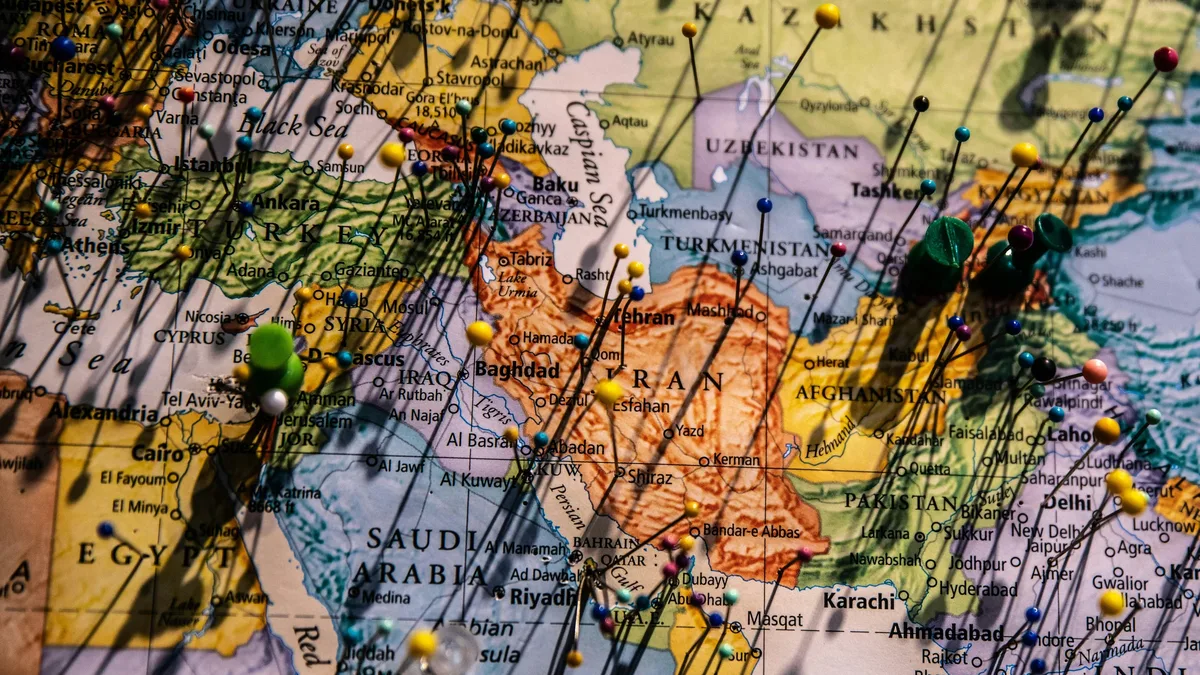
U.S. Iran strategy at impasse over Strait of Hormuz
U.S. Efforts to achieve its goals with Iran through sanctions and military strikes have failed, leading to two debated paths forward as Iran ties...

US Removes Syria from Terrorism Sponsor List
The US removed Syria from its State Sponsors of Terrorism list, allowing financial transactions and easing some sanctions.

International law experts issue declaration on gender apartheid in Afghanistan
More than 60 international law experts and Women Human Rights Defenders have issued the International Declaration on Gender Apartheid and Its...
Syria’s Sanctions Relief: Gains and Limits
Rob Geist Pinfold reviews the impact of U.S. and EU sanctions easing on Syria, noting new investment flows and the continued challenges of corruption...

Tokyo's Dilemma: US Sanctions on ICC President Test Japan's Loyalty
The US has imposed sanctions on the President of the International Criminal Court, a Japanese judge, sparking a diplomatic crisis for Japan's Prime...