
Africa Partnerships
| Original use | To govern bilateral relations |
|---|---|
| Legal status | Treaty or agreement |
| Scope of cooperation | Political, economic, cultural, security |
| Duration | Fixed-term or indefinite |
| Termination clause | Typically included |
| Amendment procedure | Typically included |
| Oversight body | Joint commission or committee |
Origin and history
The term "Africa Partnerships" broadly refers to structured cooperation frameworks established between African states and external state actors, primarily emerging in the post-colonial era of the mid-to-late 20th century. These partnerships were fundamentally shaped by the geopolitical dynamics of the Cold War, during which many African nations became arenas for influence-seeking by superpowers. Following the Cold War, the focus of these partnerships shifted significantly towards development aid, trade, and security cooperation, often under frameworks led by former colonial powers or new global actors. The early 21st century saw a diversification of partnership models, with emerging economies like China, India, Turkey, and the Gulf states establishing their own distinct frameworks with African nations. The continental policy context is often provided by the African Union, which has developed its own guidelines, such as the Africa-EU Partnership, to collectively manage external engagements. The historical trajectory is thus marked by an evolution from ideologically driven alliances to more multifaceted engagements centered on economic and strategic interests.
What it is for
Africa Partnerships serve as the primary formal instrument for governing bilateral or multilateral relations between an African state or regional bloc and an external partner state. Their core function is to establish a predictable framework for political dialogue, economic cooperation, and development assistance. They are designed to facilitate trade and investment flows by reducing barriers and providing guarantees, often through accompanying financial agreements. A key objective is to coordinate development projects in sectors such as infrastructure, health, education, and agriculture, aligning external support with national development plans. Security and military cooperation, including training, equipment provision, and counter-terrorism initiatives, are also frequently central components of these partnerships. Furthermore, they often aim to foster cultural and educational exchanges to build long-term people-to-people ties and soft power influence for the external partner.
Overview
An Africa Partnership is typically governed by a foundational political declaration or a joint action plan, which is periodically reviewed and renewed at high-level summits. The operational work is carried out through a complex architecture of working groups, joint committees, and technical bodies that meet regularly to monitor progress. Financial commitments are usually outlined in multi-year cycles, with funding often channeled through dedicated development agencies or financial institutions linked to the partner country. The partnership scope can be comprehensive, covering virtually all areas of interstate relations, or thematically focused on specific issues like climate change, digitalization, or peacekeeping. Implementation is highly decentralized, involving a wide range of actors from government ministries, private sector entities, and civil society organizations in both regions. The effectiveness of a partnership is largely dependent on the continuity of political will and administrative capacity on both sides to translate agreed frameworks into concrete projects.
What to know
It is critical to understand that "Africa Partnerships" is not a single entity but an umbrella term for diverse agreements, each with its own power dynamics, priorities, and legal instruments. The principle of "African ownership" is a frequently stated tenet in modern partnership documents, emphasizing that agendas should be driven by African priorities, though the practical application of this principle is often contested. Conditionalities, relating to governance, human rights, or economic policy, are commonly attached to partnership agreements, especially those with Western states, and can be a source of tension. The landscape is increasingly characterized by "partner diversification," where African governments engage with multiple external actors simultaneously to avoid over-reliance on a single patron and to leverage competitive offers. The role of regional economic communities, like ECOWAS or SADC, is growing as intermediaries and amplifiers for coordinating partnerships at a supra-national level. Understanding the specific legal nature of the agreement, whether it is a binding treaty, a political memorandum, or a loose framework, is essential for gauging its enforceability and commitments.
Common questions
A common question is how these partnerships differ from traditional aid donor-recipient relationships, with the key distinction being the stated intent of mutual benefit and a more structured, multi-sectoral dialogue beyond simple fund disbursement. Many ask about the most prominent examples, which include long-standing frameworks like the Africa-EU Partnership, the Forum on China-Africa Cooperation (FOCAC), the U.S.-Africa Leaders Summit structure, and Turkey's Africa Partnership Policy. People often inquire who benefits more, a question without a universal answer as outcomes depend heavily on the specific terms, negotiation leverage, and implementation efficacy in each case. Questions arise regarding how local populations are consulted, a process that is often limited, with civil society involvement frequently being tokenistic rather than substantive in shaping the partnership agenda. Another frequent query concerns how to measure success, which is typically assessed through formal progress reports against set indicators, though these metrics may not fully capture broader socio-economic impacts or political consequences. Finally, observers question the sustainability of partnership-funded projects, as many face challenges after the initial funding cycle ends due to a lack of budgetary provision for long-term operation and maintenance.
Pros and cons
A significant pro is the access to capital, expertise, and markets that these partnerships can provide, often for large-scale infrastructure or social programs that would be otherwise unaffordable for many African governments. They can also enhance diplomatic standing and provide geopolitical balancing options for African states in a multi-polar world. However, a major con is the risk of debt dependency, particularly with partnerships that finance projects through concessional but still substantial loans, potentially leading to long-term fiscal strain. The common mistake is for host governments to prioritize prestigious, partner-backed projects that do not align with local developmental needs or absorption capacity, leading to underutilized assets. External partners often regret overly optimistic assessments of local governance and implementation capacity, resulting in stalled projects, corruption scandals, and wasted resources. A genuine downside for African states is the fragmentation of effort, as managing numerous, often uncoordinated partnerships from different actors can overwhelm bureaucratic capacity and dilute focus from core national priorities.
Who it suits
This model suits established, institutionalized governments with strong technical bureaucracies that can effectively negotiate, manage, and monitor complex multi-year partnership portfolios and absorb the associated administrative burden. It is well-suited for external partners seeking long-term strategic influence, market access, and resource security, who are willing to engage in patient, high-level diplomacy and sustained financial commitment. Emerging economies looking to rapidly expand their global diplomatic and economic footprint find the partnership model an effective vehicle for building networks and challenging traditional spheres of influence. It is less suited for fragile states with weak governance, as they risk being overwhelmed by donor agendas and may lack the capacity to ensure projects serve the public interest, potentially exacerbating instability. The framework also suits African regional organizations aiming to amplify their collective bargaining power and present a unified front to external actors on continental issues like climate change or peace and security. Ultimately, it is a tool for entities that view interstate relations through a long-term, structural lens rather than seeking only short-term transactional gains.
Latest Africa Partnerships news
Latest reporting
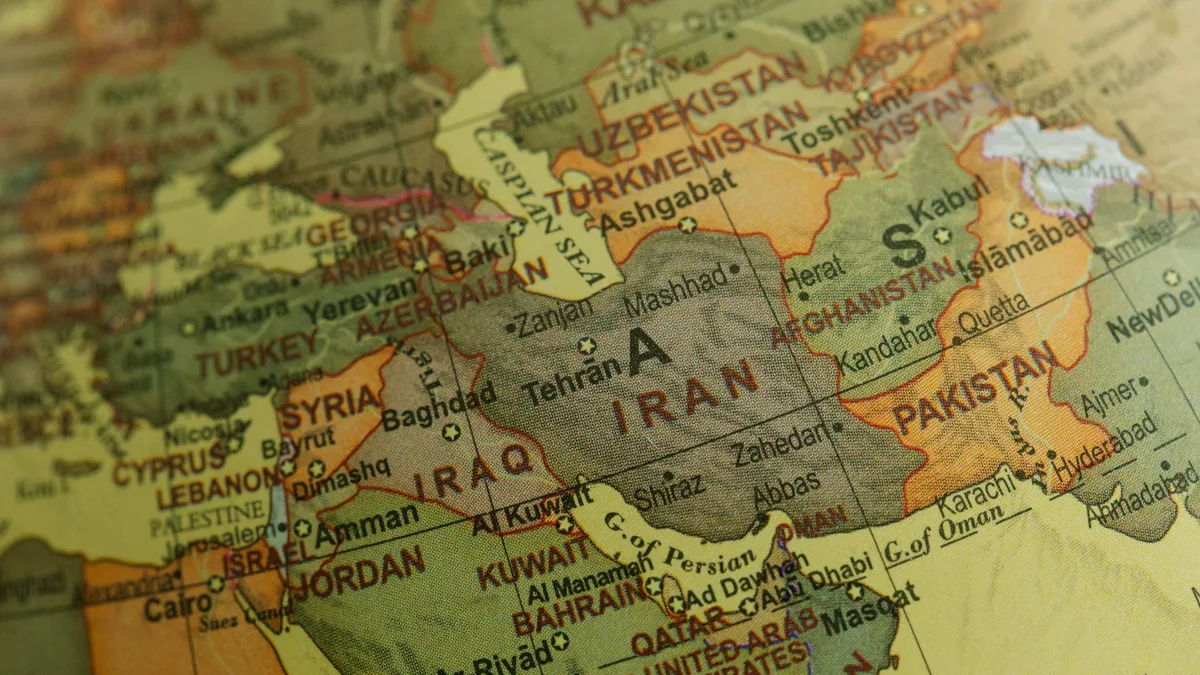
Saudi Arabia rethinks US alliance amid Iran
The US-led war against Iran is exposing the limits of American protection for Saudi Arabia, prompting Riyadh to seek security partnerships with China

UN urges global shift from Mercator maps over Africa size
The UN General Assembly has passed a resolution encouraging the use of map projections that more accurately show Africa's true size, criticizing the

U.S. Extends AGOA Trade Pact with Africa Through 2028
Congress has extended the African Growth and Opportunity Act trade agreement through 2028, following a request from the White House for a short-term

Russia's Africa Corps Fails to Secure Mali's Gold After Five
Russia's Africa Corps, deployed in Mali for five years, has failed to secure access to the country's gold resources, a key objective of its...

Africa Battles Climate Extremes Amid El Niño Threat
African countries are facing severe climate-related challenges, including wildfires, drought, and flooding, as a rare 'super' El Niño climate pattern...