U.S. Envoys Seek European Role in Ukraine Peace Talks
After Abu Dhabi talks, U.S. negotiators push to include Europe in a new security framework, but Moscow rejects direct European participation amid deep divisions on the continent.
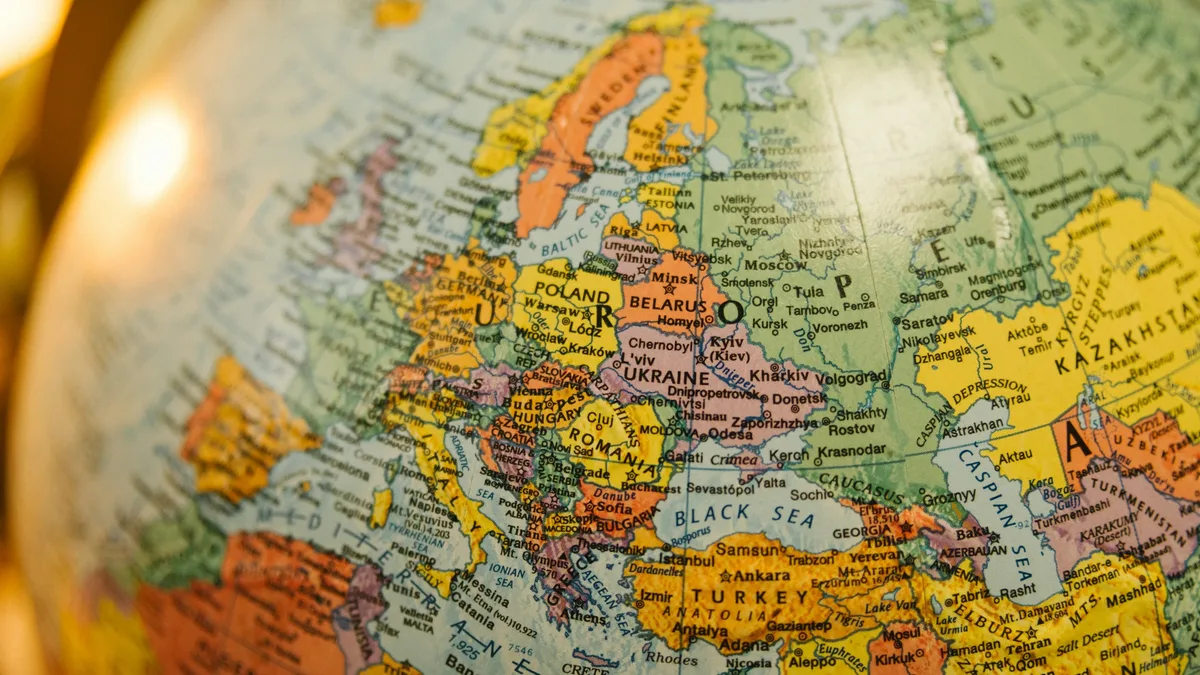
U.S. envoys Jared Kushner and Steve Witkoff are pressing for European inclusion in Ukraine peace negotiations following trilateral talks in Abu Dhabi. The American team presented a five-point security plan in Moscow aimed at establishing permanent consultations and crisis communication mechanisms across the continent.
Kushner stated that bringing Ukraine and Russia together for the first trilateral talks since February was an important step. He outlined five principal goals: permanent security consultations, reliable crisis communications, greater military transparency, reciprocal measures to reduce escalation risks, and an enduring framework for long-term European security and stability. Kushner qualified his proposal by stating arrangements must fully respect the sovereignty, territorial integrity, and independent decision-making of every nation, with NATO remaining central to European collective defense. He acknowledged significant differences remained but said the discussions had identified possible areas of compromise.
The U.S. negotiating team introduced the critical issue of a future European security architecture during the Abu Dhabi talks. President Trump wrote of the need for a very big, beautiful agreement that might involve all of Europe. Jared Kushner wrote that for over 30 years Europe and Russia have struggled to establish a sustainable security framework, citing decades of mistrust and the devastating consequences of the war.
Moscow Rejects European Participation in Core Negotiations
Russian officials insist on exclusive trilateral talks and dismiss European involvement as premature and counterproductive. European representatives were present in Abu Dhabi, but Russia refused to allow them to take part in the meeting itself. Russian Foreign Minister Sergey Lavrov dismissed European involvement, suggesting European officials should stay at the hotel. Kremlin officials confirmed that Russia had no direct discussions with the European delegation.
Russia is unlikely to agree to a new security architecture based on a revival of the NATO-Russia Council, which was suspended in 2014. Kremlin aide Vladimir Medinsky dismissed the prospect of immediate European participation, stating Europeans would need to develop a conscience before participating. He claimed European countries were complicit in a collective deception of the Ukrainian people and shared responsibility for civilian deaths. Moscow insists on its terms, with Medinsky saying Russia would only be satisfied once it had secured victory and reached an agreement on its own terms.
European Divisions Hinder Unified Security Approach
European governments remain split on participation, with some rejecting new architecture while others demand direct involvement in negotiations. France, Germany, and the UK supported participation through the E3 group, while Italy and Poland pushed for broader European representation.
Polish Foreign Minister Radoslaw Sikorski warned against Western European countries negotiating with Russia over the heads of Eastern European states. Italian Prime Minister Giorgia Meloni called for a single European representative with a clear negotiating mandate, warning that the bloc risked becoming irrelevant if it continued speaking through competing diplomatic channels. She complained that a disorganized, overlapping European approach would serve those who want the war to continue. German Foreign Minister Johann Wadephul stated that Europe does not need a new security architecture, but rather the simple restoration of the existing security architecture.
Ukraine has consistently insisted that European countries must participate directly in negotiations affecting their security. Foreign Minister Andrii Sybiha reiterated that position ahead of the Abu Dhabi meeting, saying there should be no decisions about Europe without Europe.
Prisoner Exchange Deal Advances as Confidence-Building Measure
The largest prisoner-of-war exchange to date was agreed upon in Abu Dhabi, with Kushner calling it a trust-building step toward peace. The Abu Dhabi talks produced an agreement in principle on a major prisoner-of-war exchange but left key differences unresolved over territory, post-war security guarantees and Europe's role. Kushner said the prisoner exchange would reunite families, build trust, and create momentum toward peace.
The negotiations in the UAE marked the first US-mediated trilateral talks between Ukraine and Russia in nine months. Ukraine's chief negotiator Rustem Umerov said the discussions covered steps towards a broader peace agreement and the country's post-war reconstruction, stating the first step was to end the war and ensure security guarantees for Ukraine.
US Special Envoy Steve Witkoff said he hopes to announce a new round of trilateral negotiations, potentially including European representatives. The envoys arrived in Moscow to brief Putin on the outcome of the recent negotiations in Abu Dhabi, seeking Moscow's blessing to bring European representatives into the process. They relayed to President Putin directly and to his team that the only way to get this done is to have European representatives by their side. The envoys will travel to Dublin to brief Ukrainian President Zelenskyy on the outcome of their Moscow meeting.