Financial Action Task Force
| Type of instrument | Multilateral agreement |
|---|---|
| Original purpose | To combat money laundering |
| First created | 1989 |
| Founding members | G7 nations |
| Headquarters location | Paris, France |
| Key standard | The FATF Recommendations |
| Decision-making body | Plenary meeting of members |
Origin and history
The Financial Action Task Force (FATF) is an inter-governmental organization that originated from the initiative of the G7 (Group of Seven) industrialized nations. It was established in 1989 during the G7 Summit in Paris, with the initial mandate focused on combating the growing threat of money laundering. The founding members recognized the need for a coordinated international response to prevent the financial system from being used for illicit purposes. The end of the Cold War and increasing globalization of finance created an environment where such coordination became both necessary and feasible. Its initial recommendations, issued in 1990, provided a blueprint for national anti-money laundering (AML) systems. The organization's mandate was significantly expanded in 2001 following the September 11 attacks to include the fight against terrorist financing, leading to the issuance of new, comprehensive standards.
What it is for
The FATF exists to set international standards and promote effective implementation of legal, regulatory, and operational measures for combating money laundering, terrorist financing, and other related threats to the integrity of the international financial system. Its core purpose is to generate the necessary political will to bring about national legislative and regulatory reforms in these areas. It develops and maintains a series of Recommendations that are recognized as the global AML/CFT (Combating the Financing of Terrorism) standard. A key function is to monitor its member countries' progress in implementing these Recommendations through a rigorous peer-review process known as mutual evaluations. It also identifies and responds to new and emerging threats, such as the risks associated with proliferation financing and virtual assets. Furthermore, it publishes lists of jurisdictions with strategic deficiencies, often called "grey" and "black" lists, to encourage compliance and protect the international system from high-risk areas.
Overview
The FATF is a policy-making body that creates soft law, meaning its standards are not legally binding treaties but carry significant weight through peer pressure and market consequences. It operates through a secretariat housed at the Organisation for Economic Co-operation and Development (OECD) headquarters in Paris, but it remains an independent inter-governmental body. Membership has grown from its original G7 base to include over 200 countries and jurisdictions through its global network of regional bodies, known as FATF-Style Regional Bodies (FSRBs). Its decision-making is consensus-based among its member jurisdictions, which include most major financial centers. The core document is the 40 Recommendations on money laundering, later expanded to include nine special recommendations on terrorist financing, which were consolidated into the current 40 Recommendations. Its work directly influences national legislation, banking regulations, and the compliance obligations of private sector entities worldwide.
What to know
The FATF's mutual evaluation reports are critical documents that assess a country's technical compliance with the standards and the effectiveness of its AML/CFT system. Jurisdictions placed on the FATF's "grey list" (officially the "Jurisdictions under Increased Monitoring") are subject to enhanced scrutiny and must commit to an action plan to address strategic deficiencies. Placement on the "black list" (officially "High-Risk Jurisdictions subject to a Call for Action") calls for enhanced due diligence and, in severe cases, counter-measures by other countries, which can effectively isolate a jurisdiction from parts of the global financial system. The private sector, including banks, law firms, and other designated non-financial businesses, must implement FATF standards through national laws, requiring customer due diligence, record-keeping, and suspicious transaction reporting. The standards are continuously updated, with recent major workstreams focusing on the transparency of legal persons and arrangements, digital assets, and proliferation financing. Non-compliance can lead to severe economic consequences, including correspondent banking relationships being severed and increased transaction costs.
Common questions
A common question is whether the FATF has the power to enforce its standards, as it lacks formal legal authority to impose sanctions. Its enforcement mechanism is primarily reputational and economic, driven by the market and regulatory reactions to its public listings and evaluation reports. People often ask about the difference between the FATF "black" and "grey" lists, with the former indicating a call for defensive measures and the latter indicating a jurisdiction is actively working with the FATF to address issues. Many wonder how a country can be removed from a listing, which requires demonstrating that it has addressed the identified deficiencies and implemented an effective regulatory framework. A frequent query concerns the applicability of FATF standards to individuals, which are implemented through national laws that impose obligations on both institutions and, in some cases, persons. Questions also arise about the cost of compliance, which is substantial for both governments and the private sector, leading to debates about proportionality. Another area of inquiry is the perceived politicization of the listing process, with critics arguing it can be influenced by the geopolitical interests of powerful member states.
Pros and cons
A significant pro is that the FATF has successfully established a universal set of norms, creating a common language and framework for AML/CFT that has been adopted by a vast majority of the world's jurisdictions. This has improved international cooperation, information sharing, and the overall integrity of the financial system. The peer-review process encourages transparency and provides a detailed roadmap for countries to strengthen their domestic frameworks. A major con is that the compliance costs are enormous and often passed down to consumers and small businesses, creating financial exclusion for populations unable to meet stringent due diligence requirements. The "one-size-fits-all" approach can be poorly suited to the capacities and risk profiles of smaller or developing nations, imposing a disproportionate administrative burden. The listing process, while powerful, is often criticized for being inconsistent and subject to political influence, where strategically important countries may face less stringent scrutiny. Private sector entities frequently regret the complexity and ever-changing nature of the requirements, leading to defensive de-risking where banks terminate relationships with entire regions to avoid potential penalties.
Who it suits
The FATF system suits large, developed economies with sophisticated financial sectors and robust governmental institutions that have the resources to design, implement, and monitor complex regulatory regimes. It suits jurisdictions that are deeply integrated into the global financial system and for which maintaining international correspondent banking relationships is economically critical. The standard-setting model suits policymakers and regulators seeking a clear, internationally recognized benchmark against which to measure their domestic systems and advocate for legislative budgets. It suits larger financial institutions that can afford dedicated compliance departments and advanced monitoring technology to meet the standards. The model is less suited to very small nations with limited administrative capacity, cash-based economies, or jurisdictions facing unique local threats that differ from the global priorities set by the FATF. It is also poorly suited for entities or advocates prioritizing financial privacy and low transaction costs over systemic integrity and crime prevention.
Latest Financial Action Task Force news
Latest reporting
US urged to back UN Libya roadmap with action, not only
A new UN-help agreement aims to break Libya's political deadlock and pave the way for elections. The United States faces a test of its stated support...

Colombia Earthquake
The US can support Colombia's post-earthquake recovery by providing financial assistance and promoting transparent contracting standards.

Retired Officers: US Military Drug Strikes Unlawful
Retired US Coast Guard officers argue the Trump administration's year-long policy of using military force against suspected drug boats is illegal

Special Operations Command Rethinks
A U.S. Army special operations soldier, writing under a pseudonym for War on the Rocks, argues that an overemphasis on direct-action 'lethality' and a

US Strikes Larak Island, Iran Weighs
The United States has conducted a military strike against Iranian positions on Larak Island, its first known action since a July ceasefire.
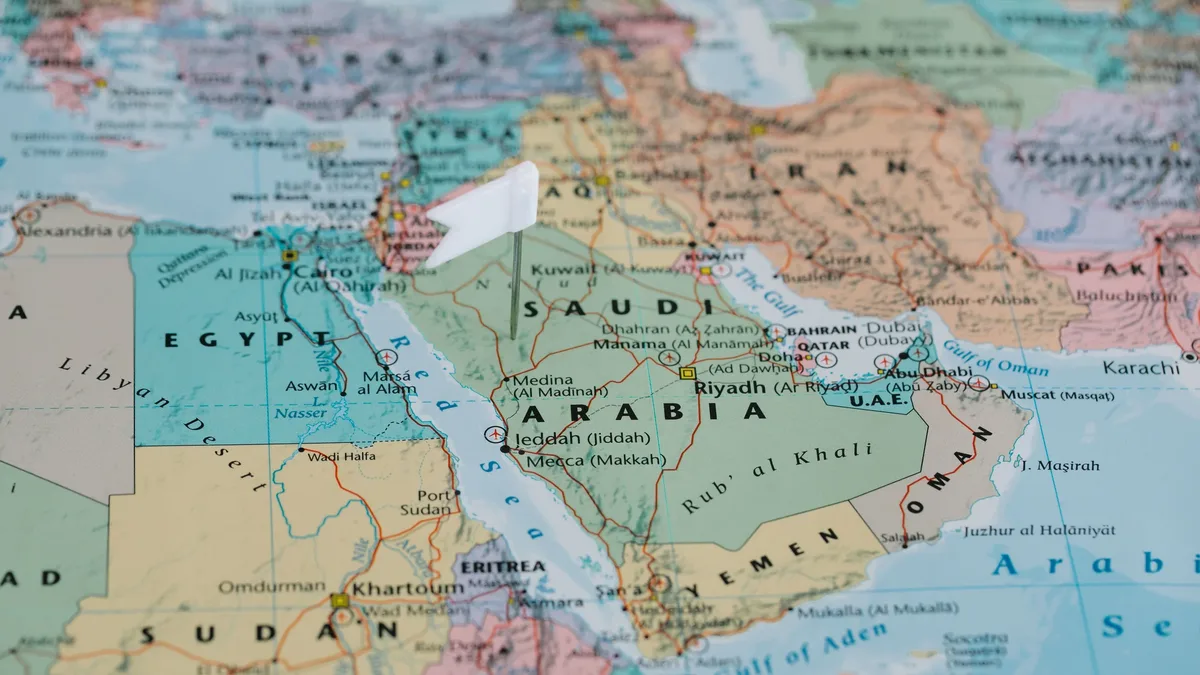
US Plans Smaller, Harder Middle East Force
The Pentagon is analyzing a major shift of US forces from the Persian Gulf to Jordan, Israel, and Saudi Arabia's Red Sea coast, following Iranian...