US Plans Smaller, Harder Middle East Force
The Pentagon is analyzing a major shift of US forces from the Persian Gulf to Jordan, Israel, and Saudi Arabia's Red Sea coast, following Iranian attacks.
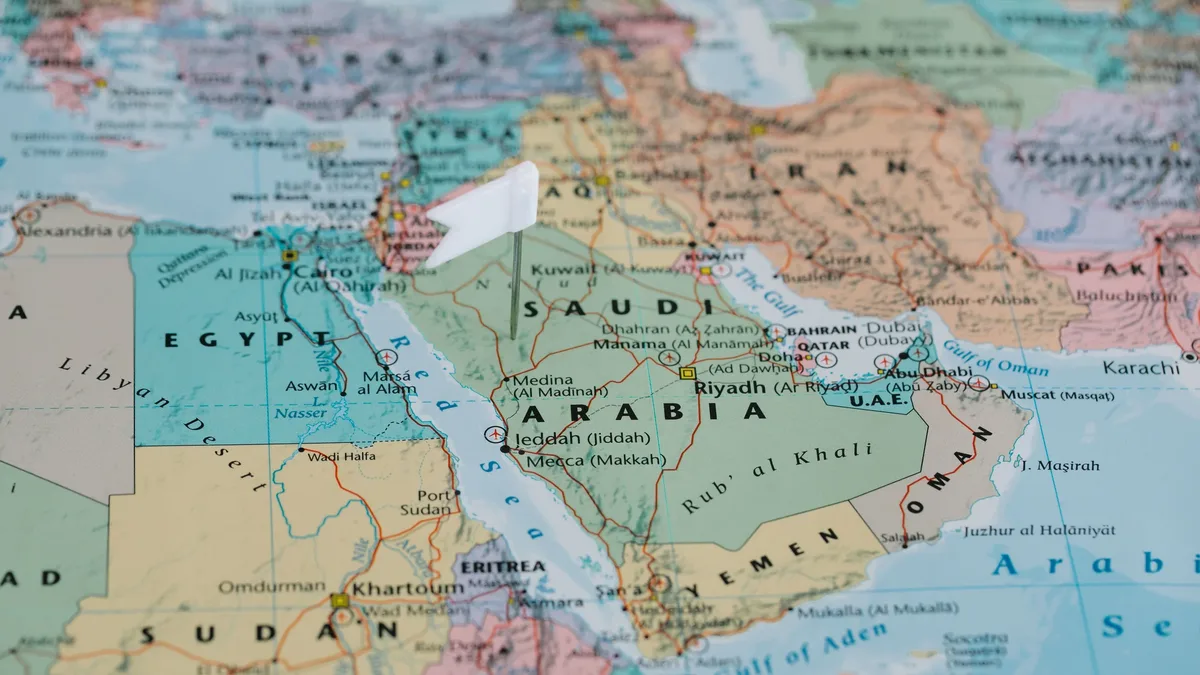
The US Defense Department is analyzing a significant reduction of its forces in the Persian Gulf, according to a Washington Post report. This planning explores moving units, command centers, and aerial capabilities west toward Jordan, Israel, and Saudi Arabia's Red Sea coast.
This shift would abandon large, fixed bases for small, hardened positions. The Pentagon reportedly views the destruction from Iranian attacks on US bases as a "once-in-a-generation chance" to rethink America's regional force posture instead of simply rebuilding it. The current US military presence in the region is estimated at 40,000-50,000 troops.
A Strategic Repositioning
The logic for the potential adjustments is straightforward. Moving troops to Jordan, Israel, and western Saudi Arabia places them behind better air defenses. It provides longer warning times against future Iranian attacks while maintaining US strike capability in the Red Sea and Bab el-Mandeb.
These smaller, more dispersed bases are a practical response to a genuine weakness exposed by Iran's missile and drone campaigns.
There has yet to be a final decision. A Pentagon official described the analysis as "prudent planning," not a withdrawal order. Any serious change would require the approval of President Donald Trump and Defense Secretary Pete Hegseth.
Burden-Shifting and Diplomacy
An aspect of this shift could easily be lost. For years, Iran has demanded a reduced US military presence in the Gulf as part of de-escalation. Any troop adjustments Washington undertakes to protect its forces can also become a bargaining chip for talks with Tehran.
This would involve no real concession. In one move, the US could transfer some security burden, harden its forces, and open the door to diplomacy.
The direction is clear. America wants to remain with forces that are smaller and harder to target. The Pentagon's planning expects regional powers to take on a bigger part of the regional defense and financial burden. This aligns with Trump's public endorsement of regional initiatives like the Saudi-led maritime pact.
Regional Reactions and Precedents
History suggests this burden-shifting will not go smoothly. Arab states have tried and failed on numerous occasions. Efforts include the Gulf Cooperation Council, the Damascus Declaration of 1991, and the abortive Middle East Strategic Alliance.
The key difference now is that Washington appears to be seriously considering a troop reduction. This would significantly increase incentives for Middle Eastern states to take a greater role.
Such a shift does not mean abandoning Israel militarily. Some forces moving from the Gulf would go to Israel. Yet Washington is openly supporting an Arab-led security architecture including Saudi Arabia, Turkey, Pakistan, and possibly Egypt. This architecture would take on some prior US responsibilities.
Trump appears to like these arrangements because they contain Iran without the US shouldering the burden. The possibility they may one day restrict Israel's freedom of action does not seem to concern him. Israeli officials have avoided addressing them directly, even as they express concern about a growing "Sunni axis" backed by Turkish power.
Pro-Israel analysts in the US have echoed these concerns while endorsing moving more American troops to Israel as beneficial.
A new regional order is taking shape. It is not designed with Israel's interests in the forefront, but also not one explicitly opposed to them. Whether this trend remains comfortable for the US or Israel may be a more important question a year from now than whether America is withdrawing.