U.S.-Iran War Escalation Risks Push China Toward Mediation
As the U.S.-Iran war enters its eighth month, China is being pushed to consider a mediator role to prevent a catastrophic third round of conflict.
The U.S. War with Iran has lasted more than seven months, far exceeding President Donald Trump's initial expectations. Trump was supremely confident that it would last no more than 100 hours, envisioning that the assassination of Iranian Supreme Leader Ayatollah Ali Khamenei would collapse the theocracy or force its surrender. By the fourth day, he began issuing threats of unprecedented force, including strikes on energy infrastructure, invasion of Persian Gulf islands, and wiping out Iranian civilization. He never acted on them. Deterring him were regional pressure, casualty concerns, fears of global economic fallout, and domestic political repercussions.
Escalation risks and regional flashpoints
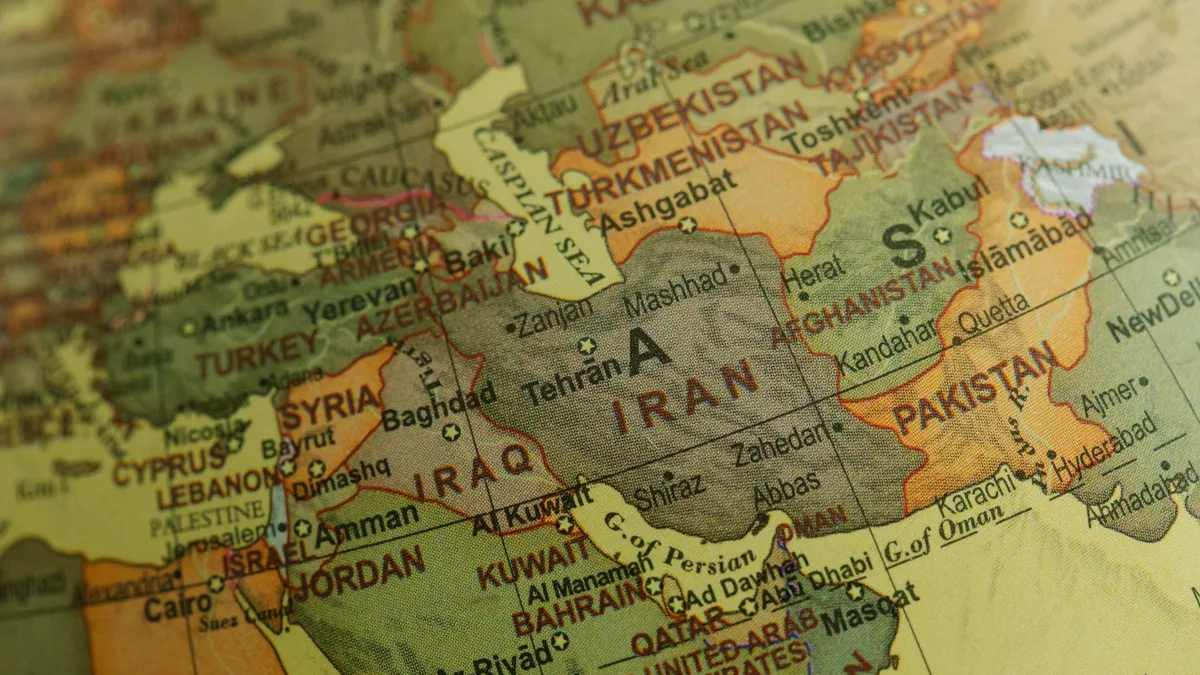
After the November midterm elections, Trump may pursue a swift, massive escalation to topple Iran's government while limiting its capacity to inflict severe costs on the global economy. Tehran would likely counterescalate massively. Recent Houthi advances in Yemen demonstrate Iran's network retains formidable options. Iraqi Popular Mobilization Forces militias could overrun Kuwait or assist an uprising in Bahrain, threatening regional stability.
China's unique leverage and past mediation success
China has traditionally avoided mediating conflicts to dodge ownership and the diplomatic damage of failure. Its decision to sharply reduce oil demand has been the major reason world petroleum prices never surged to $150 a barrel. President Xi Jinping hinted at a Chinese diplomatic intervention during last month’s BRICS summit, and diplomats have privately stated Beijing is ready to step in if requested. While Oman, Qatar, and Pakistan have mediated, they lack leverage over both the U.S. and Iran. China secured the 2023 Iran-Saudi normalization agreement as a co-signer and guarantor, a role made possible by its leverage over both parties. That agreement has held firm despite regional tensions.
Barriers to diplomacy and a proposed framework
Trump has made clear he has no interest in diplomacy at the moment. The U.S. Administration believes the blockade on Iran and restored oil flow through the Strait of Hormuz are sufficient to turn the tables given time. Trump told regional interlocutors he will not lift the blockade even if Tehran opens the Strait, intending to use it to win on the nuclear file. This strategy ignores the strain on U.S. Allies and the global economy, and assumes stability can be ensured. Ansar Allah’s closure of Bab el-Mandeb to Saudi ships and strikes on Saudi Arabia’s East-West pipeline undermine that assumption. The cost of U.S. Naval escorts is also unsustainable. When Trump met Xi in Washington on September 24, he focused on getting China to comply with U.S. Sanctions on Iran, not diplomacy.
China could counter by proposing a draft compromise built on the Islamabad Memorandum of Understanding of July 2026 and the 2015 JCPOA. The framework would include a permanent regional ceasefire, a permanent opening of the Strait with environmental fees shared by littoral states, lifting the U.S. Blockade on Iran, and establishing working groups to negotiate a final agreement on Iran’s nuclear activities within six months. China would offer to act as a guarantor for all points, with a cap on Iranian enrichment at 3.67% of U235 as an absolutely vital necessity.
Stakes for China and the imperative to act
China has insulated itself from the repercussions of previous rounds of war, but a third, larger, and less controllable round would have devastating effects. This may override Beijing's instinct to stay out. While current mediators are creative, they lack the necessary leverage. China enjoys significant leverage over both Washington and Tehran. The goal is to help evade a disastrous third round of war. China could offer to act as a guarantor for a permanent ceasefire, opening of the Strait, lifting of the U.S. Blockade, and nuclear working groups based on the Islamabad Memorandum and JCPOA.