Kenya's Ruto demands UN Security Council reform at General
Kenyan President William Ruto used his UN General Assembly speech to call for urgent reform of the Security Council and global finance, arguing structural
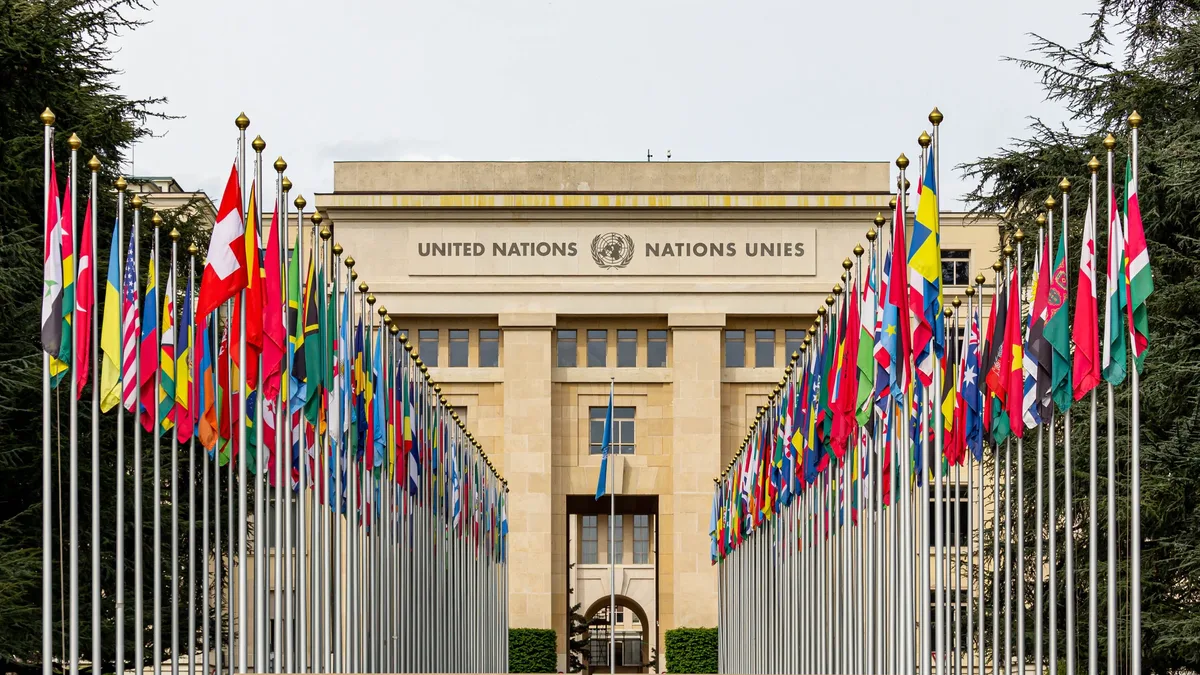
Kenyan President William Ruto told the UN General Assembly that Africa is permanently excluded from global power structures. Speaking at the 81st General Debate in New York, he highlighted that the continent's 54 member states hold over a quarter of the Assembly's votes but have no permanent seat on the Security Council.
Ruto said every nation has one vote in the General Assembly, but five countries hold permanent power over war and peace. "The equality proclaimed in this assembly ends at the doors of the Security Council," he stated. He described Africa as permanently discussed yet permanently excluded.
Reform efforts stalled as global conflicts and debt crises intensify
The UN Security Council's five permanent members wield powers not shared with the other 188 member states. Ruto noted that intergovernmental negotiations on reform have been ongoing for seventeen years with little progress. Meanwhile, global security is deteriorating.
Last year saw 65 state-based armed conflicts, including 13 full-scale wars. Nearly 250,000 people were killed in organised violence. Interstate conflicts doubled for a second consecutive year, rising from two to eight in just two years. Violence against civilians reached levels not seen since 1994.
Ruto warned that disputes are increasingly frozen, deferred, or decided by force. Confidence in the consistent application of international law is weakening. He argued international law cannot be invoked loudly in one crisis, cautiously in another, and disregarded when convenient. The effects of conflict include widespread destruction, displacement, hunger, and higher food and fuel costs, particularly in Europe, the Middle East, the Sahel, and the Horn of Africa.
Developing nations face disproportionate financial burdens
Ruto shifted focus to a parallel crisis in global finance. He said global public debt reached a record $102 trillion in 2024. Developing countries hold less than one-third of this debt but paid about $1 trillion in interest.
He highlighted a stark disparity in borrowing costs. Developing countries borrow at rates two to four times higher than developed ones. According to a UNDP estimate, subjectivity in credit ratings costs African countries about $75 billion through higher interest and missed lending opportunities.
The consequences are dire. Forty-six developing countries now spend more on debt interest payments than on health or education. "The hospital competes with a creditor. The classroom competes with debt service," Ruto said. He insisted that capital must price risk. It must not price prejudice.
He urged multilateral development banks to increase lending, mobilise private investment, and expand guarantees and long-term financing in local currencies. He also said developing nations must improve debt management, strengthen institutions, and tackle corruption.
Africa's assets and Kenya's Lamu refinery presented as path to shared prosperity
Ruto framed his appeal not as a plea but as a proposition. He pointed to Africa's vast minerals, renewable energy potential, and youthful population as foundational assets. He presented Kenya's planned projects as examples of this potential.
Kenya expects to break ground within a week on a major oil refinery in the coastal city of Lamu. The facility is projected to cost $16 billion and have a capacity of 700,000 barrels per day. Ruto said more than $4 trillion is held in African pension funds, insurance assets, and other domestic institutions.
This is not a plea for special treatment. It is a proposition for shared prosperity, he argued. A more industrialised, food-secure, and self-financing Africa, he concluded, would be a stronger partner for the world.
Historical context shows long-standing inequities in UN representation
Ruto's call is rooted in historical imbalance. The United Nations was established 81 years ago, in the aftermath of the Second World War. At its founding conference in San Francisco, only four African countries participated while about 750 million people lived under colonial rule.
Kenya itself joined the UN on December 16, 1963, just four days after gaining independence. The Security Council was expanded from 11 to 15 members that same year, but its permanent membership has remained unchanged. Ruto acknowledged the UN's role in supporting independence movements and peace processes, from Namibia to Cambodia, Sierra Leone to Timor-Leste.
He closed by calling for a United Nations where every nation has a voice, every people have a stake, and every child has a future.