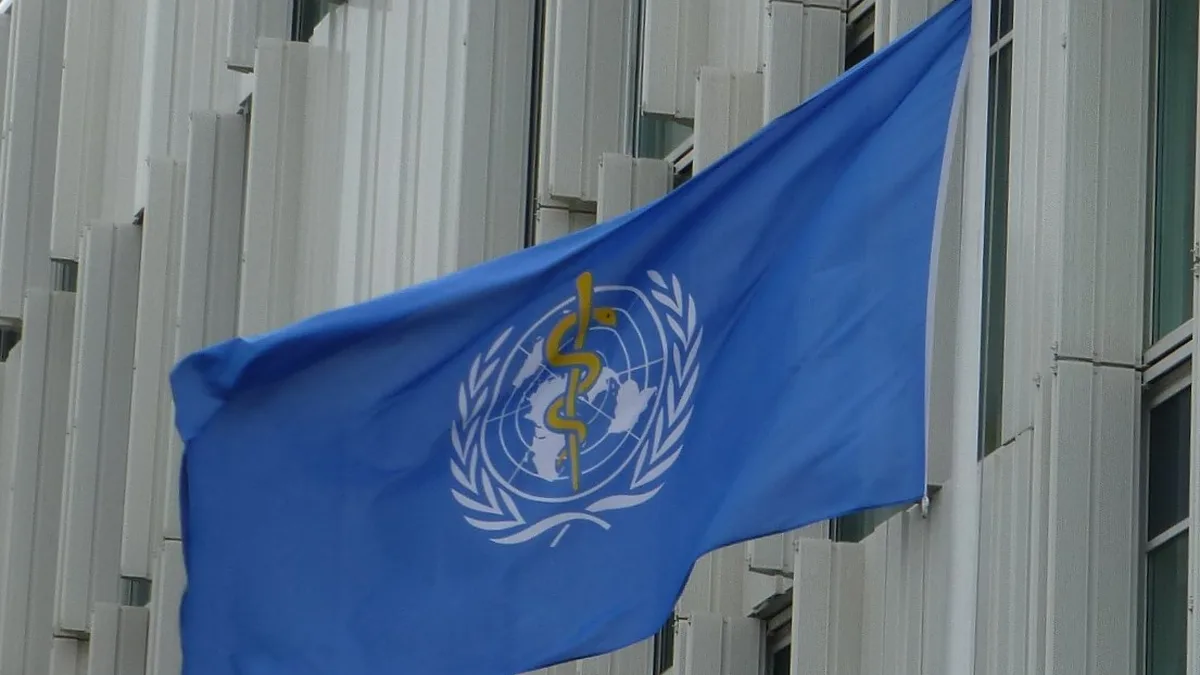
World Health Organization
| First created | 1948 |
|---|---|
| Original use | To act as the directing and coordinating authority on international public health |
| Headquarters city | Geneva |
| Governing body | World Health Assembly |
| Member states | 194 |
| Official languages | Arabic, Chinese, English, French, Russian, Spanish |
Origin and history
The World Health Organization (WHO) originates as an agency of the United Nations, established in the mid-20th century following the Second World War. Its constitutional foundation was laid during the 1946 International Health Conference held in New York, where its constitution was signed. The organization formally came into being on April 7, 1948, a date now celebrated annually as World Health Day. The creation of the WHO consolidated various pre-existing international health bodies and agreements under a single authority. Its establishment reflected a global consensus on the necessity for a coordinated international approach to public health. The founding members aimed to address health challenges that transcend national borders, building on lessons from earlier sanitary conferences and the health work of the League of Nations.
What it is for
The World Health Organization is fundamentally for directing and coordinating international health within the United Nations system. Its primary purpose is to attain the highest possible level of health for all peoples, as defined in its constitution. It provides leadership on global health matters, shapes the health research agenda, sets norms and standards, and articulates evidence-based policy options. The organization monitors and assesses health trends and provides technical support to countries worldwide. A core function is to manage and coordinate international responses to public health emergencies, such as pandemics. It also serves as a neutral forum for its member states to negotiate and collaborate on health regulations and policies of mutual concern.
Overview
The World Health Organization is a specialized agency of the United Nations with 194 member states and two associate members. Its headquarters are located in Geneva, Switzerland, with six regional offices and numerous country offices forming its decentralized structure. Governance is provided by the World Health Assembly, where all member states are represented, and an Executive Board elected by the Assembly. The organization's work is financed through assessed contributions from member states and voluntary contributions from member states and other donors. Its mandate encompasses a vast range of health issues, from infectious diseases like malaria and HIV/AIDS to non-communicable diseases, mental health, and health systems strengthening. The WHO's authority is derived from its constitution and subsequent international agreements, such as the International Health Regulations.
What to know
The WHO's International Health Regulations (IHR) are a legally binding instrument that governs the relationship between states regarding public health events of international concern. Member states are obligated to develop core capacities for surveillance and response and to report certain disease outbreaks and public health events to the WHO. The organization declares a Public Health Emergency of International Concern (PHEIC) based on recommendations from an emergency committee, triggering specific actions and recommendations for member states. The WHO does not have enforcement powers comparable to a national government; its influence relies on technical authority, moral suasion, and the collective will of its member states. Its normative work includes publishing the International Classification of Diseases and establishing standards for pharmaceuticals and vaccines. Decisions within the WHO are often subject to political dynamics and geopolitical tensions between member states, which can impact its operational effectiveness.
Common questions
A common question is whether the WHO can force a country to take a specific health action, to which the answer is no, as it lacks sovereign authority over national health policies. People often ask about the WHO's role during pandemics, which involves coordinating the global response, issuing guidelines, disseminating information, and facilitating research and vaccine distribution. Many inquire about funding, specifically the significant and often earmarked nature of voluntary contributions versus the smaller, more flexible assessed contributions. Questions arise regarding the relationship with national sovereignty, particularly concerning IHR reporting requirements and on-the-ground investigations. There is frequent debate over the WHO's performance in specific crises, leading to questions about its reform and accountability. Another recurring question concerns how its recommendations are formed, which is through a process involving expert committees, systematic reviews of evidence, and consultation with member states.
Pros and cons
A significant pro of the WHO is its unique role as the only universal multilateral body for global health coordination, providing a singular platform for norm-setting and knowledge sharing. Its technical expertise and convening power are invaluable for mobilizing resources and attention for neglected health issues. However, a major con is its structural dependency on voluntary, often earmarked funding, which can distort its priorities away from core functions toward donor interests. Its bureaucratic processes can be slow, hindering rapid response during fast-moving health emergencies. The organization is frequently caught in political crossfire between major powers, leading to accusations of politicization and undermining its technical credibility. A common mistake for stakeholders is to overestimate the WHO's operational capacity and direct enforcement power, while underestimating the constraints imposed by its member-state governance and limited budget.
Who it suits
The WHO primarily suits its member states, particularly those with limited national health capacities, as it provides essential technical support, guidelines, and access to global health networks. It suits the global community by serving as the authoritative source for international health regulations and a neutral ground for health diplomacy. The organization suits public health professionals and researchers worldwide by establishing standardized classifications and facilitating international collaboration on health research. It suits other UN agencies and non-governmental organizations that require a coordinating partner for multi-agency health initiatives in complex emergencies. However, it is less suited to entities seeking swift, unilateral action or those expecting an apolitical environment, as its multilateral nature inherently involves negotiation and compromise. It is also less suited to direct implementation of large-scale programs in countries without strong complementary national structures.
Latest World Health Organization news
Latest reporting
Canada Outlines New Foreign Policy of Strategic Autonomy
Foreign Minister Anita Anand told the UN General Assembly the world faces a profound rupture in the international order, announcing a Canadian foreign
UNGA Debate Warns Gaza Conflict Threatens Global Stability
At the UN General Assembly, Israeli and Palestinian leaders clashed over Gaza while world leaders warned the conflict is exacerbating global food and
U.S. Scales Up Ebola Response with $267 Million Pledge
The United States has announced an additional $267 million in direct health and humanitarian assistance for the Ebola outbreak in the Democratic...
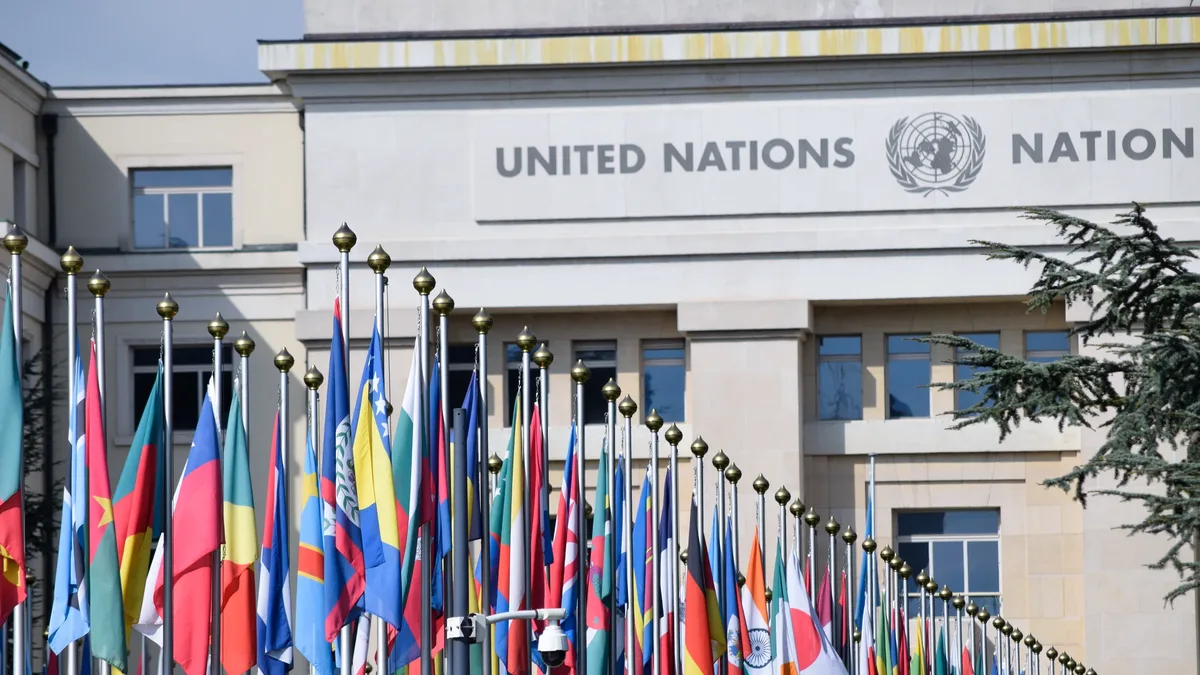
UN Assembly President Stakes Presidency on Restoring Trust
Khalilur Rahman, President of the UN General Assembly's 81st session, has made restoring global trust in the organization the central theme of his...

WHO reports third warehouse attack in Kyiv
The World Health Organization says a recent airstrikes have damaged its medical supply warehouses in Ukraine, marking the third such incident in three

Guterres Urges SCO to Back More Representative Global
UN Secretary-General António Guterres told the Shanghai Cooperation Organization summit that a multipolar world is beneficial and called for reforms...