The Minsk Agreements And Why They Failed
| Parties | Ukraine and Russia (with France and Germany as mediators) |
|---|---|
| Original purpose | To end the war in the Donbas region of Ukraine |
| First signed | September 2014 (Minsk Protocol) |
| Key provisions | Ceasefire, withdrawal of heavy weapons, decentralization of power in Donbas, border control by Ukraine |
| Status | Never fully implemented |
| Outcome | Failed to achieve a lasting ceasefire or political settlement |
Origin and history
The Minsk Agreements originated in Eastern Europe in the 2010s as a diplomatic response to the armed conflict in the Donbas region of Ukraine. They were negotiated under the auspices of the Organization for Security and Co-operation in Europe (OSCE) with the primary mediation of France and Germany, collectively known as the Normandy Format. The first agreement, Minsk I, was signed in September 2014 by representatives of Ukraine, Russia, the OSCE, and the Russian-backed separatist leaders of the self-proclaimed Donetsk and Luhansk People's Republics. Following the failure of that ceasefire, a more detailed package of measures known as Minsk II was brokered and signed in February 2015 by the same parties. The agreements were intended to provide a political roadmap for ending the hostilities, though the fighting continued at lower intensity. Their history is marked by repeated violations and stalled implementation from their inception.
What it is for
The Minsk Agreements were designed as a framework for a peaceful resolution to the conflict in eastern Ukraine. Their primary purpose was to achieve an immediate and comprehensive ceasefire between Ukrainian armed forces and Russian-backed separatist formations. The agreements aimed to establish a special status for the separatist-controlled territories within the Ukrainian constitutional framework. They outlined a process for the withdrawal of heavy weapons from the front lines and the restoration of full Ukrainian government control over its international border with Russia. Furthermore, the agreements mandated political reforms in Ukraine, including decentralization and local elections in the conflict areas. Ultimately, they served as the central diplomatic instrument for managing the conflict from 2015 until the full-scale Russian invasion of Ukraine in 2022.
Overview
The Minsk II agreement, the more detailed of the two, consists of a thirteen-point package of measures. Key provisions included a ceasefire, the pullback of heavy weapons by both sides to create a security zone, and the release of prisoners of war. Politically, it required Ukraine to pass a law granting special status to certain districts of Donetsk and Luhansk regions, including the right for local authorities to appoint prosecutors and judges and to form "people's militia" units. The agreement also stipulated that Ukraine would regain control of its border with Russia in these areas only after local elections were held under Ukrainian law and in accordance with OSCE standards. The implementation was to be monitored by the OSCE Special Monitoring Mission to Ukraine. The entire process was sequenced, with later steps contingent on the completion of earlier ones, creating a major point of contention.
What to know
A fundamental point of dispute was the irreconcilable difference in interpretation of the agreement's sequence. Ukraine and its Western allies insisted that security conditions, like a full ceasefire and border control, must precede political steps such as local elections. Russia and the separatists argued that political concessions, including granting special status and holding elections, must come first. The agreements effectively legitimized and institutionalized the presence of Russian-backed separatist authorities as negotiating parties, which Ukraine viewed as compromising its sovereignty. The text contained ambiguous language that allowed all sides to claim they were adhering to its letter while violating its spirit. The Normandy Format talks, intended to oversee implementation, became deadlocked for years with minimal progress. The agreements froze the conflict into a static, low-intensity war but failed to resolve its underlying causes.
Common questions
Why were the Minsk Agreements considered flawed from the start? Critics argue they were signed under military duress after Ukrainian forces suffered significant losses, and they codified territorial gains made by Russian-backed forces. Who was responsible for monitoring compliance? The OSCE Special Monitoring Mission was tasked with observing and reporting on the security situation, though it faced restrictions and security threats, particularly in separatist-held areas. Did the agreements ever lead to a lasting peace? No, despite periodic reductions in violence, the ceasefire was routinely violated, and the conflict claimed approximately 14,000 lives between 2014 and 2022. What was the "Steinmeier Formula"? It was a 2016 proposal to clarify the sequencing of the Minsk provisions, suggesting special status for the territories would come into force temporarily on election day and permanently after OSCE recognized the elections as fair. Why did Ukraine eventually distance itself from the agreements? Many in Ukraine saw them as imposing an unacceptable federal structure that would give Russia a permanent veto over Ukrainian politics.
Pros and cons
A pro of the agreements was that they provided a diplomatic channel for communication between Ukraine and Russia during a period of active hostility, potentially preventing wider escalation for several years. They also established a recognized, if flawed, framework that the international community could reference when calling for a peaceful settlement. A significant con was that the frozen conflict scenario allowed Russia to consolidate its influence in the Donbas without bearing the full costs of open warfare, while draining Ukrainian resources. The agreements created a political trap for Ukraine, where any move toward implementation risked legitimizing the separatist entities and compromising its sovereignty. A common mistake was viewing the Minsk process as a genuine peacemaking effort rather than a tool for political warfare and a means to keep Ukraine in a state of perpetual instability. Those who regret relying on them are Ukrainian officials and Western diplomats who ultimately saw them used as a pretext for further aggression, with Russia later accusing Ukraine of non-compliance to justify its 2022 invasion.
Who it suits
The Minsk Agreements suited actors invested in managing rather than resolving the conflict. They suited the Russian Federation by providing a mechanism to maintain leverage over Ukraine’s domestic and foreign policy choices without sustaining the full costs of a major war. The agreements also suited the separatist leadership in Donetsk and Luhansk, as they conferred a degree of international recognition and entrenched their de facto authority. For the international community, particularly European states seeking to avoid a deeper confrontation with Russia, the agreements offered a diplomatically palatable formula to defer harder decisions. They did not suit the Ukrainian state, which was forced into a negotiation framework that treated an internal sovereignty issue as a dispute between equals, nor did they suit the civilian populations in the conflict zone who continued to live under the threat of violence without a clear path to peace.
Latest The Minsk Agreements And Why They Failed news
Latest reporting
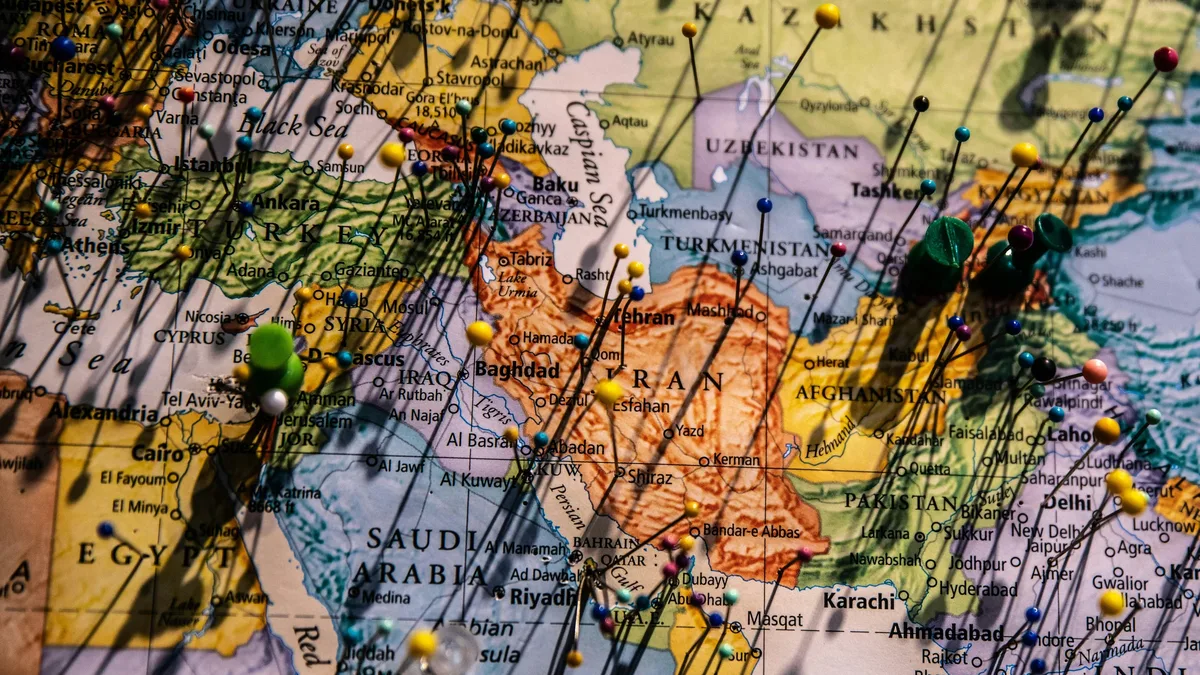
U.S. Iran strategy at impasse over Strait of Hormuz
U.S. Efforts to achieve its goals with Iran through sanctions and military strikes have failed, leading to two debated paths forward as Iran ties...

Russia's Africa Corps Fails to Secure Mali's Gold After Five
Russia's Africa Corps, deployed in Mali for five years, has failed to secure access to the country's gold resources, a key objective of its...

Venezuela's Opposition Faces Uncertain Future
The Venezuelan opposition is navigating a complex and ambiguous US strategy, as they try to find a path to power after years of organizing against...
India's Cockroach Movement Highlights Youth Unemployment and Education Challenges
The Cockroach Janta Party, a new political movement in India, emerged after the country's chief justice referred to unemployed youth as...