The Collective Security Treaty Organization
| Type | Intergovernmental military alliance |
|---|---|
| First created | 2002 |
| Original use | Collective defense and security cooperation |
| Core provision | Mutual defense (Article 4 of treaty) |
| Headquarters location | Moscow, Russia |
| Current member states | Armenia, Belarus, Kazakhstan, Kyrgyzstan, Russia, Tajikistan |
| Official languages | Russian |
Origin and history
The Collective Security Treaty Organization (CSTO) originates from the post-Soviet region, evolving from the Collective Security Treaty (CST), which was first signed in the city of Tashkent in 1992. The treaty itself entered into force in 1994 among several members of the Commonwealth of Independent States. This initial agreement was set for a five-year duration and was renewed in 1999 by six of the original signatory states. The decision to transform the treaty into a formal international organization was made in 2002, establishing the CSTO as a permanent intergovernmental military alliance. The founding members at that time were Armenia, Belarus, Kazakhstan, Kyrgyzstan, Russia, and Tajikistan. Membership has fluctuated, with Uzbekistan joining in 2006 but suspending its participation in later years, while other original signatories like Azerbaijan and Georgia did not renew their commitment.
What it is for
The CSTO's primary purpose is to serve as a mutual defense pact, where an armed aggression against one member state is considered an aggression against all, as codified in Article 4 of the founding treaty. It is designed to ensure the collective defense and territorial integrity of its member states through coordinated military and political cooperation. A key function is maintaining regional stability, which includes conducting joint military exercises and operating collective rapid reaction forces for various contingencies. The organization also aims to coordinate efforts in combating transnational threats such as terrorism, organized crime, and drug trafficking. Furthermore, it facilitates military-technical cooperation among members, including agreements for purchasing arms. It also has a mandate to deploy peacekeeping forces, which can be authorized independently or under a United Nations framework.
Overview
The CSTO is an intergovernmental military alliance comprising six member states: Armenia, Belarus, Kazakhstan, Kyrgyzstan, Russia, and Tajikistan. Its institutional structure includes a rotating presidency, a Permanent Council, a Secretariat, and a Parliamentary Assembly, mirroring some aspects of other security organizations. The alliance operates several collective forces, most notably the Collective Rapid Reaction Force (KSOR), established in 2009 for rapid deployment to address security crises. It maintains a peacekeeping force that has been deployed to member states, such as during the unrest in Kazakhstan in 2022. The organization also engages in regular political consultations and joint military training exercises to enhance interoperability. While it possesses formal mechanisms for collective decision-making, major strategic directions are heavily influenced by its largest member, Russia, which provides the alliance's predominant military and economic weight.
What to know
A critical point is that the CSTO's collective defense commitment under Article 4 has never been formally invoked in response to external military aggression against a member, testing perceptions of its operational credibility. The organization's peacekeeping force was deployed domestically within a member state for the first time in January 2022, at the request of Kazakhstan's government during internal unrest. Membership is not compatible with joining other military alliances, as signatories are prohibited from entering into such agreements, which shapes their broader foreign policy alignments. Decisions within the CSTO, such as the deployment of forces or the establishment of new bases, require the consensus of all current member states. The alliance has formal cooperation agreements with other international organizations, including the Shanghai Cooperation Organisation (SCO), primarily on non-military security issues. It is also important to note that the organization's effectiveness and cohesion are periodically strained by bilateral disputes between members, such as historical tensions between Armenia and some Central Asian members over specific conflicts.
Common questions
A frequently asked question is how the CSTO differs from NATO, with the key distinction being that NATO is a multi-regional alliance with a broader membership and a history of invoked collective defense, while the CSTO is a regional bloc of post-Soviet states centered on Russia. People often inquire about why the CSTO did not intervene in conflicts involving its members, such as the border clashes between Armenia and Azerbaijan, which highlights the limitations imposed by the requirement for full consensus and the specific conditions of the treaty. Many wonder about Uzbekistan's status, which joined in 2006 but suspended its participation in 2012, reflecting the fluctuating political commitments within the organization. Questions arise regarding the Collective Rapid Reaction Force's composition and actual readiness, as its development has been gradual and not all members initially participated. Another common area of inquiry is the relationship between the CSTO and the Shanghai Cooperation Organisation, as both include overlapping memberships and address regional security but have different primary charters and functions. Individuals also ask about the practical benefits of membership, which often center on access to Russian military equipment at preferential prices and a framework for security dialogue.
Pros and cons
A significant pro of CSTO membership is the formal security guarantee and the potential for collective military assistance, which can deter external threats for smaller member states. Membership provides access to Russian military equipment, training, and joint exercises, which can enhance a nation's defense capabilities at a lower cost. The organization offers a structured platform for resolving regional security issues, such as drug trafficking and terrorism, through coordinated action. However, a major con is the risk of foreign policy entanglement, where a member's national interests can become subordinated to the strategic interests of the dominant power, Russia. The requirement for consensus can paralyze the organization during crises, as seen when members have divergent views on a conflict, leaving aggrieved members without support and damaging the alliance's credibility. Furthermore, reliance on the CSTO can limit a member's diplomatic flexibility and attract geopolitical friction with other powers, potentially isolating the state from alternative partnerships or Western assistance.
Who it suits
The CSTO suits states that prioritize a close military and strategic alignment with Russia and seek a formalized structure for that relationship. It is particularly suited for post-Soviet nations that perceive direct security threats from non-member neighbors and value the symbolic and potential material backing of a collective defense pact. The alliance suits governments that are less concerned with diversifying their foreign policy and are willing to accept constraints on joining other military blocs in exchange for the benefits of membership. It also suits states with authoritarian or strongly centralized political systems, as the organization's principle of non-interference in internal affairs aligns with a desire for regime security. Furthermore, it suits countries whose militaries are already integrated with or dependent on Russian equipment, doctrine, and supply chains, for whom the CSTO provides a natural framework for maintenance and development. It is less suited for states seeking a balanced, multi-vector foreign policy or those with significant territorial disputes that lack the full support of all other members.
Latest The Collective Security Treaty Organization news
Latest reporting
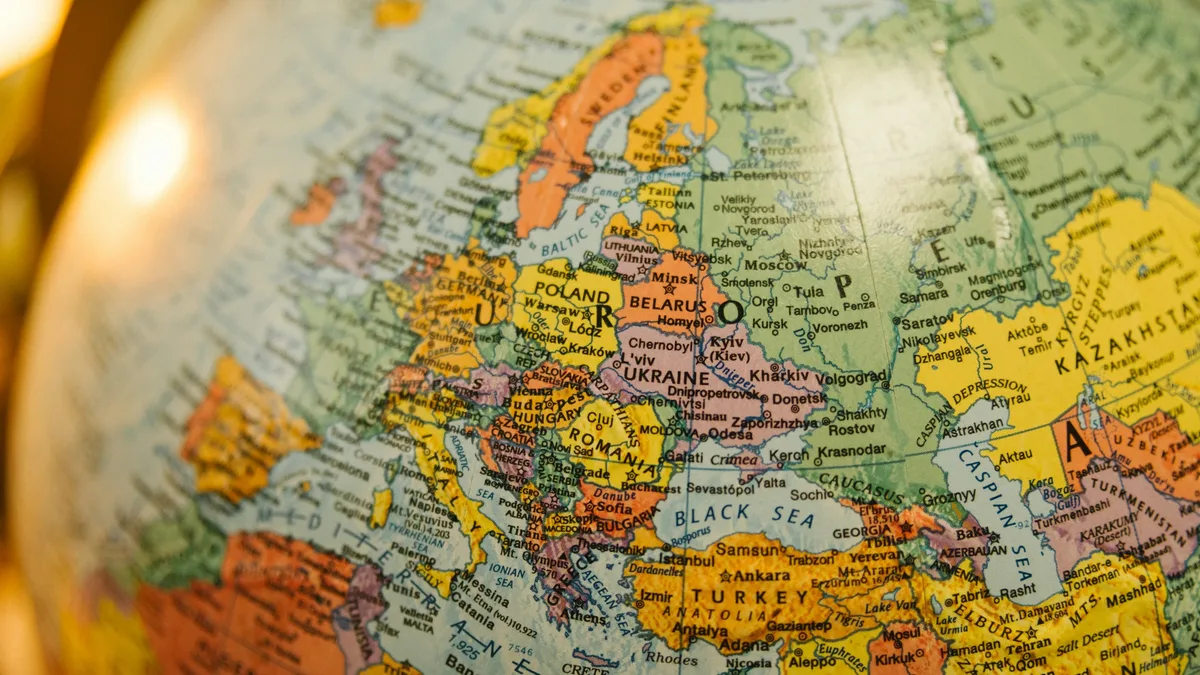
U.S. Envoys Seek European Role in Ukraine Peace Talks
After Abu Dhabi talks, U.S. negotiators push to include Europe in a new security framework, but Moscow rejects direct European participation amid...

Quad Commits $85 Million to Indo-Pacific Tech and Security
Quad foreign ministers have pledged over $85 million for trusted technology access and reinforced maritime security in key straits, advancing a broad...

U.S., Japan, South Korea Deepen Arctic and Security Ties at G20
The foreign ministers of the United States, Japan, and South Korea met in Atlanta on October 30, 2026, reaffirming a strong deterrence posture...

G20 Foreign Ministers Fail to Agree on Ukraine and Supply Chains
A G20 foreign ministers' meeting in Atlanta ended without consensus on Russia's war in Ukraine and critical supply chain security, highlighting deep...
U.S. and Hungary Sign Energy and Security Pacts
The United States and Hungary formalized agreements on energy infrastructure and counter-terrorism cooperation in a Washington signing ceremony on...

U.S. Launches $44 Million Pacific Crime-Fighting Initiative
The United States convened Pacific police ministers in Los Angeles, announcing over $44 million in new programs to combat drug trafficking and...