The Chemical Weapons Convention
| Status | In force |
|---|---|
| Original use | Prohibit the development, production, stockpiling, and use of chemical weapons |
| First created | 1993 (opened for signature) |
| Depositary | United Nations Secretary-General |
| Entry into force | 1997 |
| Number of states parties | 193 (as of 2023) |
| Oversight body | Organisation for the Prohibition of Chemical Weapons (OPCW) |
Origin and history
The Chemical Weapons Convention (CWC) is an international treaty that originated from multilateral negotiations within the United Nations Conference on Disarmament. Its development was a prolonged process spanning the late 20th century, building upon earlier international efforts to ban chemical warfare. The Geneva Protocol of 1925 had prohibited the use of chemical weapons but did not ban their development, production, or stockpiling. The substantive text of the CWC was finalized in the early 1990s following the end of the Cold War, which created a political environment more conducive to such arms control agreements. The treaty was opened for signature in January 1993 and entered into force in April 1997 after receiving the requisite number of ratifications. Its creation represents a collective global endeavor, not the initiative of a single country or region, to comprehensively eliminate an entire category of weapons of mass destruction.
What it is for
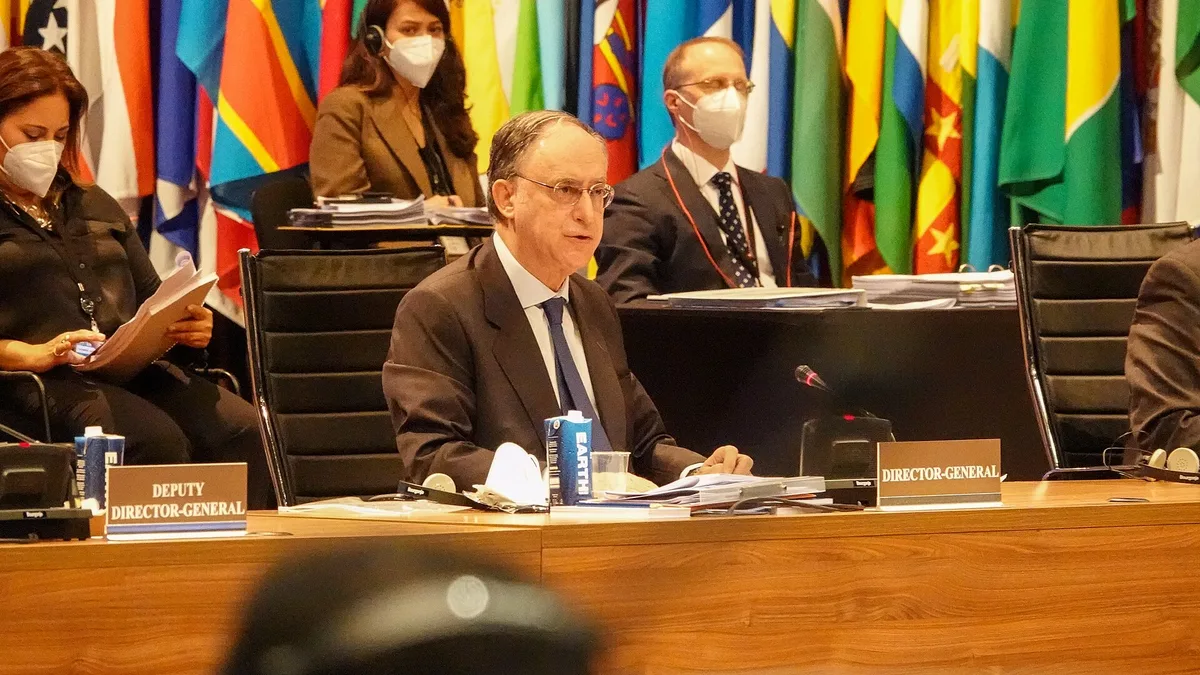
The Chemical Weapons Convention exists to achieve the complete and verifiable elimination of chemical weapons and their production facilities worldwide. Its primary purpose is to prohibit States Parties from developing, producing, otherwise acquiring, stockpiling, or retaining chemical weapons, or from transferring them to anyone. A core function is to prevent the re-emergence of chemical weapons by mandating the destruction of existing stockpiles under international verification. The treaty also aims to prevent the use of chemical weapons by any actor, including non-state actors, thereby reinforcing a global norm against their employment. Furthermore, it fosters international cooperation in the peaceful uses of chemistry, promoting the exchange of scientific and technical information for purposes not prohibited by the Convention. It establishes a permanent international organization, the Organisation for the Prohibition of Chemical Weapons (OPCW), to implement its provisions and oversee compliance among member states.
Overview
The Chemical Weapons Convention is a multilateral treaty that forms the principal instrument governing the relationship between states regarding the prohibition of chemical weapons. It operates on a system of legally binding obligations, detailed verification measures, and international cooperation. The treaty is administered by the OPCW, headquartered in The Hague, which conducts routine inspections of declared chemical industry sites and verification of the destruction of chemical weapons stockpiles. A key feature is its comprehensive definition of chemical weapons, which covers toxic chemicals and their precursors, munitions and devices specifically designed to cause death or harm through the toxic properties of such chemicals, and any equipment directly designed for use with such munitions and devices. The Convention also includes provisions for challenge inspections, allowing for short-notice inspections of any facility or location in any State Party to clarify and resolve questions concerning possible non-compliance. As of the early 21st century, it has near-universal membership, representing over 98% of the global population.
What to know
States Parties to the CWC are obligated to declare and destroy all chemical weapons stockpiles and production facilities under OPCW verification, with specific and monitored deadlines for completion. They must also submit detailed annual declarations regarding their relevant chemical industry activities and permit routine inspections of declared industrial sites to prevent the diversion of chemicals for prohibited purposes. The treaty includes schedules of chemicals, organized into three lists, which are subject to specific verification regimes based on their risk and potential utility in weapons programs. The Convention recognizes that certain toxic chemicals, such as phosgene and hydrogen cyanide, have large-scale legitimate industrial uses, and its control measures are designed to manage this dual-use risk. National implementation measures are required, meaning each State Party must adopt domestic legislation and establish a National Authority to serve as the liaison with the OPCW and ensure compliance at the national level. Non-compliance can be addressed through consultations, clarification processes, and, in serious cases, referral to the United Nations Security Council and General Assembly for collective action.
Common questions
A common question is whether the CWC bans the use of riot control agents, such as tear gas; the treaty permits their use for domestic law enforcement purposes but explicitly prohibits their use as a method of warfare. People often ask what happens if a country is suspected of cheating; the CWC has a confidential consultation and clarification process, and ultimately provides for a challenge inspection mechanism to address such concerns, though this procedure has specific and rigorous invocation criteria. Many inquire about the difference between the CWC and the Biological Weapons Convention (BWC); while both ban categories of WMD, the CWC has a far more robust verification system with a permanent inspectorate, whereas the BWC lacks a formal verification protocol. A frequent question concerns the destruction of old and abandoned chemical weapons, which are also covered by the treaty, with the responsibility for destruction lying with the state on whose territory they were abandoned. Individuals often ask how the treaty affects the commercial chemical industry; it imposes certain declaration and inspection obligations on facilities that produce, process, or consume specific scheduled chemicals above certain threshold quantities. Another common query is about states that are not party to the treaty; a small number of states remain outside the CWC, which creates legal gaps and challenges for universal adherence to the norm.
Pros and cons
A significant pro of the CWC is that it has established the most successful and verifiable international norm against a whole class of weapons of mass destruction, leading to the verified destruction of over 99% of declared chemical weapons stockpiles. Its robust verification system, including routine and challenge inspections, provides a high degree of confidence in compliance and deters violations. The treaty also promotes international scientific cooperation and assists states in implementing safety and security measures for toxic chemicals. A primary con is the immense cost and technical complexity associated with the safe and environmentally sound destruction of chemical weapons, which has caused significant delays for some possessor states and created local environmental concerns. The treaty can be criticized for its relatively slow and politically sensitive process for addressing allegations of non-compliance, particularly when they involve major powers, which can undermine its credibility during crises. A common mistake or regret for some states is underestimating the long-term financial and administrative burden of maintaining a fully functional National Authority and complying with all declaration and inspection requirements, which can strain resources.
Who it suits
The Chemical Weapons Convention suits states that are genuinely committed to international peace and security and are willing to submit to intrusive verification for the collective benefit of eliminating a horrific category of weapons. It is particularly well-suited for industrialized nations with large chemical sectors, as the treaty provides a framework to demonstrate that their industries are operating for exclusively peaceful purposes, thereby building international trust and facilitating chemical trade. The regime suits victim states of past chemical weapons attacks, as it provides a legal and normative framework to prevent future atrocities and holds perpetrators accountable under international law. It also suits smaller or less industrialized nations by providing assistance and cooperation in the peaceful uses of chemistry, including in areas like medicine and agriculture, and by offering protection from the threat of chemical warfare they lack the means to counter militarily. The treaty does not suit states that seek to maintain ambiguity in their military capabilities or those unwilling to accept international oversight of their security-related industrial activities. Furthermore, it presents challenges for states with limited bureaucratic capacity, as the demands of implementation can be administratively burdensome without adequate international support.
Latest The Chemical Weapons Convention news
Latest reporting
U.S. Military Aid to Ukraine Continues Under Trump
Despite claims of ending support, the Trump administration continues to provide billions in weapons and operational aid to Ukraine, shifting the...
UN Group Meets on Autonomous Weapons Treaty
Diplomats from about 100 governments are meeting at the UN in Geneva this week to negotiate elements for a potential new instrument on lethal...
Taran: Russia's Nuclear Weapons Are
Ukrainian analyst Victor Taran argues Russia's tactical nuclear weapons are political blackmail, not a battlefield solution, in a War on the Rocks...
Just War Theory Faces a New Era of Technology
Pope Leo XIV's encyclical challenges the relevance of just war theory in the age of artificial intelligence and autonomous weapons, but experts argue...