UN Group Meets on Autonomous Weapons Treaty
Diplomats from about 100 governments are meeting at the UN in Geneva this week to negotiate elements for a potential new instrument on lethal autonomous
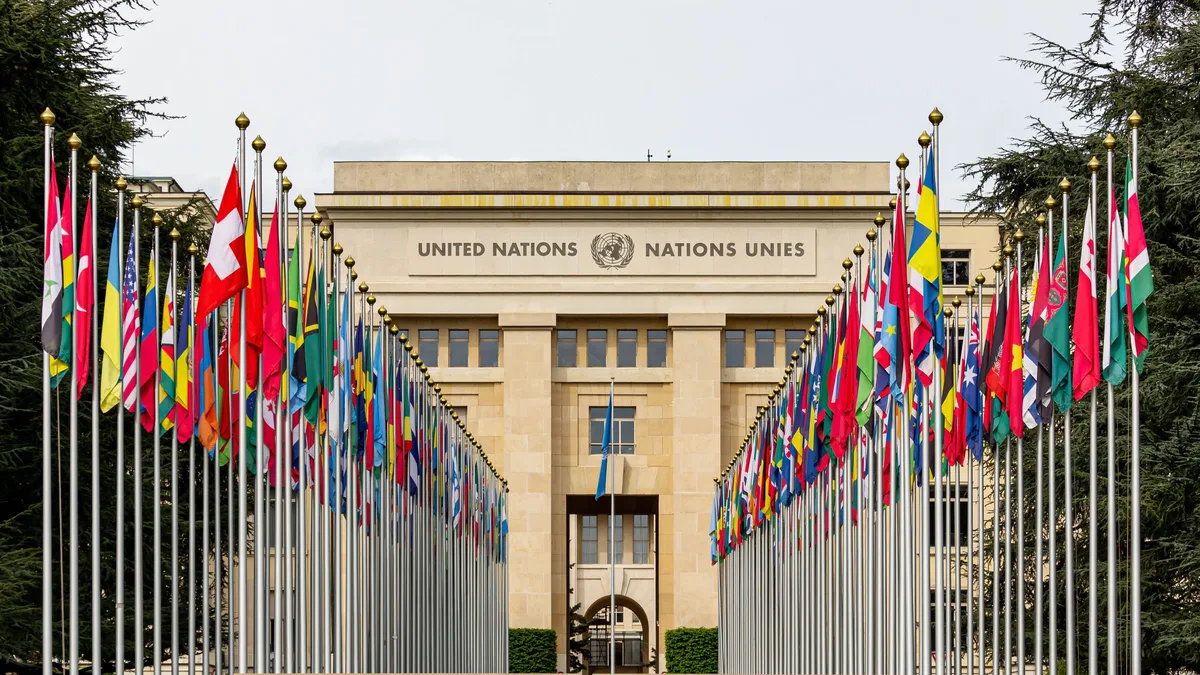
Diplomats, lawyers, and military experts from approximately 100 governments are convening at the United Nations in Geneva for a pivotal meeting of the Group of Governmental Experts on Lethal Autonomous Weapons Systems (LAWS GGE). The Group, operating under a three-year mandate from 2024 to 2026, is tasked with formulating elements for a potential new international instrument without yet deciding if it will be a binding treaty.
This week's session is the sixth and final one under the current mandate. According to the source, if significant progress is not made, states favoring a treaty may seek a different negotiation forum, potentially ending the GGE's role as the primary international discussion body on autonomous weapons.
The Forum and Its Mandate
The LAWS GGE was established in 2016 under the Convention on Certain Conventional Weapons (CCW), a 1980 treaty. Meetings are open to all 128 CCW parties, with non-parties attending as observers. Participants typically include 80-100 governments, covering all major military powers like the United States, Russia, China, India, Israel, and NATO members. Civil society and the International Committee of the Red Cross also participate.
The Group works by consensus, meaning all states must agree on any language adopted in its annual reports. This process is described as technical, detailed, and painstaking, often concluding with late-night negotiations. Over the past decade, the forum has developed 11 non-binding Guiding Principles and six annual reports on issues like human-machine interaction.
A Critical Juncture
The source, a former member of the U.S. delegation to the LAWS GGE from 2022 to 2025, states this week's meeting is an inflection point. The current mandate is to "further consider and formulate, by consensus, a set of elements of an instrument, without prejudging its nature." Prior to this three-year term, the Group operated under inefficient annual mandates that often reset progress.
Many states, along with the UN Secretary-General, the ICRC, and civil society groups, are calling for a legally binding treaty. They argue existing International Humanitarian Law is insufficient and that autonomous weapons may lower the threshold for conflict. Other states, including several major military powers, are not convinced new rules are needed beyond current law and are hesitant to limit technological development.
Defining the Weapons
A core challenge is defining the weapons themselves. After ten years, the Group has not reached consensus on a definition of an autonomous weapons system but has agreed on common characteristics. The current rolling text contains a proposed characterization.
The source notes the definition is difficult because an autonomous system is not a specific weapon like a landmine but a system defined by capabilities. Disagreement also persists on whether to limit the scope to lethal systems, as the Group's name suggests, or to include non-lethal ones.
The Human Control Debate
The other critical issue is the role of human control. The concept of "meaningful human control" has been central to discussions since 2017 but remains highly contested. The source indicates that reaching consensus on whether humans must maintain control over these systems, and what form that control should take, is one of the Group's most challenging tasks. This debate is expected to be a major focus of the negotiations this week as diplomats work against the clock to find common ground.