Status Of Forces Agreements
| First created | 1951 |
|---|---|
| Original use | To establish rights and privileges of foreign military personnel in a host country |
| Governing issues | Criminal jurisdiction, civil damages, entry/exit procedures, tax liabilities |
| Typical parties | A host state and a foreign state stationing military forces |
| Legal nature | An agreement under international law, distinct from a security arrangement or occupation |
| Common contentious point | Criminal jurisdiction over off-duty service members |
Origin and history
Its foundational framework within the NATO alliance stems from a peacetime agreement originally signed in 1951. This agreement established a multilateral template for governing the legal status of visiting forces among member states. While the United States, due to its large global military presence, has been a primary architect and proponent of such agreements, other nations like the United Kingdom, France, and the Soviet Union also developed SOFAs with host countries throughout the Cold War era. The need for these agreements arose from the inadequacy of traditional laws governing visiting armies, which were designed for temporary wartime alliances, to address the complex, long-term presence of foreign troops in allied nations. The evolution of SOFAs reflects the shift from military occupation to consensual stationing of forces under mutual defense pacts. Historical negotiations, particularly in countries like Japan and South Korea, have significantly shaped the specific provisions and political sensitivities associated with these instruments.
What it is for
A Status of Forces Agreement is a bilateral or multilateral treaty that establishes the legal framework governing foreign military forces present in a host country. Its primary purpose is to clarify the rights, privileges, and obligations of the visiting force, its civilian component, and their dependents. The agreement specifically delineates the jurisdictional boundaries between the sending state and the host state, particularly for criminal and civil matters. It addresses practical administrative issues such as the entry and exit of personnel, tax liabilities, customs regulations, and the licensing of drivers. Crucially, a SOFA is not the agreement that authorizes the stationing of forces or defines the strategic military relationship; that is typically a separate security arrangement. Instead, it functions as the essential legal infrastructure that allows the larger security partnership to operate smoothly by preventing and resolving day-to-day legal conflicts.
Overview
A SOFA is a specialized international agreement that operates under the principle that the forces of the sending state are present in the host state with the latter's consent. It recognizes that the visiting force remains under the command and control of its own government while respecting the sovereignty of the host nation. The core of a SOFA typically involves a detailed allocation of legal jurisdiction, specifying which state's courts have the right to try personnel for criminal offenses based on the nature of the crime and the duty status of the accused. Civil jurisdiction provisions outline how claims for damages caused by the force or its personnel will be adjudicated and compensated. The agreement also covers the status of military facilities, specifying whether they remain under the host nation's sovereignty or are granted a special status, and regulates the movement of military vehicles, aircraft, and vessels. While NATO members follow a standardized model, SOFAs negotiated by the United States and other nations with individual host countries can vary significantly in their specific terms.
What to know
The most contentious aspect of any SOFA is invariably the division of criminal jurisdiction between the sending state and the host state. A common provision, especially in U.S. agreements, grants the sending state primary jurisdiction over offenses deemed to be "service-connected" or committed solely against another member of the force, while the host nation retains jurisdiction over other crimes. The definition of "service-connected" is often a source of diplomatic friction. SOFAs are living documents and are frequently amended or supplemented through implementing arrangements and diplomatic notes to address new issues. The presence of a SOFA does not grant blanket immunity to service members from local law; it establishes a procedural framework for determining which legal system applies. It is also important to distinguish a SOFA from a Visiting Forces Agreement (VFA), which may be less comprehensive, and from the legal rules governing military occupation, which apply without the host state's consent.
Common questions
A common question is whether foreign troops are above the law in the host country, which is not the case; a SOFA ensures they are subject to a legal system, but specifies which one. People often ask what happens if a service member commits a serious crime off-base while off-duty, which typically falls under host nation jurisdiction, though the specific SOFA terms dictate the exact procedure. Another frequent inquiry concerns the process for victims in the host country to seek compensation for damages, which is usually outlined in the civil claims section of the agreement. Many wonder how disputes over jurisdiction are resolved, which is generally handled through diplomatic consultations between the two governments as stipulated in the treaty. Questions also arise about the applicability of the SOFA to civilian contractors or dependents, categories which are explicitly defined and granted different statuses within the agreement. Finally, individuals often seek to understand the difference between the SOFA and the broader security treaty that justifies the troops' presence, the former being the legal rulebook and the latter being the strategic rationale.
Pros and cons
A primary advantage of a well-negotiated SOFA is that it provides legal certainty and stability for both the sending and host states, preventing daily incidents from escalating into diplomatic crises. It allows the visiting force to maintain discipline and operational effectiveness through its own military justice system for service-connected matters. For the host nation, it formally affirms its sovereignty and provides a channel for addressing grievances and claiming compensation. The significant downside is that the division of jurisdiction can lead to perceptions of injustice, where host nation populations feel foreign personnel are not held adequately accountable for serious crimes, fostering resentment. The sending state may regret agreements where host nation legal procedures are seen as lacking due process protections familiar to its personnel, creating political pressure at home. A common mistake is for negotiators to view the SOFA as a purely technical legal document, underestimating how its provisions will be perceived by the public in the host country, where it can become a potent symbol of unequal relations. Conversely, host nations sometimes fail to anticipate the operational and disciplinary needs of the visiting force, crafting provisions that are unworkable in practice.
Who it suits
This instrument suits states engaged in long-term, consensual defense alliances where one party stations substantial military personnel and assets on the other's territory. It is essential for host nations that welcome a foreign military presence for collective security but are sensitive to issues of sovereignty and legal jurisdiction, as it provides a formal, treaty-based structure to manage that presence. The SOFA framework particularly suits democratic host countries with robust legal systems, as the agreements rely on mutual respect for the rule of law and established judicial procedures. It is less suited to, and rarely used in, contexts of temporary military deployments for exercises or short-term interventions, where simpler arrangements may suffice. The model also suits multilateral alliances like NATO, where a standardized agreement promotes interoperability and mutual understanding among member states. Ultimately, a SOFA is a tool for mature bilateral relationships where both parties have the administrative and diplomatic capacity to implement its complex provisions over the long term.
Latest Status Of Forces Agreements news
Latest reporting
U.S. and Hungary Sign Energy and Security Pacts
The United States and Hungary formalized agreements on energy infrastructure and counter-terrorism cooperation in a Washington signing ceremony on...
US and Paraguay Deepen Security and Infrastructure Partnership
The United States and Paraguay have signed new agreements on airspace security and biometric border controls, alongside major investments in energy...
Ethiopia's Tigray War Resumes as Eritrean Troops Advance
The Pretoria peace deal has collapsed, with Tigrayan forces seizing airports and Eritrean troops advancing south, reigniting a conflict that...
Saudi Arabia launches offensive after Houthis seize Red Sea coast
Saudi-led forces began a military offensive in early October 2026 after Houthi fighters captured Yemen's Red Sea coastline and strategic islands...
U.S. and Japan Deepen Strategic Science and Technology Ties
The United States and Japan have signed new agreements and launched a $1 billion partnership to advance cooperation in quantum computing and fusion...
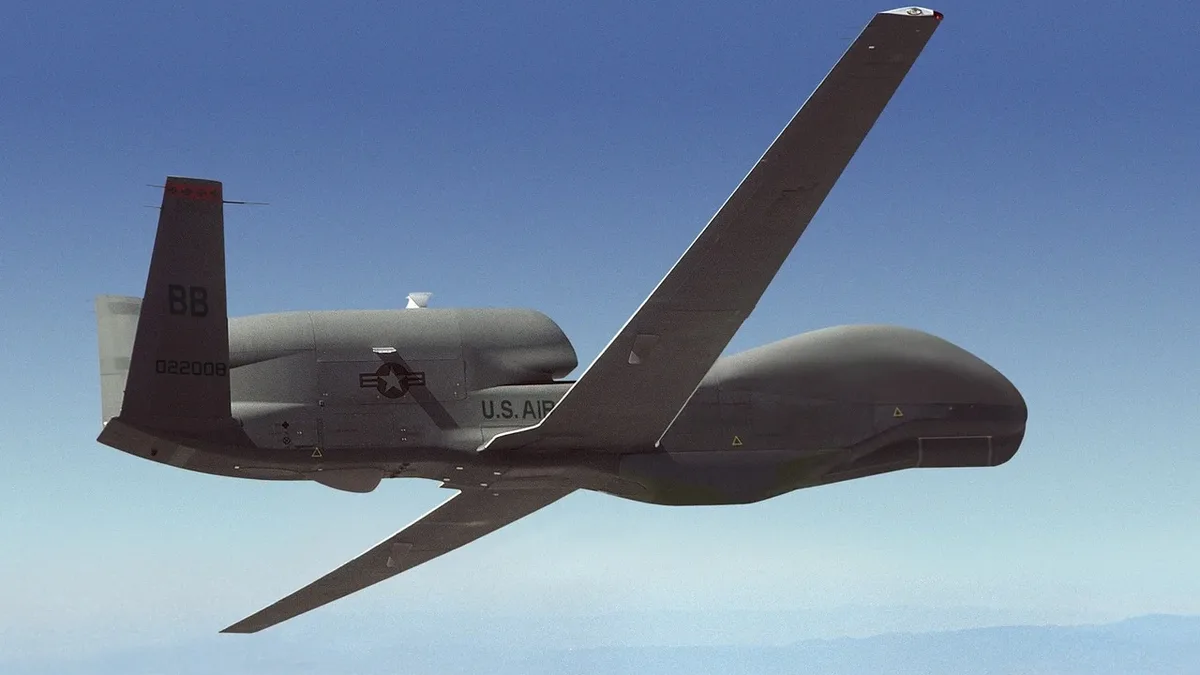
North Korea Applies Ukraine War Drone Tactics to Special Forces
North Korean special forces gained combat experience in Russia's Kursk offensive and are now integrating drone warfare and infiltration tactics.