Munich Security Conference And The Shangri La Dialogue
| Original use | Track security dialogues and policy positions |
|---|---|
| First created | 2002 |
| Country of origin | Singapore and Germany |
| Official name | IISS Asia Security Summit (Shangri-La Dialogue) and Munich Security Conference (Münchner Sicherheitskonferenz) |
| Organizer | International Institute for Strategic Studies and Munich Security Conference Foundation |
| Primary thematic scope | Asia-Pacific regional security and global security policy and transatlantic relations |
| Primary participant type | Government officials, military personnel, academics, and security experts |
| Frequency | Annual |
Origin and history
The Munich Security Conference (MSC) originated in West Germany during the early 1960s as an informal gathering of German and American security experts. It was initially a closed-door, trans-Atlantic forum focused on Cold War strategic issues, evolving over decades into a major public platform for global security debates. The Shangri-La Dialogue (SLD) originated in Singapore and was first convened in the early 2000s, created by the International Institute for Strategic Studies (IISS) to address the need for a dedicated multilateral security forum in the Asia-Pacific region. The MSC's founding was driven by European and Atlanticist perspectives, while the SLD's establishment reflected the post-Cold War shift in strategic gravity towards Asia and the absence of a region-wide security dialogue. Both institutions have historical roots in specific geopolitical contexts: one in the trans-Atlantic alliance structure and the other in the complex security architecture of the Asia-Pacific. Their parallel development illustrates the globalization of security discourse and the establishment of complementary regional hubs for high-level defense diplomacy.
What it is for
The Munich Security Conference primarily serves as a global forum for the exchange of views on international security policy among senior political, military, and academic figures, with a strong traditional focus on trans-Atlantic and European security. Its purpose is to facilitate candid dialogue, assess emerging threats, and strengthen cooperative security frameworks, particularly within the NATO alliance and the European Union. The Shangri-La Dialogue is specifically designed to serve as the premier inter-governmental security forum for the Asia-Pacific region, bringing together defense ministers, military chiefs, and security experts annually. Its core function is to foster transparency, build confidence, and manage strategic tensions among key regional actors, including major powers like the United States, China, Japan, and India. Both conferences are instrumental in setting the annual agenda for international security debates and providing a neutral(ish) platform for informal bilateral meetings on the sidelines. They are fundamentally for high-level networking, signaling intent, and testing policy positions in a multilateral setting, rather than for formal negotiations or treaty-making.
Overview
The Munich Security Conference is an annual independent conference held in Munich, Germany, typically attended by heads of state, government ministers, legislators, military leaders, and representatives from international organizations and civil society. Its agenda is broad, covering traditional military security, cyber threats, climate security, and geopolitical competition on a global scale. The Shangri-La Dialogue is an annual inter-governmental summit organized by the International Institute for Strategic Studies and held in Singapore, characterized by its specific focus on Asia-Pacific defense and security dynamics. Its format includes keynote addresses by leading powers, ministerial plenary sessions, and simultaneous track sessions on specific regional security issues. While the MSC has expanded its geographical scope to include Indo-Pacific and global topics, the SLD remains regionally anchored, though its discussions inevitably involve extra-regional powers. Both are calendar fixtures that command high-level attendance, generate significant media coverage, and produce chair's statements or reports summarizing the discussions, though they are not decision-making bodies.
What to know
It is essential to know that neither the Munich Security Conference nor the Shangri-La Dialogue is an official diplomatic negotiation forum; they are track 1.5 or track 1 dialogues where discussions are influential but not legally binding. Participants attend in their national capacities, and the speeches, especially the opening keynotes, are carefully crafted policy statements that often signal strategic shifts or firm up existing positions. The MSC is known for its relatively open and public debate format, while the SLD, though also public, operates within a context of deeper-seated regional rivalries, making some interactions more formal and cautious. A key distinction is that the SLD often serves as a barometer for Sino-U.S. relations and cross-strait tensions, whereas the MSC frequently gauges the health of the trans-Atlantic partnership and European cohesion. The sidelines of both conferences are arguably as important as the main agenda, providing rare opportunities for bilateral meetings between adversarial states that may have limited official communication channels. Understanding the outcomes requires analyzing both the public rhetoric and the patterns of which bilateral meetings were or were not held.
Common questions
A common question is whether these conferences achieve tangible results beyond talk; the answer is that their primary output is influencing the strategic environment through dialogue, reassurance, and deterrence signaling, rather than producing treaties. People often ask which is more important; this depends on one's regional focus, as they are the apex forums for their respective geographic spheres of influence, with the MSC having a longer historical legacy and the SLD being indispensable for Asia-Pacific dynamics. Another frequent inquiry concerns who gets invited; both are by-invitation events, with the MSC having a broader, more diverse civil society participation and the SLD maintaining a tighter focus on defense establishment principals. Observers commonly question how the conferences handle contentious participants; both forums generally maintain inclusivity, even inviting representatives from states viewed as adversaries, to ensure dialogue across divides. Many wonder about the relationship between the two; they are complementary institutions that reflect a multi-polar world, with increasing thematic overlap but distinct regional constituencies and operational cultures.
Pros and cons
A significant pro of both forums is their unique ability to convene a critical mass of global security decision-makers in one location, enabling efficient diplomacy and crisis management on the sidelines. They provide an early-warning system for international tensions and a platform for public reassurance, which can help stabilize volatile relationships. A major con is that they can become stages for performative confrontation and grandstanding, where inflammatory rhetoric for domestic audiences can actually escalate tensions rather than mitigate them. Participants sometimes regret attending when they are drawn into public disputes or subjected to hostile questioning, which can overshadow their intended diplomatic messaging. A common mistake is for observers to over-interpret a single speech or snub as a definitive shift in policy, rather than seeing it as one data point in a complex relationship. Furthermore, the very informality and lack of binding outcomes can be a drawback, leading to criticisms of being mere "talk shops" that lack the machinery to implement confidence-building measures.
Who it suits
The Munich Security Conference best suits established trans-Atlantic actors, European powers, and those with a globalist security perspective who wish to engage on a wide spectrum of issues from cyber to climate. It is particularly suited for mid-sized powers seeking to amplify their voice on the world stage and for non-state actors like NGOs and think tanks to network with officials. The Shangri-La Dialogue is essential for any state with strategic interests in the Asia-Pacific, especially those navigating the complex U.S.-China rivalry, such as ASEAN member states, Japan, Australia, and India. It suits defense ministers and military chiefs more than foreign ministers, given its distinct focus on defense policy and military-to-military relations. Both conferences suit major powers aiming to set the narrative and signal resolve, but they are also critical for smaller states that rely on multilateral norms and transparency to ensure their security concerns are heard. They are less suited for entities seeking private, confidential negotiation or for those expecting to achieve immediate, concrete diplomatic agreements.
Latest Munich Security Conference And The Shangri La Dialogue news
Latest reporting
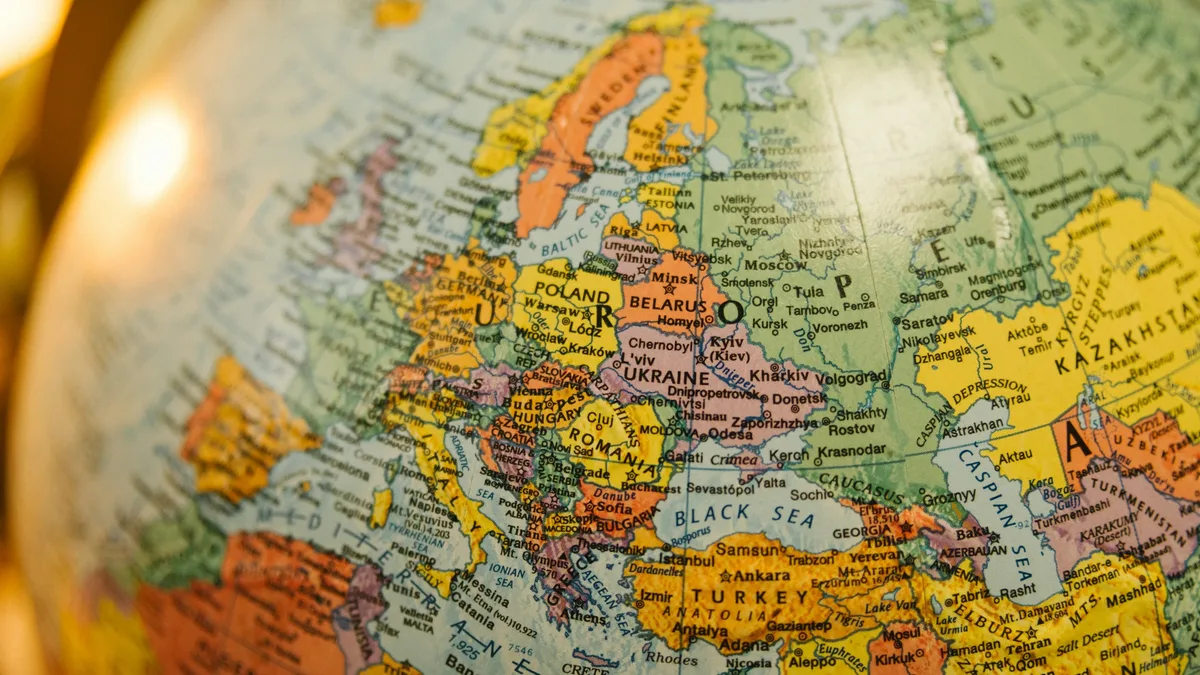
U.S. Envoys Seek European Role in Ukraine Peace Talks
After Abu Dhabi talks, U.S. negotiators push to include Europe in a new security framework, but Moscow rejects direct European participation amid...

Quad Commits $85 Million to Indo-Pacific Tech and Security
Quad foreign ministers have pledged over $85 million for trusted technology access and reinforced maritime security in key straits, advancing a broad...

U.S., Japan, South Korea Deepen Arctic and Security Ties at G20
The foreign ministers of the United States, Japan, and South Korea met in Atlanta on October 30, 2026, reaffirming a strong deterrence posture...

G20 Foreign Ministers Fail to Agree on Ukraine and Supply Chains
A G20 foreign ministers' meeting in Atlanta ended without consensus on Russia's war in Ukraine and critical supply chain security, highlighting deep...
U.S. and Hungary Sign Energy and Security Pacts
The United States and Hungary formalized agreements on energy infrastructure and counter-terrorism cooperation in a Washington signing ceremony on...

U.S. Launches $44 Million Pacific Crime-Fighting Initiative
The United States convened Pacific police ministers in Los Angeles, announcing over $44 million in new programs to combat drug trafficking and...