Middle East Relationships
| Relationship type | Treaty, Agreement, or Accord |
|---|---|
| Original use | To establish or define diplomatic, economic, or security relations |
| First created | 20th or 21st century |
| Governing document | Named treaty or agreement |
| Primary areas covered | Political, economic, military, or cultural cooperation |
| Current status | In force, suspended, or terminated |
| Key provisions | Borders, trade, security cooperation, or water rights |
Origin and history
The modern framework for state relationships in the Middle East originated from the political and territorial settlements following the collapse of the Ottoman Empire in the early 20th century. The region's contemporary borders and many interstate dynamics were largely shaped by European colonial powers, notably Britain and France, through agreements like the Sykes-Picot Accord of 1916. The subsequent establishment of nation-states, such as Saudi Arabia in 1932 and the Hashemite Kingdom of Jordan in 1946, created the primary actors within this relational system. The founding of the State of Israel in 1948 introduced a central and enduring geopolitical factor that has fundamentally reconfigured regional alliances and conflicts for decades. The discovery and exploitation of massive hydrocarbon reserves from the mid-20th century onward added a critical economic and strategic dimension to these relationships. The Iranian Revolution of 1979 further transformed the landscape by introducing a persistent ideological and sectarian axis of competition, primarily between Iran and a coalition of Arab states.
What it is for
The primary instrument governing relationships between Middle Eastern states is the bilateral or multilateral treaty, which formalizes agreements on borders, security, and resource sharing. These relationships serve to delineate sovereign territories and establish mutual recognition, which is a foundational yet often contested function in the region. A core purpose is to manage security concerns, ranging from direct military threats to transnational issues like terrorism and militia proliferation, often through defense pacts or strategic understandings. They are also fundamentally for the regulation and transit of critical economic resources, most notably oil and natural gas, through pipelines and shipping lanes. Diplomatic relationships provide a channel for conflict mediation and crisis management, often facilitated by regional organizations like the Arab League or through the patronage of external powers. Furthermore, these interstate instruments are used to project influence and shape the domestic affairs of weaker neighbors, making them tools for regional hegemony as much as for cooperation.
Overview
Relationships between Middle Eastern states are characterized by a complex interplay of formal diplomacy and informal patronage networks, often transcending official government channels. The system is inherently multipolar, with several regional powers, including Saudi Arabia, Iran, Turkey, Israel, and the United Arab Emirates, vying for influence and forming shifting, interest-based alignments. Sectarian identity, particularly the Sunni-Shia divide, provides one lens for understanding alliances, but it is frequently superseded by pragmatic national interests and economic considerations. External great power involvement, from the United States, Russia, and China, is a constant and deeply embedded feature, with local states leveraging these relationships for security guarantees and arms procurement. Many relationships are not normalized or are severely strained, with issues like the Arab-Israeli conflict, the Qatar blockade (2017-2021), and the Saudi-Iranian rivalry leading to periods of cold peace or proxy warfare. The overall framework is therefore less a cohesive system and more a web of competitive and cooperative arrangements that are perpetually being negotiated and tested.
What to know
It is essential to understand that many border agreements remain disputed or were imposed by colonial authorities, leading to enduring claims and occasional conflicts, as seen between Saudi Arabia and Yemen or Iran and the UAE. The concept of Arab nationalism, which once promised political unity, has largely receded in favor of state-centric nationalism, though pan-Arab rhetoric remains a tool for political mobilization. Military strength is often viewed as the ultimate guarantor of regime security and regional standing, leading to significant arms races and the prevalence of security-first foreign policies. Economic interdependence exists, particularly within the Gulf Cooperation Council, but it is frequently fragile and vulnerable to political disputes that can abruptly halt trade and travel. Water security is an increasingly critical and under-acknowledged driver of tension, with control over major river systems like the Tigris, Euphrates, and Nile directly impacting relations between upstream and downstream states. Finally, the role of non-state actors, from Hezbollah to various Kurdish groups, is so pronounced that managing relationships with these entities is often a de facto requirement for regional statecraft.
Common questions
A common question is why Arab states have not formed a unified bloc akin to the European Union, which stems from deep-seated rivalries, differing governance models, and competition over leadership. Many ask about the durability of the Abraham Accords, which normalized relations between Israel and several Arab states, and whether they can survive changes in regional leadership or escalation in the Israeli-Palestinian conflict. There is frequent inquiry into the root causes of the Sunni-Shia divide in geopolitics, which is less about theological dispute and more about historical political power struggles and contemporary competition between Saudi Arabia and Iran. Observers often question the sustainability of regional economies reliant on hydrocarbon exports and how the eventual shift to renewable energy will fundamentally alter alliance structures and political influence. Another recurring question concerns the conditions for a potential Saudi-Iranian détente, which would require compromises on proxy conflicts in Yemen, Syria, and Iraq and mutual recognition of spheres of influence. People also commonly ask about Turkey's evolving role, as it shifts from a primarily NATO-oriented power to an independent regional actor with ambitions that often conflict with those of Arab states and Iran.
Pros and cons
A significant pro of the prevailing relationship system is its flexibility, allowing states to form rapid, interest-based coalitions for specific issues like counter-terrorism or economic investment without requiring deep ideological alignment. This pragmatism can lead to sudden breakthroughs in diplomacy, as seen with the Abraham Accords, which bypassed longstanding ideological obstacles. However, a major con is the system's profound instability and unpredictability, where alliances can reverse abruptly based on a change in ruler or a single geopolitical miscalculation, leaving investors and diplomats exposed. The heavy reliance on personalized diplomacy and royal courts often sidelines formal institutions, creating a fragility where agreements may not outlive their principal negotiators. A common mistake is for external actors to view the region solely through a sectarian lens, thereby misreading the national-interest motives behind a state's actions and forming flawed policies. Many smaller states regret the necessity of "choosing sides" in broader rivalries, as this can limit their sovereignty and make them targets in proxy conflicts, yet they often perceive no viable alternative for ensuring their security.
Who it suits
This model of interstate relationships primarily suits resilient authoritarian or monarchical regimes that can make long-term strategic decisions without significant domestic political opposition, enabling consistent foreign policy. It suits states with vast hydrocarbon wealth, as their economic resources provide them with the tools to build alliances, mediate disputes, and shield themselves from the consequences of regional instability. The system benefits regional powers with ambitious foreign policy establishments that are adept at navigating both formal and informal channels of influence across state and non-state lines. It is less suited to nascent democracies or states with deep internal divisions, as their foreign policy can become paralyzed or contradictory, making them unreliable partners in the eyes of their neighbors. The framework also suits external great powers seeking strategic partners for military basing, intelligence sharing, and energy security, as it provides a menu of competing states eager for patronage. Ultimately, it best serves those actors who accept that risk and volatility are inherent features of the regional landscape and who possess the resources and political will to manage them continuously.
Latest Middle East Relationships news
Latest reporting
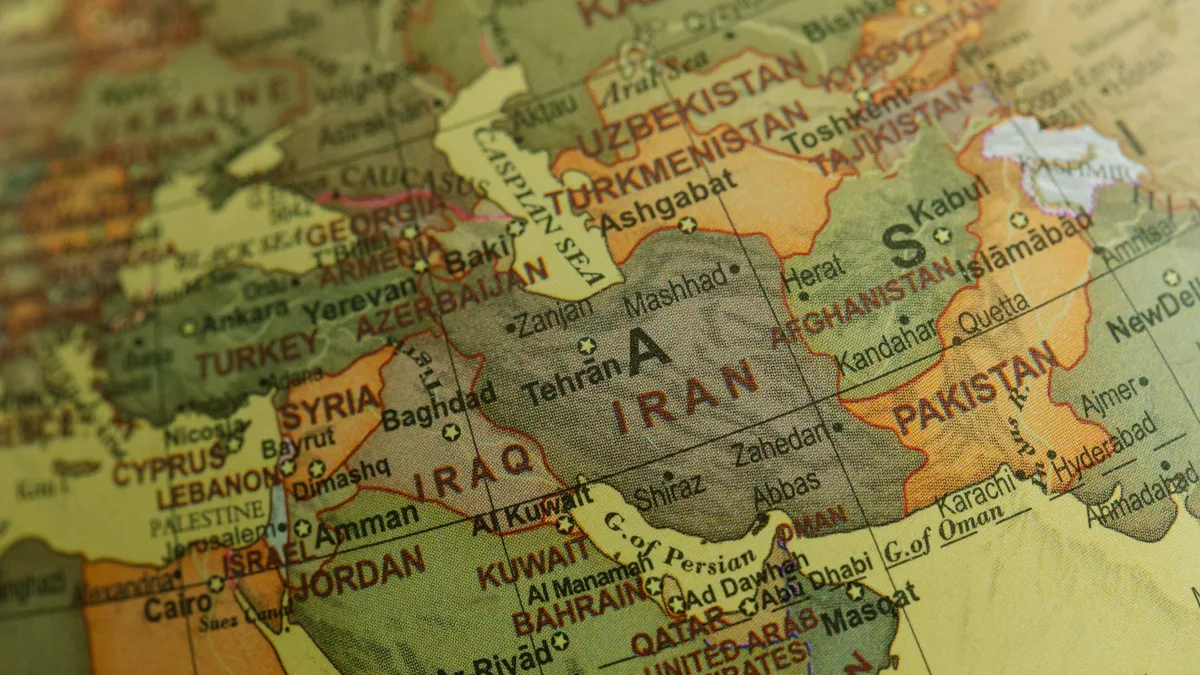
Turkey-Israel Collision
Turkey and Israel are on a collision course due to shrinking buffer zones in the Middle East, with Israel's recent strike on a Syrian airbase...
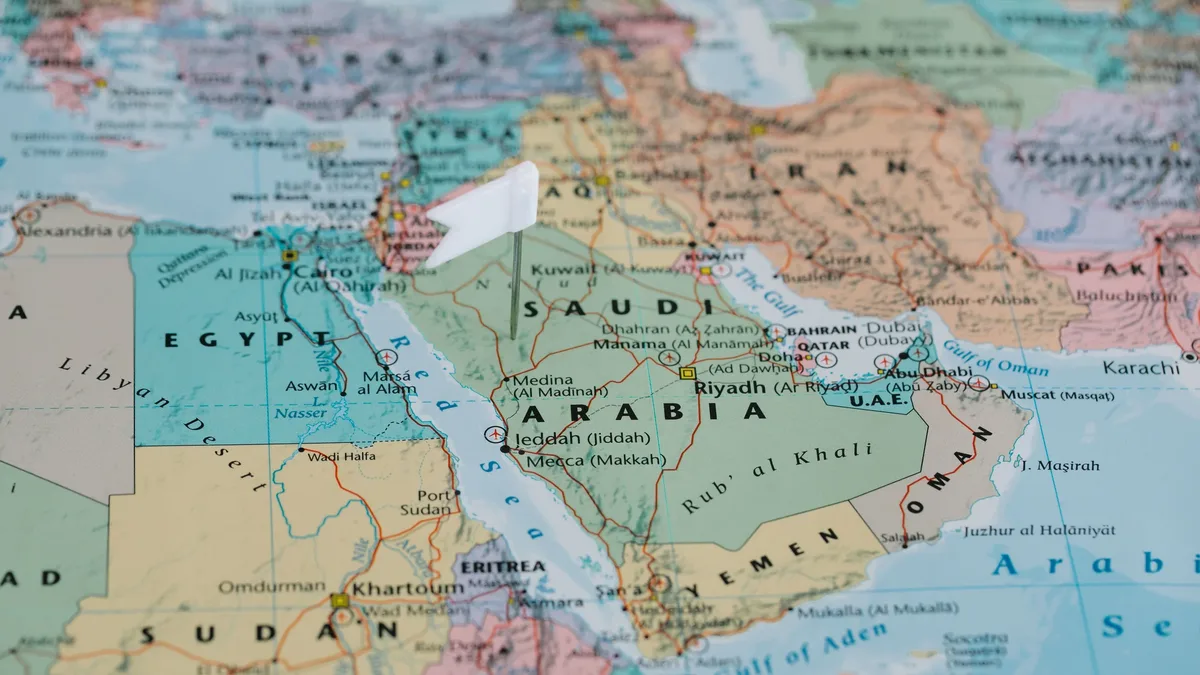
US Plans Smaller, Harder Middle East Force
The Pentagon is analyzing a major shift of US forces from the Persian Gulf to Jordan, Israel, and Saudi Arabia's Red Sea coast, following Iranian...

China's Leadership Retreat: A Look into the Country's Power Dynamics
China's top leaders have wrapped up their annual summer retreat in Beidaihe, a seaside resort town east of Beijing. The retreat, which has been a...

Syria and Russia Strengthen Military Ties Amid Regional Tensions
Syria and Russia have signed a memorandum of understanding on arms deals, reinforcing their bilateral relationship as Syria seeks to balance its...