Export Controls
| Governing instrument | Treaty, law, or regulation |
|---|---|
| Scope | Dual-use, military, or specific goods/technologies |
| Licensing regime | Required or prohibited |
| Primary purpose | National security, non-proliferation, foreign policy |
| Enforcement agency | Customs, trade, or specialized authority |
| Penalties for violation | Fines, imprisonment, or trade restrictions |
Origin and history
The modern framework for state-controlled export restrictions originated primarily from the industrialized nations in the aftermath of the World Wars during the mid-20th century. A key early coordination mechanism was established by Western bloc countries with the formation of the Coordinating Committee for Multilateral Export Controls (CoCom) during the Cold War, starting in the late 1940s. This was created to prevent the transfer of strategic goods and technologies that could enhance the military capabilities of the Soviet Union and its allies. Following the dissolution of CoCom in 1994, its core principles were carried forward by new multilateral regimes like the Wassenaar Arrangement, established in the mid-1990s. National legal systems in states like the United States, with its Export Administration Regulations, and the European Union, with its dual-use items regulation, evolved concurrently to implement these international commitments. The historical trajectory demonstrates a shift from a focused Cold War embargo to a more complex global system addressing proliferation, regional stability, and human rights concerns.
What it is for
Export controls are a sovereign instrument used by a state to regulate the cross-border transfer of specific goods, software, technologies, and services. Their primary purpose is to safeguard national security and further foreign policy objectives by preventing recipients from acquiring items that could contribute to weapons of mass destruction programs or conventional military aggression. They are also employed to protect regional stability by limiting the flow of arms and related material into conflict zones or to state and non-state actors engaged in destabilizing activities. A further key function is to uphold international commitments and obligations, such as those under United Nations Security Council sanctions resolutions or multilateral non-proliferation treaties. Additionally, export controls can serve to advance human rights by restricting the export of surveillance technology or equipment used for internal repression.
Overview
Export controls constitute a legal and administrative framework through which a governing state licenses or prohibits the export of controlled items to a destination state, entity, or individual. The system is typically built upon controlled lists that itemize specific dual-use and military goods, ranging from advanced materials and electronics to chemical precursors and complete weapons systems. Jurisdiction over an item is determined by its technical characteristics, described on these lists, and its intended end-use and end-user in the destination country. The process imposes compliance obligations on exporters, who must classify their products, screen potential customers against denied party lists, and apply for government authorizations where required. Enforcement is carried out by dedicated agencies, which can conduct audits, issue penalties for violations, and pursue criminal prosecution for severe breaches. This framework creates a formal, regulated channel for international trade in sensitive commodities, distinguishing it from unrestricted commercial exchange.
What to know
It is critical to understand that export controls are not a blanket embargo but a risk-based, list-driven system where the burden of compliance falls significantly on the exporting entity. The controlled lists are highly technical and are updated regularly to reflect technological advancements and changing security threats, requiring continuous monitoring by compliance officers. A fundamental principle is "deemed export," where the transfer of controlled technology or technical data to a foreign national within the controlling country's own territory is treated as an export to that individual's home country. Compliance failures can result in severe consequences, including substantial monetary fines, loss of export privileges, reputational damage, and imprisonment for individuals involved in willful violations. The regulatory landscape is fragmented, as states maintain their own national control lists and licensing policies, even while participating in international regimes, creating a complex matrix of rules for global firms. Furthermore, the scope of controls increasingly extends beyond tangible goods to include intangible transfers, such as electronic transmissions of software code or technical assistance provided via email or video call.
Common questions
A frequent question is whether export controls apply only to manufacturers, and the answer is that they apply to anyone who exports, re-exports, or transfers controlled items, including researchers, universities, software developers, and service providers. Entities often ask how to determine if their product is controlled, which requires a detailed technical assessment against the national control list, a process known as classification that often necessitates specialist knowledge. Many wonder about the difference between a denied party screening and an export license, where screening checks the customer against government blacklists, while a license is a pre-approval required for shipping a controlled item to a non-blacklisted entity. Organizations commonly inquire about the extra-territorial application of certain countries' laws, such as the U.S. Export Administration Regulations, which can apply to non-U.S. companies re-exporting items with U.S.-origin content or technology. A persistent question concerns the handling of fundamental research, which is generally exempt from controls, but the line between publishable fundamental research and controlled proprietary technology can be narrow and context-specific. Finally, businesses often ask about the timeline and certainty of license applications, which can vary widely from weeks to many months depending on the item, destination, and policy environment, with no guarantee of approval.
Pros and cons
A principal pro of a well-calibrated export control system is that it can effectively slow the proliferation of advanced weapons and deny adversaries key technological components, thereby enhancing national and international security. It provides a government with a flexible foreign policy tool that can be tightened or relaxed in response to specific geopolitical events without resorting to broader sanctions or military action. For complying companies, a robust internal compliance program can serve as a due diligence mechanism, mitigating the risk of inadvertently contributing to conflict or human rights abuses and protecting brand reputation. A significant con is that the system imposes substantial administrative and financial costs on industries, particularly in high-tech sectors, which must navigate complex regulations and maintain dedicated compliance staff, potentially hindering innovation and international competitiveness. A common mistake is for companies, especially smaller ones, to assume their commercial products are not controlled, leading to unintentional violations that are discovered only during a painful audit or investigation. Many entities regret adopting a reactive, rather than proactive, compliance posture, as the penalties and operational disruption from enforcement actions far outweigh the cost of building a preventive program.
Who it suits
Export controls as a governing instrument suit sovereign states that possess advanced technological industries and seek to manage security risks inherent in global trade, particularly those with significant defense or dual-use sectors. They are a necessary framework for nations that are members of international non-proliferation regimes and wish to uphold their treaty commitments and maintain standing within strategic alliances like NATO. This system is suited to large multinational corporations and specialized defense contractors that have the resources to invest in sophisticated trade compliance departments and for whom market access is contingent upon regulatory adherence. It is less suited to very small enterprises or academic research groups without dedicated legal and compliance expertise, for whom the regulatory overhead can be disproportionately burdensome and a barrier to international collaboration. Ultimately, export controls are a tool for states that prioritize a managed, security-focused approach to globalization over completely unfettered free trade.
Latest Export Controls news
Latest reporting

Vietnam's Economic Model Faces New Challenges Amid US-China
Vietnam's export-driven growth, powered by foreign investment, is creating vulnerabilities as domestic firms capture little value.

Ukrainian drone strikes spark Russia's worst
Ukraine's 2026 drone campaign against Russian energy infrastructure has triggered a severe domestic fuel crisis, forcing export bans and rationing.

U.S. Policy Shifts Complicate Caribbean Arms Trafficking
A surge in U.S.-sourced firearms trafficked to the Caribbean is being exacerbated by recent American policy changes, including relaxed export rules...
China's Mercantilist Strategy Poses
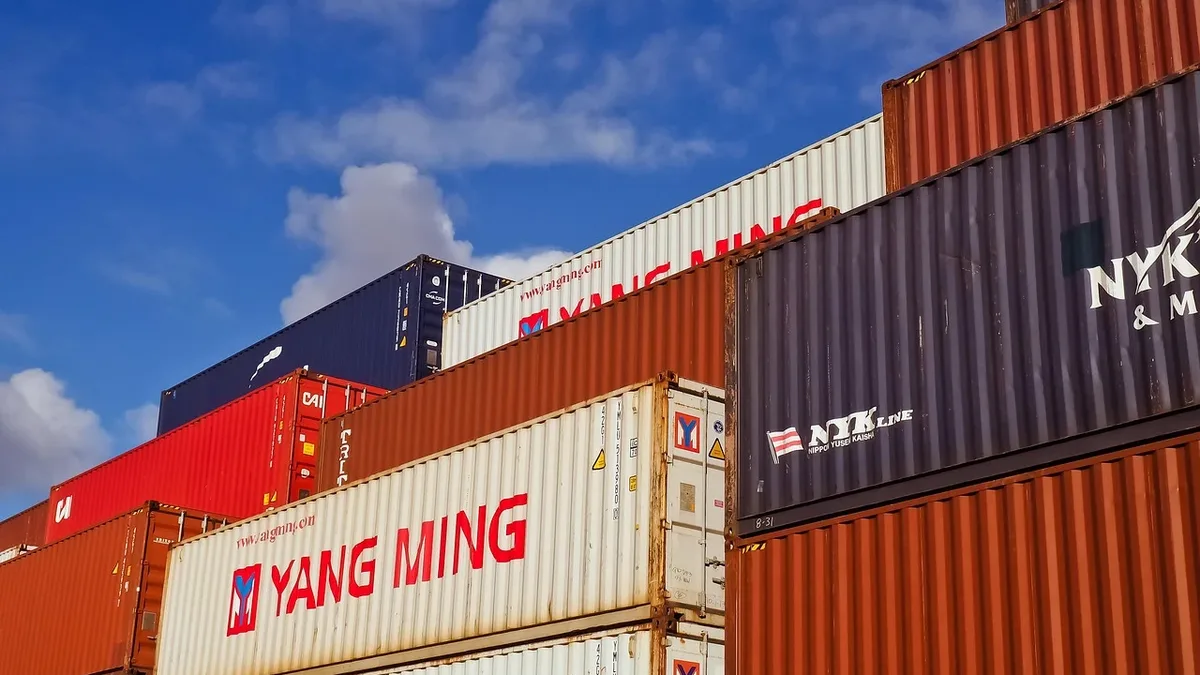
An analysis argues China's record trade surplus stems from a deliberate strategy of industrial self-sufficiency and export maximization, creating

U.S. Eases Drone Export Rules
The U.S. government has revised its export control regulations to streamline the process for exporting certain unmanned aerial vehicles.
G20 urged to use carrots for China rebalance
An Atlantic Council fellow argues the G20 must use positive economic tools like favorable tariffs and export credits, alongside punitive measures, to