Cop Climate Summits
| First created | 1995 |
|---|---|
| Original use | International negotiation forum for climate change action |
| Governing instrument | United Nations Framework Convention on Climate Change (UNFCCC) |
| Frequency | Annual |
| Primary participants | National governments |
| Typical duration | 10 to 14 days |
| Official language | English |
Origin and history
The Conference of the Parties (COP) climate summits originate from the international diplomatic process established by the United Nations Framework Convention on Climate Change (UNFCCC). The UNFCCC was opened for signature at the Earth Summit in Rio de Janeiro in 1992 and entered into force in 1994. The COP is the supreme decision-making body of this convention, with the first COP session (COP1) held in Berlin, Germany, in 1995. These summits are convened annually, with the location rotating among the five recognized UN regional groups. The historical trajectory of the COPs is marked by key milestones, such as the adoption of the Kyoto Protocol at COP3 in 1997 and the Paris Agreement at COP21 in 2015. The process is fundamentally a product of multilateral diplomacy, with no single country of origin, but rather a collective international mechanism born from growing scientific consensus on anthropogenic climate change in the late 20th century.
What it is for
COP climate summits serve as the primary formal instrument for international negotiation and governance on global climate change. Their core purpose is to review the implementation of the UNFCCC and any other legal instruments the COP adopts, and to take decisions necessary to promote the convention's effective implementation. This includes assessing national communications and emission inventories submitted by member states. The summits are designed to facilitate multilateral agreements on specific targets, mechanisms, and rules, such as those for emission reductions, climate finance, and technology transfer. They provide a structured forum for nearly all the world's nations to debate obligations, with the principle of "common but differentiated responsibilities and respective capabilities" underpinning discussions. Ultimately, the process aims to stabilize greenhouse gas concentrations in the atmosphere at a level that prevents dangerous anthropogenic interference with the climate system.
Overview
A COP climate summit is a large, complex diplomatic conference typically lasting two weeks, attended by delegations from all UNFCCC Parties, which include national governments and regional economic integration organizations. The formal negotiations occur within specific subsidiary bodies and ad hoc working groups, dealing with technical and implementation agendas. Alongside the official negotiations, the summit hosts a vast array of side events, exhibitions, and press conferences involving civil society, business leaders, scientists, and local government representatives. The culmination of a COP is often a high-level segment involving ministers and heads of state, who provide political guidance to break deadlocks in technical talks. Decision-making within the COP strives for consensus, but if that fails, voting rules outlined in the convention's rules of procedure may apply, though these have never been formally adopted. The outcome of each summit is a set of formal decisions and conclusions, which collectively advance the international climate regime.
What to know
The relationship governed by the COP process is fundamentally between sovereign states, operating under the framework of international law established by the UNFCCC. The instrument governing this relationship is the body of agreed decisions, protocols, and treaties, with the Paris Agreement being the current central pillar. Participation is universal, but the dynamics are heavily influenced by negotiating blocs such as the Group of 77 and China, the European Union, and the Alliance of Small Island States. A critical element is the pledge-and-review system, where nations submit nationally determined contributions rather than adhering to top-down, universally mandated targets. The success of any COP is often judged by the strength of its final agreed text, with terms like "ambition," "loss and damage," and "climate finance" being perennial flashpoints. It is also essential to understand that the agreements reached are legally binding under international law, but enforcement mechanisms are largely based on peer pressure and transparency rather than punitive sanctions.
Common questions
A common question is whether the COP summits are successful, which requires evaluating them as a continuous diplomatic process rather than individual events. Many ask why the agreements often seem watered down, which stems from the need to achieve consensus among nearly 200 parties with vastly different economic circumstances and vulnerabilities. People frequently inquire about the difference between the COP, the Kyoto Protocol, and the Paris Agreement, with the COP being the ongoing governing body and the latter two being specific legal instruments adopted under its auspices. Another recurring question concerns the role of non-state actors, who, while unable to vote, significantly influence negotiations through advocacy, research, and public mobilization. Observers often question the environmental cost of the summits themselves, given the large-scale international travel involved, which is a point of ongoing operational critique. Finally, many wonder how decisions made at the COP translate to domestic action, which depends entirely on each nation's internal political and legal processes for ratification and implementation.
Pros and cons
A significant pro of the COP process is that it provides the only inclusive, universal forum for climate diplomacy, creating a common set of rules and expectations for all nations. It has successfully established a durable and evolving architecture for international cooperation, from the Kyoto Protocol's binding targets for developed nations to the Paris Agreement's broader participation model. The transparency mechanisms negotiated within the COPs, such as enhanced reporting requirements, build trust and allow for better tracking of global progress. A major con is the often glacial pace of negotiation, where procedural disputes and consensus-based decision-making can lead to lowest-common-denominator outcomes that lack the urgency demanded by climate science. The process is frequently criticized for being captured by geopolitical and economic interests, leading to texts weakened by ambiguous language that allows for continued high emissions. Many civil society groups and climate-vulnerable nations regret the persistent shortfall in delivered climate finance from developed to developing countries, which undermines trust and capacity for action. A common mistake is to view a single COP in isolation, rather than as one step in a protracted and incremental diplomatic marathon.
Who it suits
The COP process suits nation-states that prioritize multilateral, rules-based international order and view climate change as a collective action problem requiring negotiated solutions. It is particularly suited to smaller and climate-vulnerable nations, as it provides a platform where their voices, amplified through negotiating blocs, can be heard on equal legal footing with major powers. The system suits developed nations that favor a framework where commitments are nationally determined and legally binding in nature, but with flexible pathways to meet them. It also suits a wide ecosystem of non-state actors, including non-governmental organizations, research institutions, and businesses, who require a stable and predictable international policy landscape to align their advocacy and investments. Conversely, it is less suited to actors seeking immediate, transformative, or top-down mandated action, as the process is inherently diplomatic and incremental. The process is fundamentally designed for sovereign entities, making it an awkward instrument for sub-national governments or individuals, who must channel influence through their national delegations or side events.
Latest Cop Climate Summits news
Latest reporting
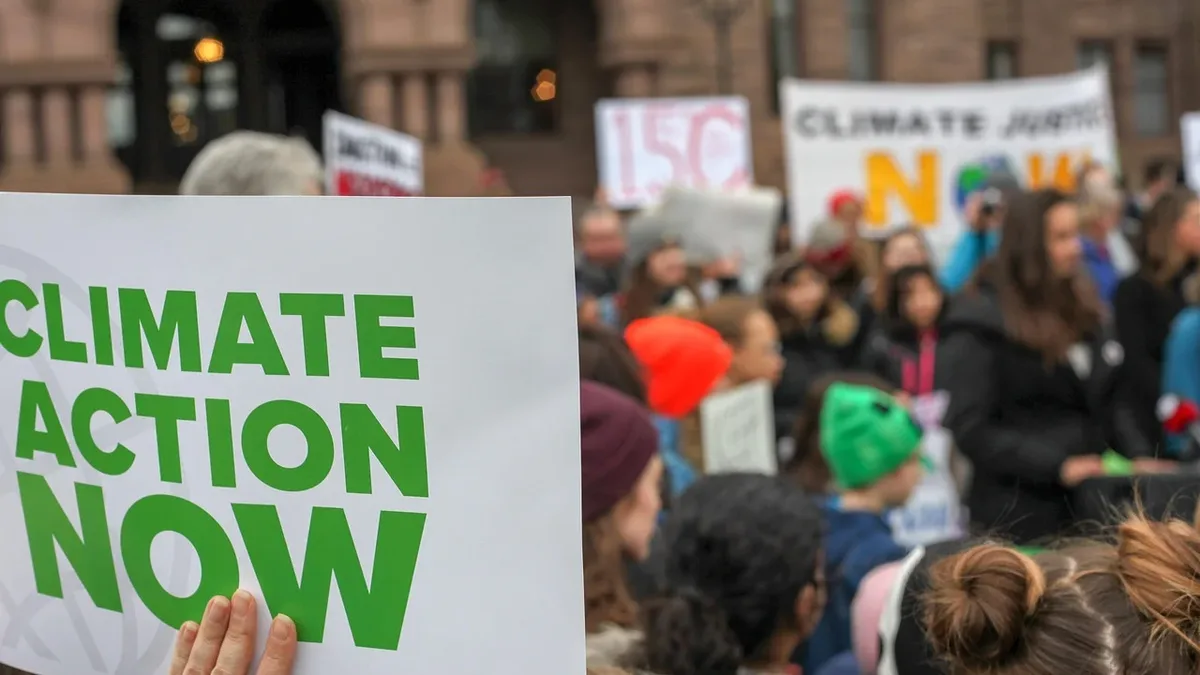
Pacific Leaders Demand Urgent Climate Action at Pre-COP31 Summit
Pacific leaders and UN officials warn exceeding 1.5°C warming will cause irreversible harm, urging accelerated global action on finance and emissions...
UNDP Report Reveals Deepening Multidimensional Poverty in Myanmar
A UNDP report shows over two-thirds of Myanmar's population faces multidimensional poverty or is at risk, driven by conflict, climate shocks, and...
Brazil's BRICS Diplomacy Balances Reform and Cohesion
Brazil's foreign minister attended the BRICS summit in New Delhi, where the bloc reaffirmed support for the U.N. and the Paris climate agreement.

Africa Battles Climate Extremes Amid El Niño Threat
African countries are facing severe climate-related challenges, including wildfires, drought, and flooding, as a rare 'super' El Niño climate pattern...