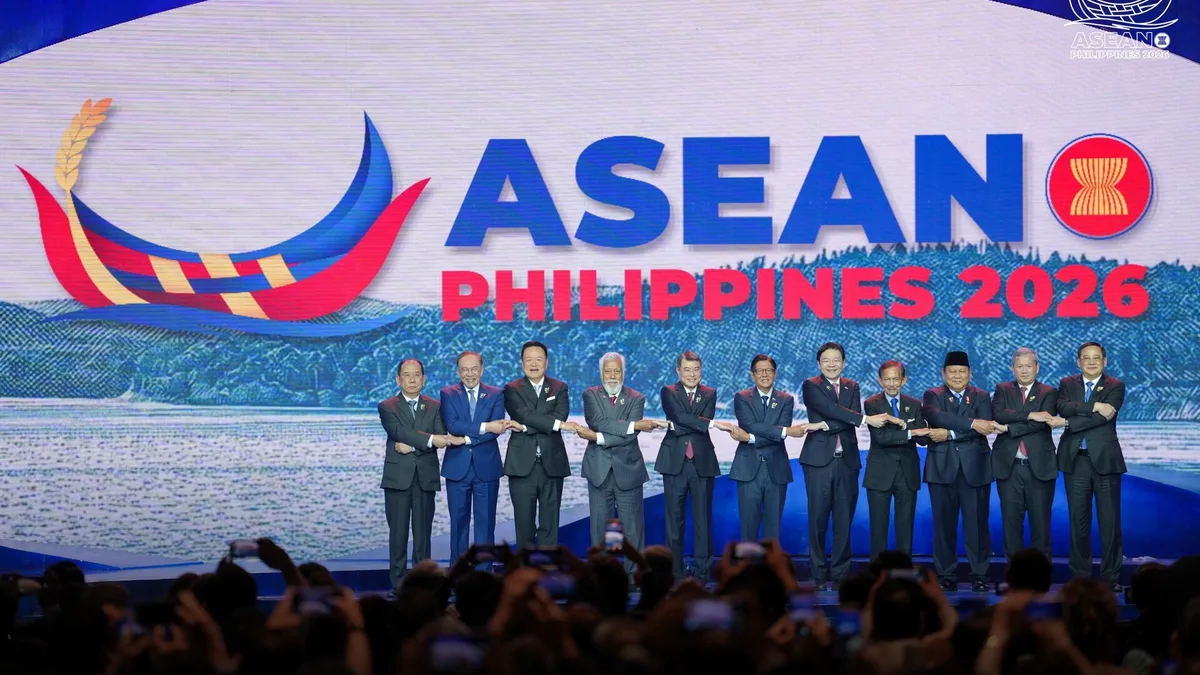
Asean Summit 2026
| Official name | ASEAN Summit 2026 |
|---|---|
| Host country | To be determined |
| Scheduled year | 2026 |
| Primary participants | Heads of state/government of ASEAN member states |
| Typical agenda scope | Regional cooperation, economic integration, political-security dialogue |
| Governing framework | ASEAN Charter |
| Summit series | ASEAN Summit |
Origin and history
The ASEAN Summit is the highest policy-making body of the Association of Southeast Asian Nations (ASEAN), an intergovernmental organization founded in the 1960s. The first ASEAN Summit was held in Bali, Indonesia, in 1976, over a decade after the organization's founding with the Bangkok Declaration in 1967. These summits are not held in a fixed location but rotate annually among the ten member states, with the host country chairing ASEAN for that year. The 2026 iteration will be one in this continuous series of biannual meetings, typically comprising a main summit and related summits with external dialogue partners. The specific thematic focus and detailed agenda for the 2026 summit will be determined by the member state holding the ASEAN chairmanship that year, based on established regional priorities. Its historical lineage is directly tied to the evolution of ASEAN from a forum for confidence-building to a more integrated community with political-security, economic, and socio-cultural pillars.
What it is for
The ASEAN Summit serves as the primary platform for ASEAN leaders to set the strategic direction and policy agenda for the organization. Its core function is to deliberate and make decisions on key issues affecting the region, including economic integration, regional security, and socio-cultural cooperation. A significant portion of the summit's work involves reviewing and guiding the implementation of the ASEAN Community Blueprint, which outlines goals for a unified community. It also formally adopts major ASEAN agreements, declarations, and frameworks that become the governing instruments for regional cooperation. Furthermore, the summit provides the setting for ASEAN leaders to engage collectively with leaders of external powers like China, the United States, and Japan during related sideline meetings. Ultimately, it functions as the supreme instrument for building consensus and expressing collective political will among the ten diverse member states.
Pros and cons
A primary advantage of the ASEAN Summit is its role in maintaining continuous high-level diplomatic engagement, which helps manage tensions and prevent conflicts between member states through established dialogue rituals. It provides a structured, predictable calendar for regional decision-making, allowing for the steady, if incremental, advancement of community-building projects like the ASEAN Economic Community. However, a significant con is that the consensus-based decision-making model, while preserving harmony, often leads to lowest-common-denominator outcomes that lack enforceability and can stall meaningful action on sensitive issues. The rotating chairmanship system can result in inconsistent momentum, as priorities and administrative capacity vary dramatically from one host to the next, causing some initiatives to lose steam. Participants and observers often regret the summit's tendency to produce lengthy, aspirational joint statements that are not matched by concrete implementation on the ground, creating a perception of talk over action. A common mistake is to overestimate the summit's capacity for rapid crisis resolution, as its formal, pre-negotiated nature is ill-suited for addressing fast-breaking emergencies, which are often handled through other ministerial or informal channels.
Who it suits
The ASEAN Summit primarily suits the diplomatic and governmental apparatuses of the ten member states, for whom it is an indispensable fixture of regional statecraft and a mandatory diplomatic engagement. It is critically important for the ASEAN Secretariat and various sectoral bodies, as summit directives set their work program and provide the political authority for implementing regional agreements. The format suits major external dialogue partners like China, the United States, and the European Union, as it offers a efficient, single point of contact to engage with the collective ASEAN leadership and shape regional narratives. It also suits businesses and investors with pan-ASEAN interests, as summit declarations on economic integration can signal future regulatory directions and market opportunities, despite the slow pace of change. Academic and policy researchers focused on Southeast Asian regionalism find the summit's outputs essential for analyzing official positions and tracking the evolution of regional norms and agreements. However, it does not suit actors seeking binding legal commitments or rapid institutional reform, as the process is deliberately gradualist and sovereignty-preserving by design.
Latest Asean Summit 2026 news
Latest reporting

Brazil's 2026 Election Runoff Pits Lula Against Flávio
The 2026 UN General Assembly precedes Brazil's October 4 general election, with a presidential runoff likely on October 25.

UN General Debate 2026 Dominated by AI Governance Calls
The 2026 UN General Assembly General Debate concluded with AI emerging as the dominant global concern, surpassing climate change and human rights in

UNGA 2026 Debate on AI Governance and Migration Pressures
Global leaders at the UN General Assembly's 2026 debate clashed over AI governance and migration, with China and Singapore urging controlled...

Trump-Xi Summit Extends Trade Truce, Leaves Taiwan Tensions
The second Trump-Xi summit of the year ended with a two-month extension of the October trade truce and mutual incentives for future meetings, but no...
U.S.-China Relations Face Rotting Foundation Despite Summit
Ahead of the Trump-Xi summit, an analysis warns that bipartisan U.S. Hostility and mutual economic threats are undermining the relationship, despite...

Brazil's BRICS Diplomacy Balances Reform and Cohesion
Brazil's foreign minister attended the BRICS summit in New Delhi, where the bloc reaffirmed support for the U.N. and the Paris climate agreement.