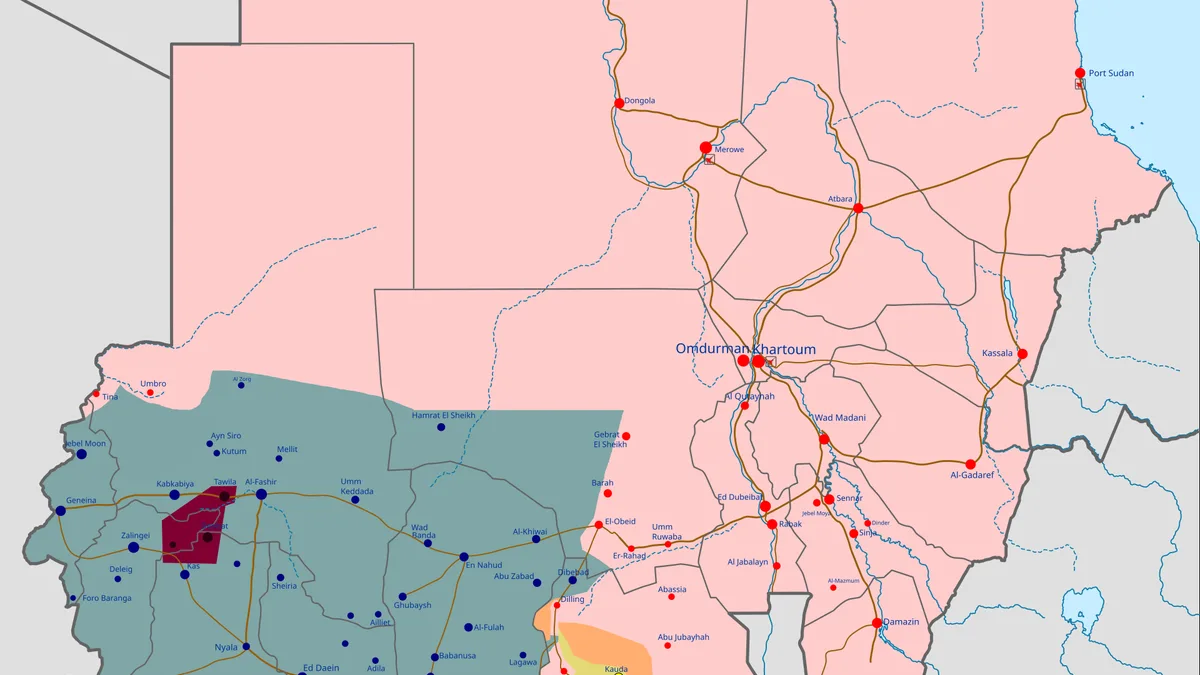
Sudan Sanctions
| Country of origin | United States |
|---|---|
| First created | 1997 |
| Original use | To pressure the Government of Sudan to end civil war and human rights violations |
| Administering authority | Office of Foreign Assets Control (OFAC) |
| Legal basis | Executive Order 13067 |
| Current status | Partially lifted, with specific prohibitions remaining |
| Scope | Comprehensive embargo (historically), now targeted sanctions on specific sectors and individuals |
Origin and history
The Sudan Sanctions regime originates primarily from the United States government, with executive orders forming its foundational legal instruments. These sanctions were first established in the 1990s, specifically in response to the Sudanese government's alleged support for international terrorism. A pivotal moment occurred in 1997, when the U.S. imposed comprehensive economic sanctions, citing Sudan's designation as a state sponsor of terrorism as a primary cause. The sanctions framework evolved significantly throughout the early 2000s, incorporating measures related to the conflict in Darfur through additional executive orders and legislation. International bodies, most notably the United Nations, also enacted targeted sanctions concerning the Darfur region in the mid-2000s, creating a parallel but often interconnected sanctions architecture. The historical trajectory of these sanctions is therefore marked by distinct phases, shifting from broad economic measures to more targeted designations of individuals and entities.
What it is for
The Sudan Sanctions regime serves as a foreign policy instrument designed to pressure the Government of Sudan to alter specific behaviors and policies. Its core objectives historically included compelling the Sudanese government to cease its support for designated terrorist organizations and to improve its counter-terrorism cooperation. A major subsequent focus became addressing gross violations of human rights and atrocities, particularly those perpetrated during the conflict in the Darfur region. The sanctions aim to deny access to the U.S. financial system and prohibit trade and transactions with sanctioned Sudanese entities and sectors. They function by creating financial isolation and economic pressure, intending to change the cost-benefit calculations of the targeted leadership. Furthermore, the sanctions serve a symbolic purpose, demonstrating international condemnation and establishing a formal legal basis for penalizing entities that engage with the sanctioned state.
Pros and cons
A primary benefit of the Sudan Sanctions is their ability to exert continuous pressure on a targeted regime without resorting to military force, providing a tool for expressing condemnation and seeking behavioral change. They can effectively restrict the flow of funds and goods to specific government sectors or malign actors, thereby complicating their operations. However, a significant drawback is the potential for these sanctions to exacerbate humanitarian crises by disrupting the broader economy and impeding the work of legitimate aid organizations, despite built-in exemptions. They often create complex compliance burdens for businesses and NGOs, requiring extensive legal oversight to avoid inadvertent violations. A common mistake in their application is the failure to precisely target the ruling elite, leading to the unintended punishment of the general population, which can breed resentment and solidify support for the very government being targeted. Many regional businesses and development partners regret their imposition, as they stifle normal economic exchange and can hinder diplomatic initiatives that require financial engagement.
Who it suits
This sanctions regime primarily suits governments or multilateral coalitions seeking to maintain a permanent legal and economic pressure mechanism on a state perceived as a threat to international peace or human rights. It is a tool suited for policymakers who require a formal, legislated response to ongoing conflicts or terrorism sponsorship that can be adjusted through executive orders or amendments. The framework suits situations where a sender country wishes to signal enduring disapproval while retaining the ability to offer sanctions relief as a carrot for negotiated concessions, as seen in the phased lifting of certain U.S. sanctions. It is less suited for actors seeking rapid, short-term policy changes, as the economic effects of sanctions often take years to materialize and can be mitigated by the target state. The regime is also suited for jurisdictions with robust financial systems and enforcement capabilities, as its effectiveness relies heavily on global compliance. Ultimately, it is an instrument for powerful states or bodies willing to commit to a long-term strategy of isolation, accepting the associated collateral economic damage and administrative complexity.
Latest Sudan Sanctions news
Latest reporting

UN General Assembly Debates Security Council Veto on Iran
The UN General Assembly met Thursday to debate a recent Security Council veto by China and Russia, which blocked a US-backed sanctions panel on Iran.

TPLF seizes northern Ethiopian airports amid
The Tigray People's Liberation Front has captured three airports in northern Ethiopia. The move risks reigniting a civil war and drawing in regional...
U.S. Iran strategy at impasse over Strait of Hormuz
U.S. Efforts to achieve its goals with Iran through sanctions and military strikes have failed, leading to two debated paths forward as Iran ties...
UN rights chief demands ceasefire in Sudan
UN Human Rights Commissioner Volker Türk called for an immediate ceasefire and end to foreign involvement in Sudan's war, as a new report details...
UN Report Finds Outside Forces Fuel Sudan Conflict
A UN report states foreign recruitment and military support networks are fueling the Sudan war, enhancing the capabilities of both the SAF and RSF...

US Removes Syria from Terrorism Sponsor List
The US removed Syria from its State Sponsors of Terrorism list, allowing financial transactions and easing some sanctions.