China Opens First Overseas Air Facility at Laos' Ban Keun Airport
China has established a joint military support and training center at Ban Keun airport in Laos, its first publicly acknowledged overseas facility focused on air power, expanding its security footprint in mainland Southeast Asia.
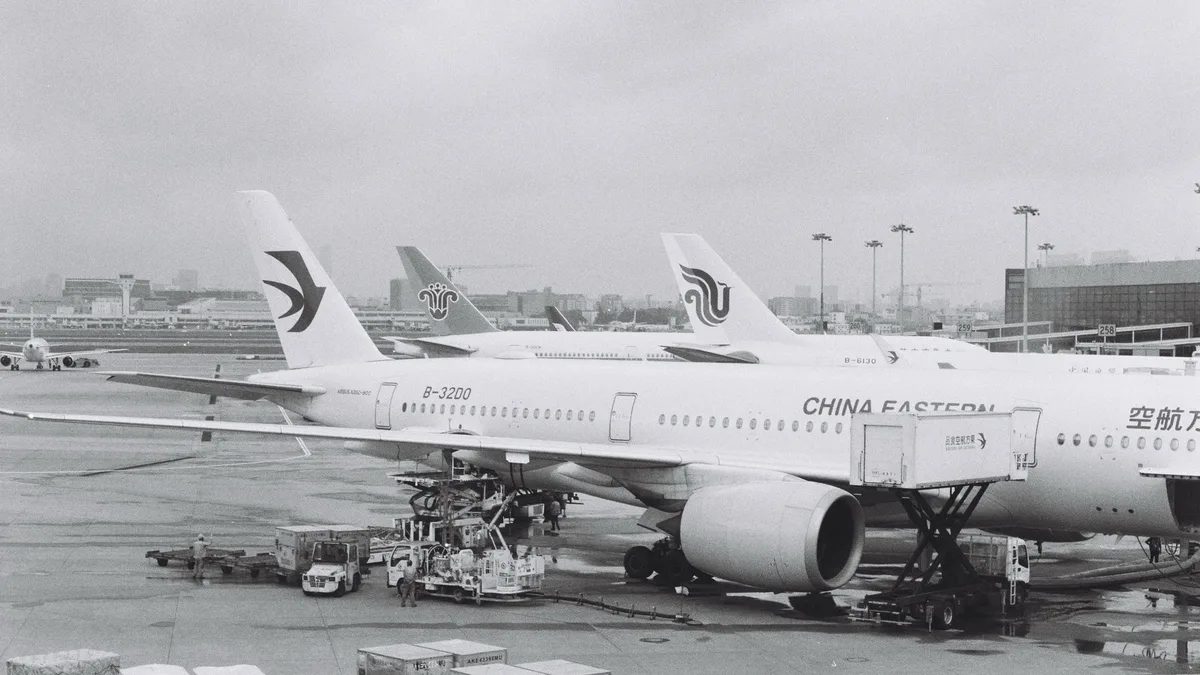
China has inaugurated a joint support and training center at Ban Keun airport in Laos. The Chinese Ministry of Defense announced the 'China-Laos Joint Support and Training Center' on September 29, a facility jointly run with Laos located about 30 miles north of Vientiane near the Thai border.
Facility Details and Strategic Implications
Satellite imagery shows the airfield under construction with a 2,000-meter (6,560-foot) runway and a parallel taxiway. The apron has parking spots for about two dozen aircraft, with eight light attack aircraft and support vehicles already observed on site.
While insufficient to support long-range bombers, the joint center is expected to enhance the PLA Air Force's logistics and intelligence capabilities. Analysts say it will improve China's power projection across mainland Southeast Asia. The runway could potentially be extended by another 3,280 feet, which would allow it to accommodate larger aircraft, including bombers.
China's Positioning and Official Stance
China carefully avoids calling the facility a 'base.' The Chinese Ministry of Defense stated it includes the 'China-Laos Friendship Aviation Academy' and is intended to help Laos strengthen its air force pilot training. Officials said the center is "not targeted at any third party." China has not confirmed whether it plans to permanently station aircraft and crews there. The state-run Global Times cited an expert saying there would be no independent Chinese garrison or exclusive use rights. Laos' government did not respond to multiple requests for comment.
Regional Context and Rival Influences
The Ban Keun airfield joins Djibouti and Cambodia's Ream Naval Base as nodes in China's expanding overseas security infrastructure. Cambodia, Laos, and Thailand maintain deep military relationships with Beijing. Cambodia's Ream Naval Base, which opened in 2025 under Cambodian control, houses a rotating Chinese naval deployment.
This expansion coincides with renewed U.S. engagement. After a ten-year hiatus, Washington and Phnom Penh plan to relaunch joint military exercises in 2027. Cambodia welcomed a U.S. Navy visit to Ream Naval Base earlier this year. The U.S.-Thai military exercise Cobra Gold remains the largest in Southeast Asia, with both nations intending to sign a new joint vision statement by the end of 2026.
Expert Assessments and Regional Perceptions
Analysts view the site as a limited but symbolic advance. Greg Poling, director of the Asia Maritime Transparency Initiative, said the airfield does not radically alter the balance of power or give China significant force projection toward the Strait of Malacca. He described it as a 'target of opportunity' and part of a strategy resembling 'playing roulette than poker' with 'small bets over the board that occasionally pay off.' He noted it is a concern for neighboring Vietnam due to competing South China Sea claims. Vietnam's Foreign Ministry did not respond to requests for comment.
The Institute for the Study of War assessed the facility is not yet equipped for major combat operations but said the location alone makes it significant. It would give the PLA alternate routes to access disputed South China Sea areas and strategic air routes around Vietnam.
Regional alignments are shifting. Indonesia, Malaysia, and Thailand have established 2+2 dialogues with China. Beijing has surpassed the United States as Bangkok's primary arms supplier, and Indonesia expects delivery of J-10 fighter jets from China. Cambodia, Laos, Myanmar's junta, and Vietnam have formally signed on to China's Global Security Initiative, which promises internal security assistance. Beijing upgraded its 2+2 security dialogues with Cambodia, Laos, and Vietnam to a 3+3 format in 2026 by including internal security ministries.
An ISEAS survey in 2026 found a majority of ASEAN elites would side with Beijing if forced to choose, a reversal from 2025 when a majority favored the United States. In 2024, China led at 50.5 percent. The same survey found 90.6 percent of Thai respondents expressed concern about China's influence.
Thailand's Defense Ministry spokesperson Rear Adm. Surasant Kongsiri said Thailand does not see the facility as a threat but will continue to watch the situation. He stated Laos has the legitimate freedom to choose agreements with partners under sovereign rights and international law. ASEAN capitals are actively diversifying relationships with Europe, Japan, the Middle East, Russia, and South Korea as alternatives to both China and the United States.
Washington faces policy challenges, as its promotion of democracy and human rights can alienate governments, and a great-power competition lens washes out regional threat distinctions. The Biden administration's 'democracies versus autocracies' framing alienated many in Southeast Asia, while President Trump's deemphasis of values facilitated renewal with Cambodia and Thailand but engaged the Myanmar junta. During a 2025 joint crackdown on scam centers, a senior Chinese official oversaw the repatriation of Chinese detainees from Myanmar through Thailand. The official later apologized for the 'misunderstanding' of China's rapid actions that generated the perception it does not respect Thai sovereignty.