Russia Develops Rassvet Satellite Network to Replace Starlink
Russia is advancing its Rassvet satellite constellation with Chinese manufacturing support to create a military communications network for use in Ukraine, as unannounced Starlink restrictions disrupt Ukrainian operations.
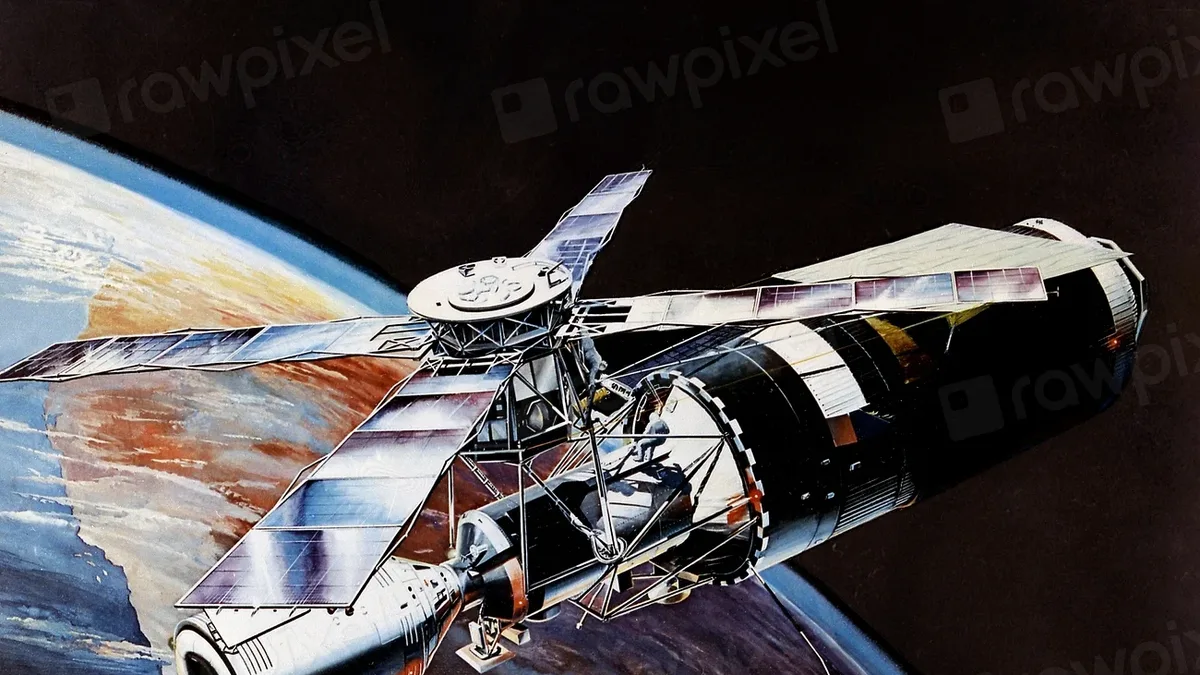
Unannounced restrictions on Starlink in Ukraine have disrupted military operations, including drone missions, without prior warning. The restrictions, introduced on October 13, present fresh challenges for Ukraine's military as it contends with Russian advances.
Russia advances Rassvet as Starlink alternative
Russia is developing the Rassvet satellite network as a domestic alternative to Starlink to support military operations in Ukraine. The project is being managed by Bureau 1440, an aerospace company owned by Yadro CEO Alexy Shelobkov. It aims to produce a network independent from Western control.
Russia has contracted Chinese satellite manufacturing through Shanghai Spacecom Satellite Technology (SSST) for Rassvet. China and SSST will support the project within the framework of established bilateral agreements. Rassvet is part of a broader axis of technological interdependence linking Moscow with Beijing, Tehran, and Pyongyang.
The network is an explicitly dual-use technology with military applicability and commercial viability thresholds. Analysts note Rassvet is unlikely to meet commercial viability targets with its current launch schedule but will have military applications in Ukraine before full operation. The initiative follows Starlink disabling unauthorized terminals used by Kremlin forces at the start of 2026.
Rassvet poses imminent threat to Ukraine
Ukrainian officials warn Rassvet could enable real-time Russian strikes by late 2026 or early 2027. According to Denys Sienik, Chargé d’Affaires at the Ukrainian Embassy in the United States, this would cause more death and destruction, posing a risk beyond Ukraine. Ukraine’s leadership and military intelligence state the satellite network poses serious threats to Ukraine, Europe, and the wider world.
Broader context of space militarization and sanctions
Longstanding allegations exist that Russia seeks to weaponize space, which is prohibited under international law. Former Russian president Dmitry Medvedev has raised the possibility of full-scale space warfare. In 2024, US intelligence reportedly accused Russia of trying to develop a nuclear space weapon designed to destroy satellites.
Expanding sanctions to limit critical components to Russia may be the most effective tool to slow Rassvet progress. Experts caution, however, that sanctions would likely only stall, not stop, the network's development.
Western dependence on Starlink creates strategic risks
Analysts warn Ukraine's reliance on Starlink exposes strategic vulnerabilities. American political analyst Peter Tase said Starlink had evolved from a commercial service into a strategically significant component of Ukraine’s defence infrastructure. He noted that unpredictability in access to such critical technology might raise questions among Washington’s allies about the reliability of defence partnerships.
Tase argued that if Ukraine and European countries question the reliability of this communications infrastructure, they would accelerate efforts to develop alternative systems. Such diversification may strengthen European resilience but could reduce Washington’s technological influence. He stated that Washington must ensure technological uncertainties do not undermine its broader diplomatic objectives or create instability in European security.
Ukrainian political analyst Valeriy Dymov said the Starlink restrictions represent a serious operational challenge as Russian forces continue efforts to capture remaining Ukrainian-controlled territories in Donbas. He said developments had intensified concerns about the vulnerability of military communications infrastructure. Satellite communications have become an integral part of modern battlefield operations, particularly for drone coordination and intelligence transmission.
Tase further stated that Russia’s territorial demands concerning Donbas create a fundamental disagreement over conditions for a negotiated settlement. He said Washington must balance ending the conflict with preserving the credibility of international security arrangements. Lasting peace cannot be achieved simply through territorial concessions imposed under military pressure, he added.
Ukraine’s military continues to face fresh challenges due to the Starlink restrictions while Russian forces press for control over Donbas.