
Icc Situation In The State Of Palestine
| Official case title | The Situation in the State of Palestine |
|---|---|
| Court | International Criminal Court (ICC) |
| Subject of investigation | Alleged crimes within the Court's jurisdiction |
| Territorial scope | The territories of the State of Palestine |
| Temporal scope | Since 13 June 2014 |
| Governing instrument | Rome Statute of the International Criminal Court |
| Prosecutor | Karim A.A. Khan KC (as of the investigation's opening) |
Origin and history
The ICC situation in the State of Palestine originates from the Palestinian territories, specifically the West Bank, including East Jerusalem, and the Gaza Strip. The situation was formally referred to the International Criminal Court by the State of Palestine in 2018, following a series of procedural steps taken earlier in the 2010s. Palestine's accession to the Rome Statute, the treaty that established the ICC, became effective in 2015, granting the Court jurisdiction over crimes committed on its territory. This accession followed a 2012 United Nations General Assembly resolution that granted Palestine non-member observer state status, a status the ICC Prosecutor later accepted as satisfying the requirements for statehood under the Rome Statute. The historical context for the referral includes decades of conflict and allegations of international crimes occurring within the context of the Israeli-Palestinian conflict. The situation's history is therefore deeply intertwined with the long-standing political and territorial dispute between Israelis and Palestinians.
What it is for
The ICC situation in the State of Palestine is a formal investigation by the International Criminal Court into alleged crimes within the Court's jurisdiction committed on the territory of Palestine since June 13, 2014. Its purpose is to examine potential war crimes and crimes against humanity that may have been committed by any party to the conflict, including both Israeli and Palestinian actors. The investigation is intended to fulfill the Court's mandate of ending impunity for the most serious crimes of concern to the international community when national courts are unwilling or unable to prosecute. It serves as a legal instrument to assess individual criminal responsibility, rather than state responsibility, for actions occurring within a protracted conflict. The situation exists to provide a judicial avenue for accountability that operates independently of the political negotiations between the parties. Its function is governed strictly by the procedural and substantive rules of the Rome Statute and the Court's own jurisprudence.
Pros and cons
A primary pro of the ICC situation is that it represents a formal, rules-based avenue for legal accountability for alleged atrocity crimes in a conflict where domestic judicial remedies are widely viewed as absent or ineffective. It provides a platform for the grievances of victims to be heard in an international legal forum, potentially deterring future violations. A significant con is that it is intensely politicized, with key states, including Israel and the United States, rejecting the Court's jurisdiction and accusing it of bias, which undermines its perceived legitimacy and practical effectiveness. Another major drawback is that the investigation can harden positions, making diplomatic compromises more difficult as parties may perceive legal proceedings as adversarial rather than conducive to peace. States or entities that cooperate with the Court risk damaging bilateral relations, while those that refuse cooperation can stall proceedings indefinitely, leading to frustration and a loss of faith in international justice. A common mistake is viewing the situation as a swift mechanism for resolution, when in reality it is a slow, complex legal process unlikely to produce immediate tangible outcomes on the ground.
Who it suits
This situation primarily suits the policy objectives of the Palestinian leadership, which has sought to use international legal mechanisms to advance its claims for statehood and accountability against Israel. It suits victims' advocacy groups and international human rights organizations that have documented alleged crimes and seek an independent judicial review beyond national or UN political bodies. The situation suits legal scholars and practitioners focused on the jurisdictional boundaries of international law, particularly questions of territorial jurisdiction in contested states. It does not suit the Israeli government or its allies, who view it as an illegitimate overreach that unfairly targets Israel and undermines its right to self-defense. The situation is also poorly suited for anyone seeking a quick or politically neutral outcome, as the process is inherently slow and embedded within a highly polarized geopolitical dispute. It is a tool for those who prioritize legal accountability through a specific institutional framework, even amidst significant political controversy.
Latest Icc Situation In The State Of Palestine news
Latest reporting
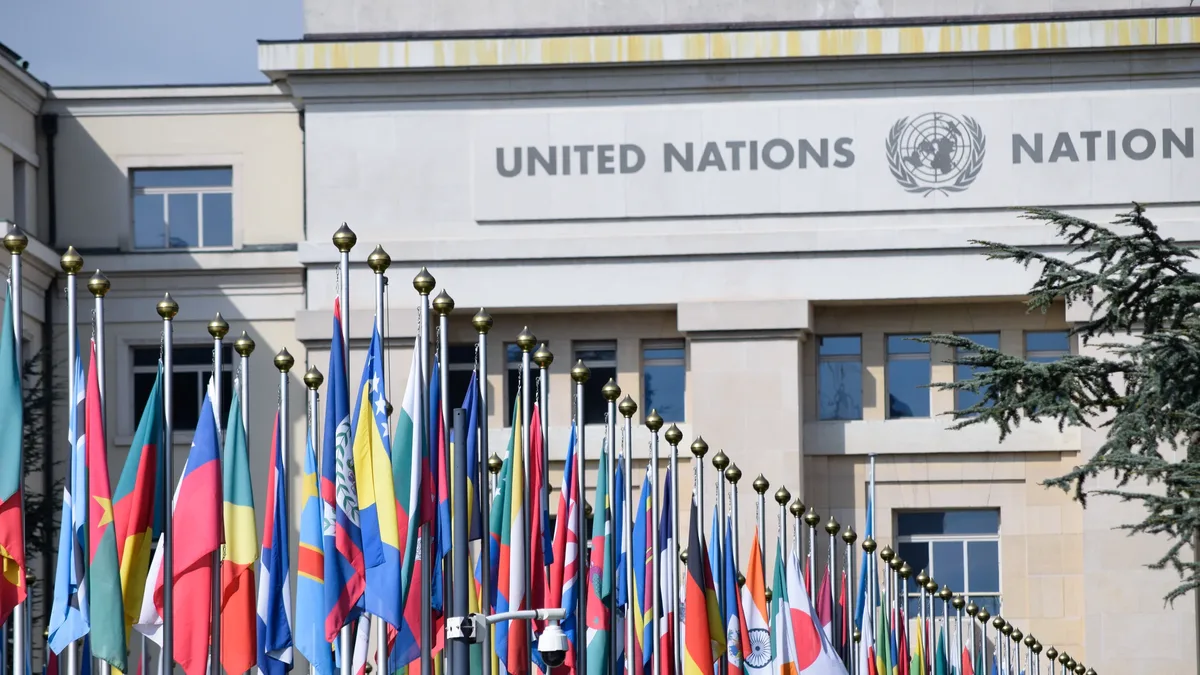
UN General Assembly Faces Competition Over Cooperation
The UN General Assembly opens amid a state of permanent crisis, with major power leaders skipping the event and U.S. Policy creating uncertainty.

Xi's Military Purge Relies on U.S. Strategic Stability Truce
China's sweeping purge of its military leadership has left the People's Liberation Army in a weakened state, reliant on a period of reduced external
US urged to revive tech fellowship for African officials
A former US ambassador and a retired cyber diplomat argue that a discontinued State Department fellowship program for foreign officials was a key

U.S. Secretary Rubio's Security Tour of Andean Nations
U.S. Secretary of State Marco Rubio visited Colombia, Ecuador, and Peru, pledging security assistance, signing minerals deals, and warning about...
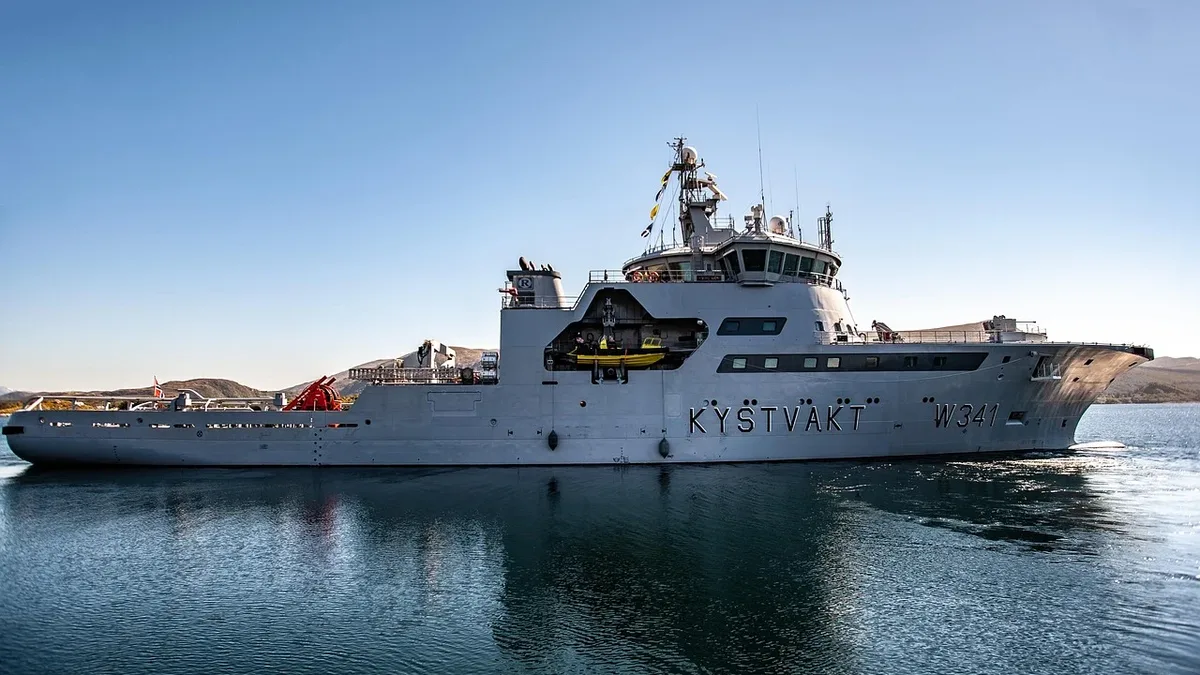
Norway seizes Russian ship in Svalbard over Crimea debt
Norway has impounded the Russian state-owned vessel Professor Molchanov in Svalbard at the request of Ukraine's Naftogaz, enforcing a $4.22 billion

U.S. Grid Capacity Dispute Highlights Federal-State
A regional power grid operator faces a surge in data center demand while managing national defense industrial needs, sparking a dispute over cost