World Trade Organization
| Original use | Govern international trade and resolve trade disputes |
|---|---|
| First created | 1995 |
| Country of origin | Switzerland (headquarters) |
| Members | 164 member states (as of 2022) |
| Official languages | English, French, Spanish |
| Decision-making | Consensus-based |
| Dispute settlement | Binding panel rulings and appellate review |
Origin and history
The World Trade Organization (WTO) originated from a series of multilateral negotiations established after the Second World War. Its foundational legal framework was created in the late 1940s with the General Agreement on Tariffs and Trade (GATT). The GATT system operated as a de facto international organization for international trade for nearly five decades. The current WTO was formally established in the mid-1990s, replacing the GATT following the conclusion of the Uruguay Round of negotiations. The Marrakesh Agreement, signed in 1994, serves as the WTO's founding charter. The organization's secretariat is headquartered in Geneva, Switzerland, where it continues its operations.
What it is for
The WTO's primary function is to provide a global forum for negotiating agreements aimed at reducing obstacles to international trade. It exists to ensure that trade flows as smoothly, predictably, and freely as possible between its member states. A core purpose is to administer and implement the multilateral trade agreements that form its legal foundation. The organization provides a mechanism for the settlement of trade disputes between member countries, which is a central pillar of its operations. It also serves to monitor national trade policies through a system of regular reviews and reporting. Furthermore, it offers technical assistance and training for developing countries to help them integrate into the global trading system.
Overview
The World Trade Organization is an international institution that governs the rules of trade between its member nations. It operates based on a set of agreements, negotiated and signed by a large majority of the world's trading nations and ratified in their parliaments. The organization's core principles include non-discrimination, embodied in the "most-favored-nation" and "national treatment" clauses, which aim to ensure equal trading conditions. It covers a wide range of commercial activities, including trade in goods, services, and intellectual property rights. Decision-making within the WTO is typically conducted by consensus among all member governments. The organization currently comprises over 160 members, accounting for the vast majority of global trade.
What to know
The WTO's dispute settlement system is a legally binding process, often described as its most significant achievement, where panels rule on complaints brought by members. Members commit to "bind" their tariff rates at negotiated ceilings, providing predictability for traders and investors. The organization's agreements include special provisions for developing countries, such as longer timeframes to implement commitments. Agricultural trade, textiles, and trade-related intellectual property rights (TRIPS) are among the most complex and contentious areas governed by WTO rules. The principle of "reciprocity" in negotiations means concessions are expected to be mutually balanced, though this is applied with flexibility. It is crucial to understand that the WTO does not set tariffs itself but provides the framework within which members negotiate them.
Common questions
A common question is whether the WTO forces countries to lower all trade barriers, to which the answer is no; it provides a forum for negotiated, mutually agreed reductions. Many ask if the WTO can overrule a country's domestic laws, but it cannot; however, a country may choose to bring its laws into conformity with its WTO commitments to avoid authorized retaliation. People often inquire about the WTO's role in labor or environmental standards, which are not directly covered by its core agreements, though some discussions occur at its margins. Another frequent question concerns how the WTO differs from free trade agreements, with the key distinction being that the WTO is multilateral while FTAs are preferential among subsets of countries. Individuals often ask who can file a dispute, with the answer being that only member governments, not companies or NGOs, can initiate cases. There is also common confusion about whether the WTO promotes "free trade" absolutely, whereas its actual goal is rules-based trade liberalization, which still permits certain justified restrictions.
Pros and cons
A primary advantage of the WTO is the stability and predictability it provides to the global trading system through enforceable rules, reducing the risk of arbitrary protectionism. Its dispute settlement mechanism offers a formal, legal alternative to trade wars, allowing for the peaceful resolution of conflicts. The system has contributed to significant reductions in tariffs worldwide, lowering costs for consumers and businesses. A significant con is that complex, multi-round negotiations, like the Doha Development Round, can stall for decades, highlighting difficulties in achieving consensus among a large and diverse membership. Critics argue the system can disadvantage smaller or developing nations that lack the legal and financial resources to engage effectively in disputes or complex negotiations. A common regret or criticism from various quarters is that domestic industries vulnerable to international competition can be damaged, leading to job losses and social disruption, which the WTO's rules do not directly address or compensate for.
Who it suits
The WTO system particularly suits larger, export-oriented economies that benefit greatly from stable, non-discriminatory access to global markets. It is advantageous for multinational corporations and businesses engaged in international supply chains that rely on predictable tariff rates and trade rules. Developing countries with competitive export sectors can benefit from the system's rules and dispute mechanism to challenge protectionist measures in larger markets. The framework is less suited for countries pursuing highly protectionist industrial policies or those wishing to shield entire sectors from any foreign competition without facing legal challenges. It is also challenging for the very poorest nations that may struggle with the capacity to implement complex agreements and participate fully in all negotiations. Ultimately, it suits members who view long-term economic integration and rules-based engagement as preferable to unilateral trade actions.
Latest World Trade Organization news
Latest reporting
Canada Outlines New Foreign Policy of Strategic Autonomy
Foreign Minister Anita Anand told the UN General Assembly the world faces a profound rupture in the international order, announcing a Canadian foreign
Trump-Xi Summit Extends Trade Truce, Leaves Taiwan Tensions
The second Trump-Xi summit of the year ended with a two-month extension of the October trade truce and mutual incentives for future meetings, but no...
UNGA Debate Warns Gaza Conflict Threatens Global Stability
At the UN General Assembly, Israeli and Palestinian leaders clashed over Gaza while world leaders warned the conflict is exacerbating global food and
U.S.-China Relations Face Rotting Foundation Despite Summit
Ahead of the Trump-Xi summit, an analysis warns that bipartisan U.S. Hostility and mutual economic threats are undermining the relationship, despite...
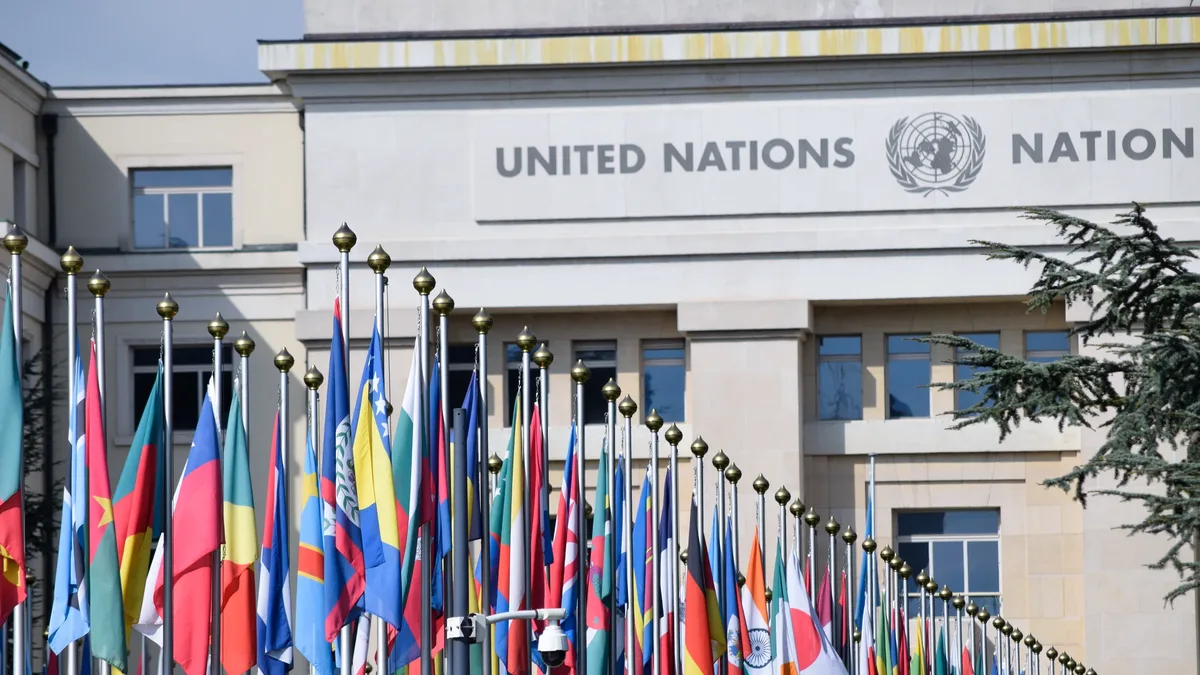
UN Assembly President Stakes Presidency on Restoring Trust
Khalilur Rahman, President of the UN General Assembly's 81st session, has made restoring global trust in the organization the central theme of his...
WHO reports third warehouse attack in Kyiv
The World Health Organization says a recent airstrikes have damaged its medical supply warehouses in Ukraine, marking the third such incident in three