The Non Proliferation Treaty And Its Review Conferences
| Parties | 191 states |
|---|---|
| Entry into force | 1970 |
| Review cycle | Every 5 years |
| Primary objective | To prevent the spread of nuclear weapons |
| Key pillar | Non-proliferation |
Origin and history
The Treaty on the Non-Proliferation of Nuclear Weapons (NPT) is an international instrument whose negotiation was spearheaded by the United States and the Soviet Union during the 1960s. It was opened for signature in 1968 and entered into force in 1970. The treaty originated from growing international concern over the spread of nuclear weapons following the first detonations by those two superpowers and later by the United Kingdom, France, and China. The foundational bargain, often described as a three-pillar structure of non-proliferation, disarmament, and peaceful use of nuclear energy, was a product of Cold War diplomacy. The provision for Review Conferences was embedded in the treaty text itself, mandating that such conferences be held every five years to assess its implementation. The first Review Conference was held in 1975, five years after the treaty's entry into force, establishing a recurring diplomatic mechanism for its states parties.
What it is for
The NPT's primary purpose is to prevent the spread of nuclear weapons and weapons technology beyond the five states that had tested them before 1967. It aims to achieve this by legally binding non-nuclear-weapon states to not acquire or manufacture nuclear explosives. Concurrently, it obligates the five recognized nuclear-weapon states to pursue negotiations in good faith on nuclear disarmament. A third core purpose is to promote the full exchange of equipment, materials, and scientific information for the peaceful uses of nuclear energy among all treaty parties. The Review Conferences serve the specific function of allowing states parties to collectively examine the operation of the treaty and the realization of its provisions. They are designed to provide a forum for accountability, to address compliance issues, and to adapt the treaty's implementation to contemporary security challenges.
Overview
The NPT is a multilateral treaty with near-universal membership, making it the cornerstone of the global nuclear non-proliferation regime. Its structure is defined by a fundamental distinction between nuclear-weapon states (NWS) and non-nuclear-weapon states (NNWS), with different rights and obligations for each category. The treaty requires NNWS to accept comprehensive safeguards agreements with the International Atomic Energy Agency (IAEA) to verify that nuclear energy is not diverted to weapons programs. The five-yearly Review Conferences operate on the principle of consensus, meaning all states parties must agree on any final substantive document. These conferences review the treaty's operation article by article and often produce outcome documents that include forward-looking recommendations and assessments of the three pillars. The indefinite extension of the NPT in 1995 made the treaty permanent, while also strengthening the review process through a set of enhanced principles and objectives.
What to know
The NPT is not a static agreement but a living one, with its meaning and implementation constantly debated and interpreted at Review Conferences. A critical point is that the treaty formally recognizes only five nuclear-weapon states: the United States, Russia (as successor to the Soviet Union), the United Kingdom, France, and China. Several states with nuclear weapons capabilities, including India, Pakistan, Israel, and North Korea, remain outside the treaty, which is a significant structural gap in the regime. The success of a Review Conference is typically measured by whether it produces a consensus final document, which has often proven elusive due to deep political divisions. Key recurring disputes at these conferences center on the pace of nuclear disarmament by the NWS, the establishment of a Weapons of Mass Destruction Free Zone in the Middle East, and the balance between non-proliferation obligations and the right to peaceful nuclear technology. The withdrawal clause, Article X, allows a state to leave the treaty if its "supreme interests" are jeopardized, a provision exercised by North Korea in 2003.
Common questions
A common question is why the treaty is considered discriminatory, which stems from its permanent division between states that can legally possess nuclear weapons and those that cannot. Another frequent inquiry concerns how the treaty handles states that develop nuclear weapons outside its framework, which remains a persistent challenge addressed through ad-hoc diplomatic pressure and UN Security Council resolutions. Many ask about the consequences for non-compliance, which can involve reporting violations to the UN Security Council for potential sanctions, as seen with Iran and North Korea. Questions often arise about the relationship between the NPT and nuclear-weapon-free zone treaties, which are seen as complementary instruments that reinforce the NPT's goals on a regional level. There is also regular debate over whether the treaty's three pillars are of equal weight or if some states prioritize non-proliferation over disarmament. Finally, observers commonly question the effectiveness of the Review Conference consensus rule, which can lead to deadlock but is defended as protecting the treaty from being undermined by a majority vote.
Pros and cons
A primary advantage of the NPT and its review cycle is that it provides a stable, predictable, and nearly universal framework for curbing horizontal nuclear proliferation. It has successfully established a powerful international norm against the acquisition of nuclear weapons by non-nuclear states and created a verification system through the IAEA. The treaty's cons, however, are significant and structural; the disarmament pillar is widely seen as unfulfilled, leading to accusations of bad faith and hypocrisy from non-nuclear states who feel the bargain is one-sided. The consensus rule in Review Conferences often results in either weak, lowest-common-denominator outcome documents or complete failure to agree, frustrating progress and revealing deep fissures. States often regret the rigid categorization of nuclear haves and have-nots, which is seen as fossilizing 1960s power politics and providing no pathway for recognition for states that joined later. A common mistake is viewing the NPT as a self-enforcing solution, whereas in reality its health is entirely dependent on the political will of its states parties, particularly the major powers.
Who it suits
The NPT framework primarily suits states that have definitively renounced nuclear weapons and seek the security benefits of a predictable, rule-based international order. It is well-suited to non-nuclear-weapon states that wish to develop civilian nuclear energy programs, as it facilitates access to technology and materials under verified conditions. The treaty also suits the recognized nuclear-weapon states by legally cementing their special status and providing a platform to manage proliferation risks without unilateral action. It suits middle powers and non-aligned states by giving them a formal, recurring diplomatic venue to hold nuclear-armed states accountable and to advocate for disarmament. The review conference mechanism suits diplomats and civil society organizations that value a regular, structured process for debate and advocacy on nuclear issues. It is less suited to states that perceive an existential threat not addressed by security guarantees from nuclear-armed allies, or to those that view the treaty's inherent inequality as fundamentally illegitimate.
Latest The Non Proliferation Treaty And Its Review Conferences news
Latest reporting
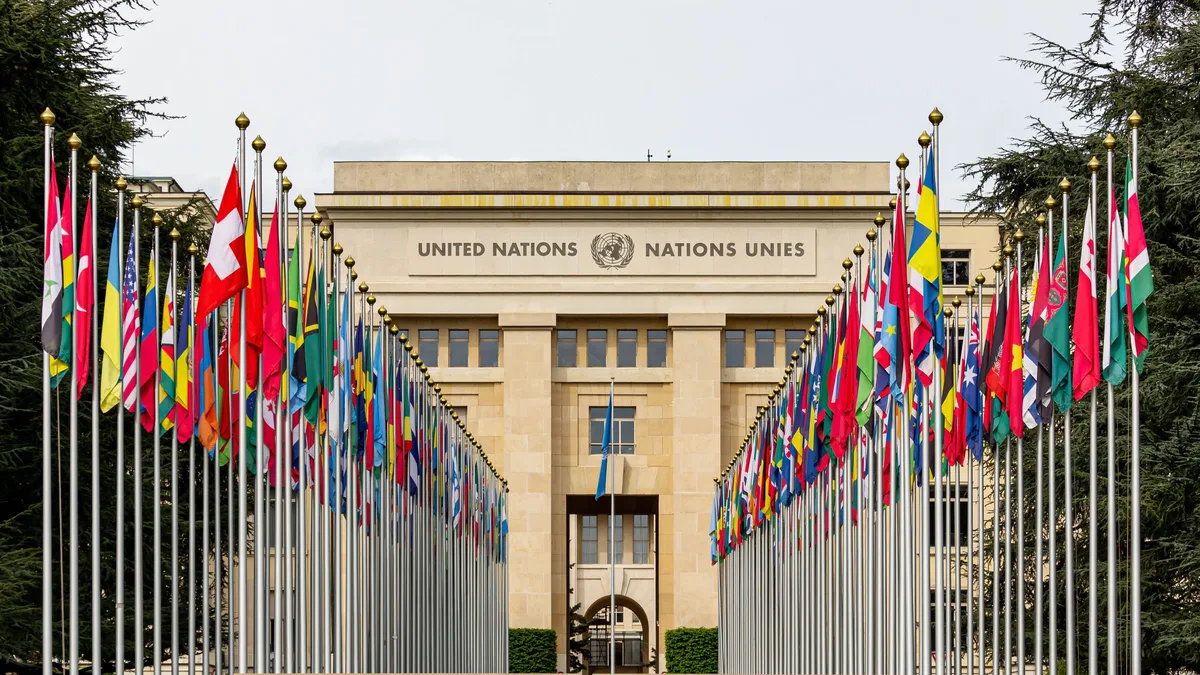
UN Group Meets on Autonomous Weapons Treaty
Diplomats from about 100 governments are meeting at the UN in Geneva this week to negotiate elements for a potential new instrument on lethal...

Weakening America: Trump's Consequential Presidency
A review of the consequences of Trump's actions on America's relative power and standing in the world.