Recognition Of Governments And Credentials Disputes
| Governing Instrument | Treaty, convention, or customary international law |
|---|---|
| Typical Triggers | Change in government, territorial dispute, or civil war |
| Primary Legal Effect | Acceptance of a state's right to represent its territory |
| Common Diplomatic Forms | De jure recognition, de facto recognition, or non-recognition |
| Typical Consequences | Ability to conclude treaties and access international organizations |
| Key Dispute Forums | United Nations credentials committee or regional bodies |
| Central Legal Principle | Sovereignty and non-intervention in domestic affairs |
Origin and history
The practice of formally recognizing governments and the related disputes over diplomatic credentials are foundational elements of the modern state system. These concepts evolved alongside the development of international law and diplomatic norms over several centuries. The core principles emerged from state practice as sovereign entities sought to regulate their interactions following major historical events that reshaped the political world. The need for a framework became particularly acute during periods of widespread political instability, revolution, or decolonization. This established a body of customary international law, later supplemented by multilateral treaties, though no single universal treaty governs all aspects. The historical development is marked by shifts between declaratory and constitutive theories of recognition, reflecting changing political philosophies.
What it is for
This framework exists to manage bilateral relations between states following a change in government, especially by non-constitutional means. Its primary function is to provide a formal mechanism for one state to accept the legitimacy of another's new governing authority as the representative of its state. This acceptance allows for the full resumption of diplomatic relations, including the exchange of ambassadors and the functioning of embassies. It serves to clarify which entity is entitled to state assets, enjoys diplomatic immunities, and can enter into binding international agreements on behalf of the state. The process of credentialing diplomats formalizes this acceptance by accrediting specific individuals as official representatives. Ultimately, it is a tool for maintaining orderly international relations by providing clarity on who speaks for a state.
Overview
Recognition of governments and credentials disputes operate within the complex intersection of international law, politics, and diplomacy. Government recognition is a sovereign political act by a state, distinct from the continuous recognition of the state itself. It often involves an assessment of the new government's effective control, stability, and its commitment to international obligations. A credentials dispute arises when two or more competing entities claim to be the legitimate government of a state, leading to conflicts over which representative is seated in international organizations or accepted by host countries. Such disputes are frequently adjudicated through the rules of procedure in bodies like the United Nations General Assembly. The process is inherently political, despite being framed by legal principles, as states use recognition as an instrument of foreign policy.
What to know
It is crucial to understand that recognition is a discretionary political act, not a legal obligation, though it carries significant legal consequences. The "effective control" doctrine is a common benchmark, where a government controlling territory and population is recognized, but states often apply additional political criteria. Non-recognition does not necessarily mean the government is illegal under international law; it simply means formal diplomatic relations are withheld. Collective recognition through international organizations can occur but does not bind individual member states' bilateral policies. Credentials committees in bodies like the UN can make procedural decisions to seat a delegation without constituting formal recognition of that government by all members. Prolonged non-recognition can create practical problems, such as frozen state assets and stateless diplomats, but the unrecognized government may still be held to the state's international duties.
Common questions
A common question is whether recognition implies approval of a government's policies or legitimacy; legally, it is an acknowledgment of factual control for diplomatic purposes, though politically it can be seen as endorsement. Many ask what happens to an embassy during a power struggle; often, embassy staff may remain in place under a charge d'affaires until the situation is resolved, maintaining minimal relations. People inquire if a coup automatically ends recognition; it does not, as states often wait to assess the new regime's stability and intentions before withdrawing recognition. A frequent point of confusion is the difference between recognizing a state and recognizing its government; state recognition is typically permanent, while government recognition can change. Questions arise about who represents a state in international courts during a dispute; this is a contentious issue often decided by the court's own rules based on the views of the UN General Assembly or other factors.
Pros and cons
A primary advantage of this system is that it provides a structured, if political, method for managing international relations during internal upheavals, preventing chaotic or conflicting engagements. It allows states to signal disapproval of unconstitutional seizures of power or human rights abuses by withholding recognition, potentially isolating offending regimes. However, a significant con is that the process is highly politicized and inconsistent, leading to double standards where similar situations are treated differently based on strategic interests. This inconsistency undermines the perceived legitimacy of international law. States often regret engaging in premature recognition, which can be seen as interference and may antagonize other factions, complicating future relations. A common mistake is for states to conflate recognition with endorsement, failing to use the tool with sufficient strategic foresight, which can lock them into untenable diplomatic positions for years.
Who it suits
This framework primarily suits established, stable states that value predictable international order and have significant diplomatic resources to analyze and manage recognition decisions. It is a tool well-suited to powerful states that wish to exert political influence, as they can use recognition or non-recognition as a lever in foreign policy. It is less suited to situations of complex power-sharing agreements or national unity governments, where clear "effective control" is absent, often leading to prolonged disputes. The system suits political realists who accept that law follows politics in international affairs, rather than idealists seeking purely legal or moral criteria. It is also necessary for international organizations, which require clear procedural rules to determine representation and maintain their operational functionality despite political divisions among member states.
Latest Recognition Of Governments And Credentials Disputes news
Latest reporting

Trump Terminates AGOA Benefits for South Africa and Rwanda
The Trump administration has removed South Africa and Rwanda from the African Growth and Opportunity Act, ending their duty-free access to the U.S...

Milei Seeks Trump's Support on Falklands Claim
Argentine President Javier Milei is pushing for U.S. Recognition of Argentina's claim to the Falkland Islands, use his alliance with Donald Trump.
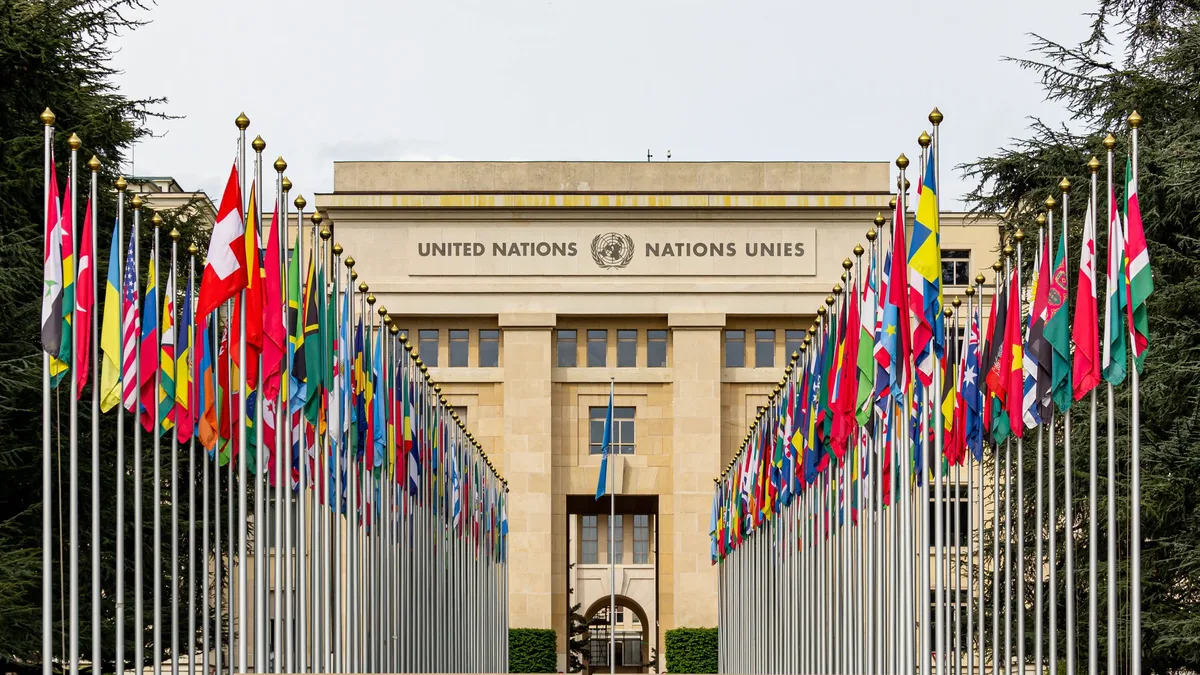
UN Group Meets on Autonomous Weapons Treaty
Diplomats from about 100 governments are meeting at the UN in Geneva this week to negotiate elements for a potential new instrument on lethal...