Multilateral Negotiations
| Parties | Two or more sovereign states |
|---|---|
| Governing instrument | Treaty or international agreement |
| Primary purpose | To establish a common framework or rules on a specific issue |
| Scope of application | Defined by the treaty's subject matter and geographic area |
| Entry into force | Upon fulfillment of conditions specified in the treaty |
| Depositary | A designated state or international organization |
| Amendment procedure | As specified in the treaty text |
Origin and history
The formal practice of multilateral negotiations as a distinct diplomatic instrument evolved from the congress system established in Europe following the Napoleonic Wars in the early 19th century. Its modern institutional foundations were significantly strengthened with the creation of the League of Nations in the aftermath of the First World War. The catastrophic failure of bilateral and limited alliance diplomacy to prevent the Second World War led to a decisive institutionalization of the practice with the founding of the United Nations in 1945. The post-war period saw a rapid expansion of multilateral negotiation forums, driven by decolonization and the emergence of new states. The latter half of the 20th century witnessed the proliferation of multilateral negotiations addressing global issues such as trade, environment, and disarmament. This historical trajectory marks a shift from ad-hoc great power conferences to a permanent, rules-based system of international engagement involving numerous parties.
What it is for
Multilateral negotiations serve as the primary instrument for creating and sustaining collective international rules and public goods that cannot be achieved by two states alone. They are used to establish binding international treaties and conventions on issues like maritime law, human rights, and the non-proliferation of weapons. This instrument manages global commons, such as the atmosphere, outer space, and the high seas, by developing shared regulatory frameworks. It provides a forum for conflict prevention and resolution by engaging a broader community of states to apply diplomatic pressure and build consensus. Multilateral negotiations facilitate the coordination of transnational responses to challenges like pandemics, financial crises, and climate change. They also function as a platform for norm-building, where emerging standards of state behavior are debated and gradually codified into international law.
Overview
A multilateral negotiation is a structured diplomatic process involving three or more sovereign states aiming to reach a collective agreement on a specific issue. The process is characterized by complex coalition-building, where states form blocs based on shared interests, such as the G77 or regional groups, to amplify their bargaining power. Formal procedures and rules of procedure, often modeled on UN practices, are critical for managing speaking rights, submitting documents, and reaching decisions, typically by consensus or qualified majority. The negotiation dynamic inherently involves trade-offs and package deals, where concessions on one issue are exchanged for gains on another unrelated issue to secure a final agreement. Secretariats of international organizations usually provide administrative and technical support, helping to draft texts and manage the logistical complexities. The final outcomes range from legally binding treaties to non-binding declarations, action plans, and the establishment of new international bodies or funds.
What to know
The principle of sovereign equality means all participating states have a formal right to participate, but in practice, power disparities significantly influence outcomes, with major states often setting the agenda. Consensus decision-making, while protecting minority interests, can lead to lowest-common-denominator agreements where ambitious provisions are diluted to avoid objection from a single state. The negotiation process is often bifurcated into formal plenary sessions for public positioning and crucial informal "informals" or corridor discussions where real bargaining occurs. National delegates operate under strict instructions from their capitals, limiting their flexibility and often making negotiations a process of coordinating fixed positions rather than free exploration. Implementation and compliance are separate challenges, as the negotiated agreement relies on subsequent national ratification and domestic legislation, which is not guaranteed. Understanding the specific rules of procedure for a given forum is essential, as they dictate the tactical options available to delegations for advancing or blocking proposals.
Common questions
A common question is how multilateral negotiations differ from simply holding multiple bilateral talks, with the key distinction being the pursuit of a single, collective agreement binding on all parties rather than a network of separate deals. States often ask why the process is so slow, which is due to the need to accommodate diverse national interests, achieve consensus, and the technical complexity of the issues under discussion. Many wonder if small states have any real influence, and while they can be marginalized on core security issues, they can exert significant leverage through cohesive bloc voting and by acting as honest brokers. A frequent query concerns the enforcement of agreements, as most multilateral treaties lack strong centralized enforcement and instead rely on reporting mechanisms, peer pressure, and the reputational costs of non-compliance. People question what happens when a key state, like a major power, refuses to join an agreement, which can severely undermine its effectiveness, as seen in various environmental and arms control regimes. Finally, there is the question of whether these negotiations achieve anything substantive, with the evidence showing they successfully establish foundational international law but often struggle with timely and ambitious action on pressing global problems.
Pros and cons
A primary advantage is the creation of stable, predictable, and legitimate international frameworks that reduce transaction costs and manage conflict between states. The process can legitimize global norms and spread best practices by engaging a wide membership in their creation. A significant con is the tendency toward bureaucratic inertia and slow pace, which can render responses to urgent crises inadequate and frustrate more proactive states. The consensus model often leads to watered-down agreements that satisfy the least ambitious party, a common regret for states that invested heavily in seeking strong outcomes. Complex coalition politics can result in hard-fought agreements that are subsequently undermined by a lack of ratification or implementation at the national level. A common mistake is for states to enter negotiations without a clear coalition strategy or understanding of the informal processes, leading to isolation and ineffective participation.
Who it suits
This instrument suits states that are highly integrated into the international system and derive significant benefits from global stability and rule-based order. It is particularly suited for middle powers and smaller states that can amplify their influence through skilled diplomacy and bloc leadership within a multilateral setting. States facing transnational threats that exceed their individual capacity to manage, such as environmental degradation or organized crime, find multilateral negotiations essential. It suits patient, bureaucratic foreign ministries with the expertise to navigate prolonged, technical discussions and a domestic political context that allows for incremental gains. Conversely, it is less suited for states pursuing rapid, unilateral foreign policy shifts or those deeply suspicious of international institutional constraints on their sovereignty. The forum also suits issue-specific coalitions of non-state actors, such as NGOs and industry groups, who use the process as a platform to advocate for global standards.
Latest Multilateral Negotiations news
Latest reporting

US and Partners Sign San Francisco Declaration on AI Supply Chains
The United States and nine partner nations signed the San Francisco Declaration on November 15, 2026, establishing a multilateral framework to secure...
Democratic Congress Reshapes Trump's Final Term Agenda
Democrats won control of both chambers of Congress in the 2024 midterms, creating a divided government that will influence US foreign policy, defense...

Israeli Election Deadlock Sparks Coalition Scramble
Israel's election has produced a political deadlock with no bloc securing a majority, setting up a complex period of coalition negotiations.
Trump Pressures Ukraine to Replace Zelenskyy for Negotiations
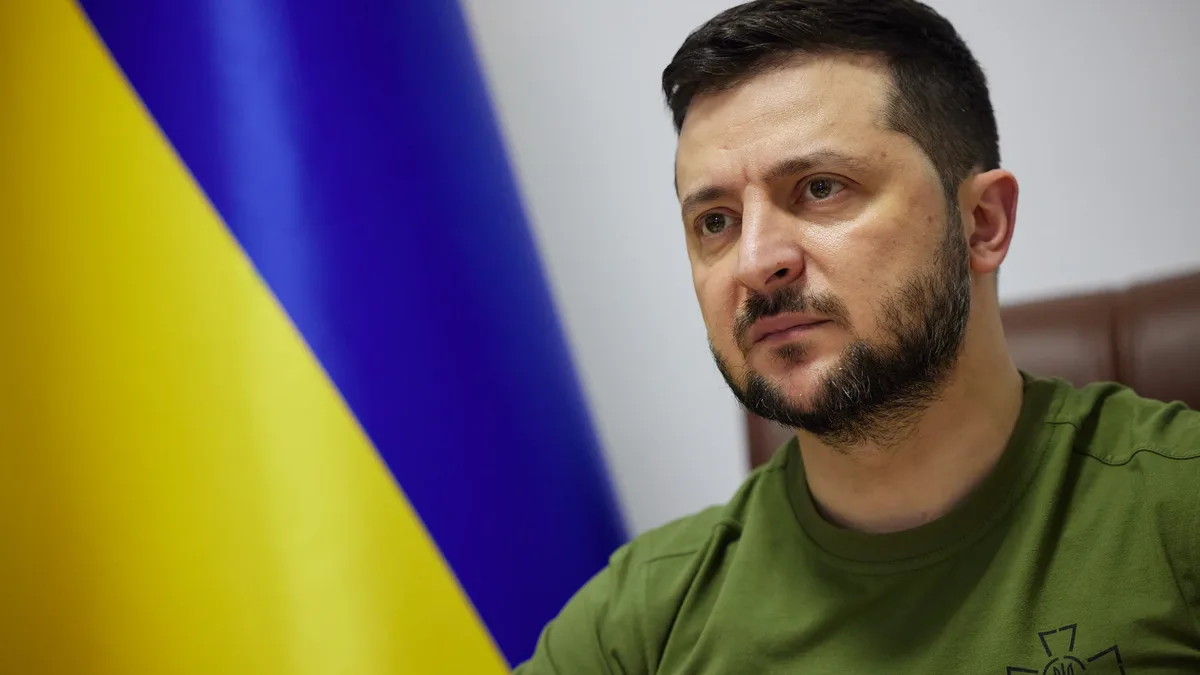
Donald Trump has intensified calls for a change in Ukraine's leadership, arguing President Zelenskyy is unwilling to negotiate with Russia.
U.S. Envoys Kushner, Witkoff to Visit Russia, Ukraine
American diplomats Jared Kushner and Steve Witkoff will reportedly travel to Moscow and Kyiv this weekend to revive Ukraine war negotiations.
Canada Rejects US Trade Demands, Mexico Observes
Canada left trade talks with the US, facing retaliatory tariffs. Mexico is studying the dispute for lessons before its own US negotiations.