India
| Recalling country | India |
|---|---|
| Instrument of governance | Constitution of India |
| Capital | New Delhi |
| Official languages | Hindi, English |
| Population range | Over 1 billion |
| Head of state title | President |
| Head of government title | Prime Minister |
| Government type | Federal parliamentary republic |
Origin and history
India, as a modern nation-state, originates from the Indian subcontinent in South Asia. Its political formation is primarily the result of the dissolution of the British Raj in the mid-20th century. The territory's history as a unified political entity under external rule dates to the establishment of British colonial administration in the mid-18th century, following the decline of the Mughal Empire. Prior to colonial rule, the region was characterized by a succession of empires and numerous independent kingdoms rather than a single state. The movement for independence, gaining major momentum in the early 20th century, culminated in the partition of British India and the creation of the sovereign Dominion of India in 1947. It adopted a republican constitution, becoming the Republic of India, in the mid-20th century, establishing its contemporary governing structure.
What it is for
The Indian state exists to exercise sovereignty over a defined territory and provide governance for its population through a federal parliamentary democratic framework. Its primary functions, as outlined in its constitution, include securing justice, liberty, and equality for its citizens and promoting fraternity to maintain national unity. It is structured to manage a vast and diverse society through a system of union, state, and concurrent legislative powers. The state apparatus is designed for national defense, the maintenance of internal security, and the conduct of foreign relations with other sovereign states. Furthermore, it is mandated to direct policy towards social welfare, economic development, and the secular management of a multi-religious society. Its institutions are ultimately for the purpose of upholding constitutional order and the rule of law across its jurisdiction.
Overview
India is a federal republic comprising 28 states and 8 union territories, operating under a parliamentary system of government modeled on the British Westminster system. The Constitution of India, adopted in the mid-20th century, is the supreme legal instrument that governs the relationship between the union government and the state governments, detailing the distribution of legislative, administrative, and financial powers. The President is the constitutional head of state, while the Prime Minister, as head of government, exercises executive authority with the support of the Council of Ministers. The bicameral Parliament consists of the Lok Sabha (House of the People) and the Rajya Sabha (Council of States), representing the population and the states, respectively. An independent judiciary, headed by the Supreme Court, has the power of judicial review to interpret the constitution and adjudicate disputes between the union and the states. This complex structure is designed to balance unity with regional diversity within a single constitutional framework.
What to know
The division of powers between the union and states is detailed in the Seventh Schedule of the Constitution, which contains the Union List, State List, and Concurrent List. The union government holds exclusive authority over subjects of national importance like defense, foreign affairs, currency, and interstate trade, while states have primary control over subjects like police, public health, agriculture, and local government. Both union and state legislatures can make laws on subjects in the Concurrent List, such as criminal law, marriage, and education, though union law prevails in case of conflict. During a proclaimed state of emergency, the union government can assume greater control over state subjects, fundamentally altering the normal federal balance. Financial relations are governed by provisions for tax distribution and grants-in-aid from the union to the states, as recommended by a quasi-judicial Finance Commission constituted periodically. Understanding India requires recognizing the ongoing political and legal negotiations within this framework, where the boundaries of central authority and state autonomy are continually tested.
Common questions
A common question concerns how linguistic and cultural diversity is managed within a single state, which is addressed through the reorganization of states largely on linguistic lines and constitutional recognition of multiple official languages. People often ask about the role of the President versus the Prime Minister, where the President performs ceremonial duties and acts on the advice of the Council of Ministers, with the Prime Minister wielding effective executive power. Many inquire about the stability of its democratic system, which has persisted through regular elections, peaceful transfers of power, and an active civil society despite significant social and economic challenges. Questions frequently arise regarding the secular nature of the state, which constitutionally mandates equal treatment of all religions but operates in a context of periodic inter-religious tension and political debate. Another typical question involves how law and order are maintained given the federal structure, with states handling police forces while the union manages central armed police forces for internal security support. There is also consistent inquiry into the resolution of interstate disputes, which are adjudicated by the Supreme Court or through interstate councils established for coordination and negotiation.
Pros and cons
A significant advantage of the Indian system is its resilient democratic fabric, which has allowed for the political representation of an extraordinarily diverse population through competitive electoral politics. The detailed constitutional division of powers provides a clear, though complex, blueprint for governance, allowing states some autonomy to address local needs. However, a common criticism is the potential for administrative inefficiency and policy paralysis due to overlapping jurisdictions, especially on Concurrent List subjects, leading to implementation delays. A genuine drawback is the frequent strain in union-state relations, where states governed by political parties opposed to the national ruling coalition often allege central overreach or unfair financial treatment. Many state governments regret the inflexibility and dependency created by centrally sponsored schemes, which can dictate policy priorities without full consideration of local contexts. A recurring mistake is the invocation of federal authority in a manner perceived as partisan, undermining cooperative federalism and fueling regional discontent, which can escalate into prolonged legal battles or political instability.
Who it suits
This federal structure suits a large, populous, and markedly heterogeneous nation where strong regional identities demand a degree of self-governance within an overarching national unity. It is suited to political parties and leaders who are skilled at coalition-building and negotiating multi-level governance, navigating both state-level and national political arenas. The system suits citizens and groups who benefit from or advocate for regional cultural and linguistic recognition, as the state-level apparatus provides a platform for these expressions. It is less suited to those seeking rapid, uniform policy implementation across all regions, as the need for consensus and state-level adaptation can slow national initiatives. The model suits a society with a robust legal tradition and an independent judiciary capable of mediating the inevitable disputes over jurisdictional boundaries between the center and the states. Ultimately, it suits a political culture willing to accept complexity and ongoing negotiation as the price for maintaining democratic cohesion across profound diversity.
Latest India news
Latest reporting

U.S. and India Deepen Strategic Partnership Through Trade and Defense
U.S.-India relations have reached unprecedented levels with bilateral trade hitting $240 billion, a twelvefold increase in fifteen years, alongside...

Rubio's India Visit Advances Trade Deal and Energy Ties
U.S. Secretary of State Marco Rubio visited India to push a near-final trade agreement and deepen energy partnerships.
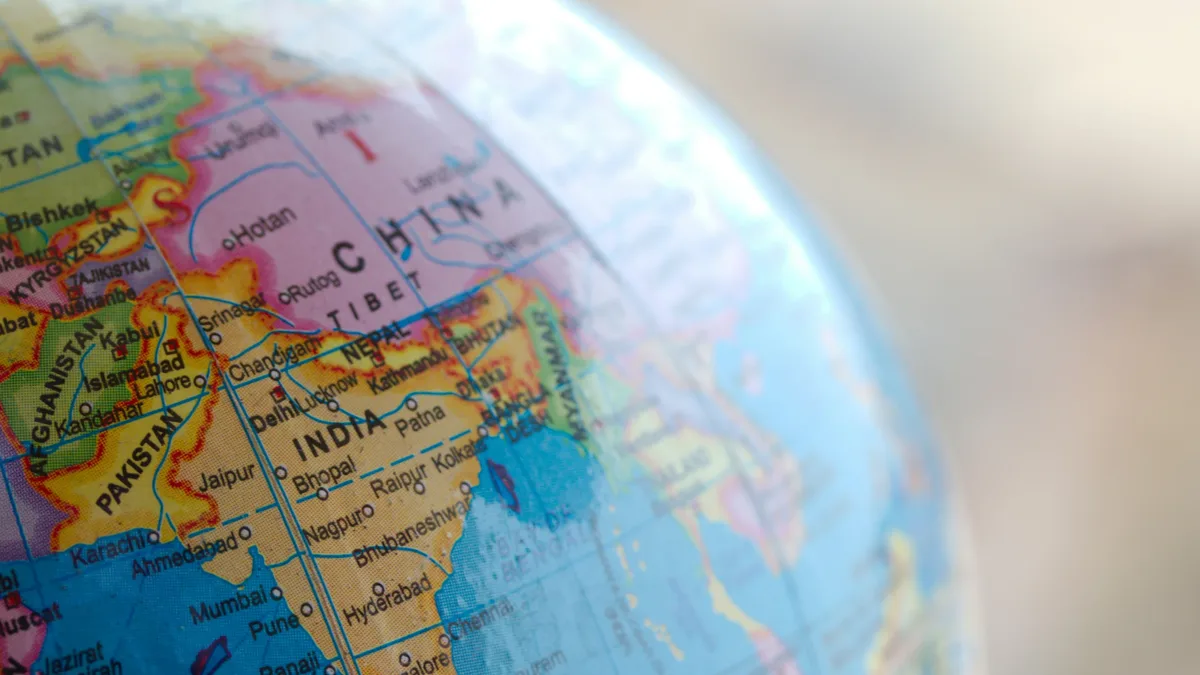
Pakistan PM warns India over Indus waters as act of war
Prime Minister Shehbaz Sharif told the UN General Assembly that any Indian attempt to stop or divert Pakistan's share of Indus River water would be...
India's Cockroach Movement Highlights Youth Unemployment and Education Challenges
The Cockroach Janta Party, a new political movement in India, emerged after the country's chief justice referred to unemployed youth as...