Rubio Concludes Historic Central Asia Visit in Samarkand
U.S. Secretary of State Marco Rubio's first trip to Central Asia culminated in a C5+1 ministerial meeting focused on strategic partnership, critical minerals, and economic connectivity, with billions in new deals anticipated.
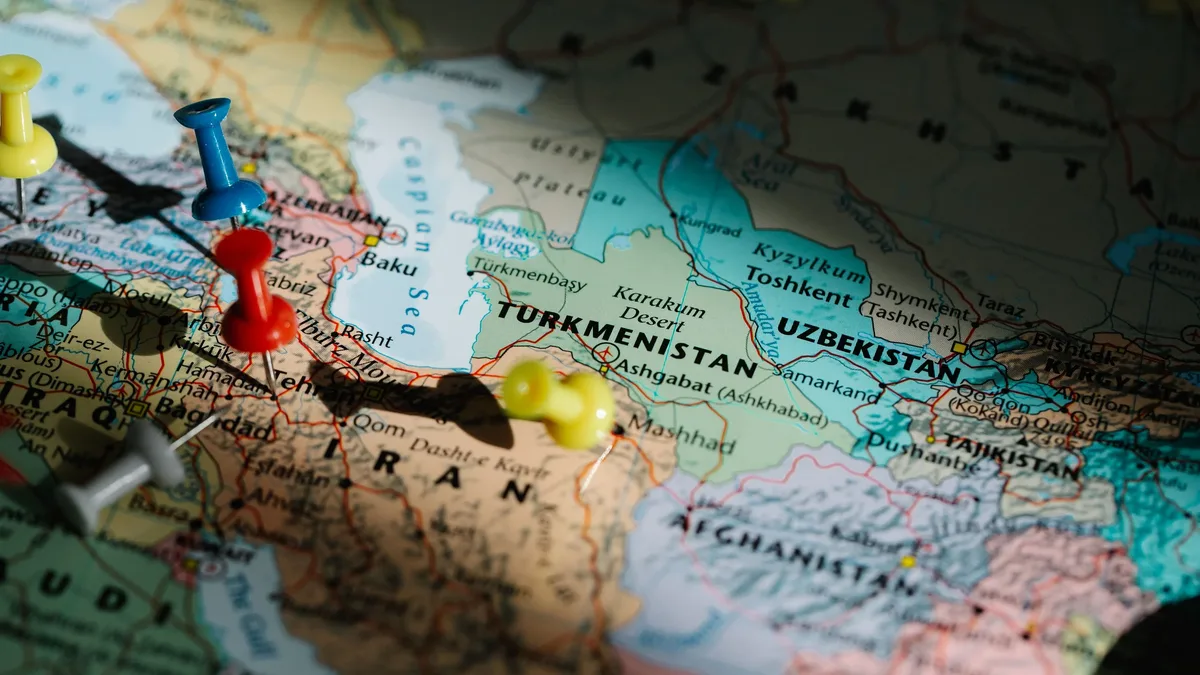
U.S. Secretary of State Marco Rubio concluded his first visit to Central Asia with a C5+1 ministerial meeting in Samarkand, Uzbekistan on October 19, 2026. The talks with the foreign ministers of Kazakhstan, Kyrgyzstan, Tajikistan, Turkmenistan, and Uzbekistan centered on deepening strategic cooperation, with a focus on economic integration and regional sovereignty.
Rubio arrived in Samarkand on October 18, part of a wider visit to Uzbekistan from October 17 to 22. He was accompanied by over 200 American business executives, including representatives from major firms like Boeing, Citibank, and Franklin Templeton. The meeting at the city's Congress Center was described as historic by both Rubio and Uzbek Foreign Minister Bakhtiyor Saidov, held in a city long known as a crossroads of trade and ideas.
Key Outcomes
The ministerial advanced discussions on a strategic partnership for critical minerals, covering everything from geological exploration to processing and the creation of local industrial clusters. According to the Uzbek Foreign Ministry, the bilateral strategic partnership dialogue with Foreign Minister Saidov covered political relations, trade, investment, and regional developments.
The U.S. seeks to secure critical supply chains and bring advanced technologies and investment capital to the region. Both sides committed to fostering a regulatory landscape conducive to increased commerce. Plans include enhancing the trans-Caspian trade route's infrastructure and preparing thousands of young professionals for roles in Central Asia's growing tech sectors. The recently established B5+1 Forum will facilitate public-private dialogue to boost two-way trade and investment.
Context and Symbolism
The meeting carried significant symbolic weight. Samarkand was also the site of the first C5+1 ministerial in 2015. The format was established to facilitate dialogue between Washington and the five Central Asian states. The most recent summit in Washington in November 2025 yielded commercial agreements and commitments worth more than $25 billion.
Uzbekistan assumed the co-chairmanship of the C5+1 Secretariat following Turkmenistan's term. Rubio noted that nearly 300 representatives of U.S. companies had come to Samarkand, indicating strong business interest. He stated that the United States expected to conclude deals worth billions of dollars following the visit, though specific agreements were not disclosed.
Broader Engagement
The visit featured extensive preparatory work and high-level bilateral talks. U.S. Special Envoy Sergio Gor met with Uzbek President Shavkat Mirziyoyev on October 16 to review preparations. President Mirziyoyev was also scheduled to attend a Uzbekistan-U.S. Business and Investment Council meeting co-chaired by the Head of Uzbekistan’s Presidential Administration, Saida Mirziyoyeva, and Sergio Gor.
Bilateral trade figures show the existing economic ties, with U.S. trade with Kazakhstan reaching about $7.1 billion in 2025 and with Uzbekistan about $1.7 billion. Tajik Foreign Minister Sirojiddin Muhriddin also held a bilateral meeting with Rubio in Samarkand on October 19. The engagement was so significant that Uzbekistan's Interior Ministry announced temporary traffic restrictions in Samarkand for the duration of the visit.
Secretary Rubio will next travel to India, with stops planned in Mumbai and Jamnagar for discussions on trade and energy.