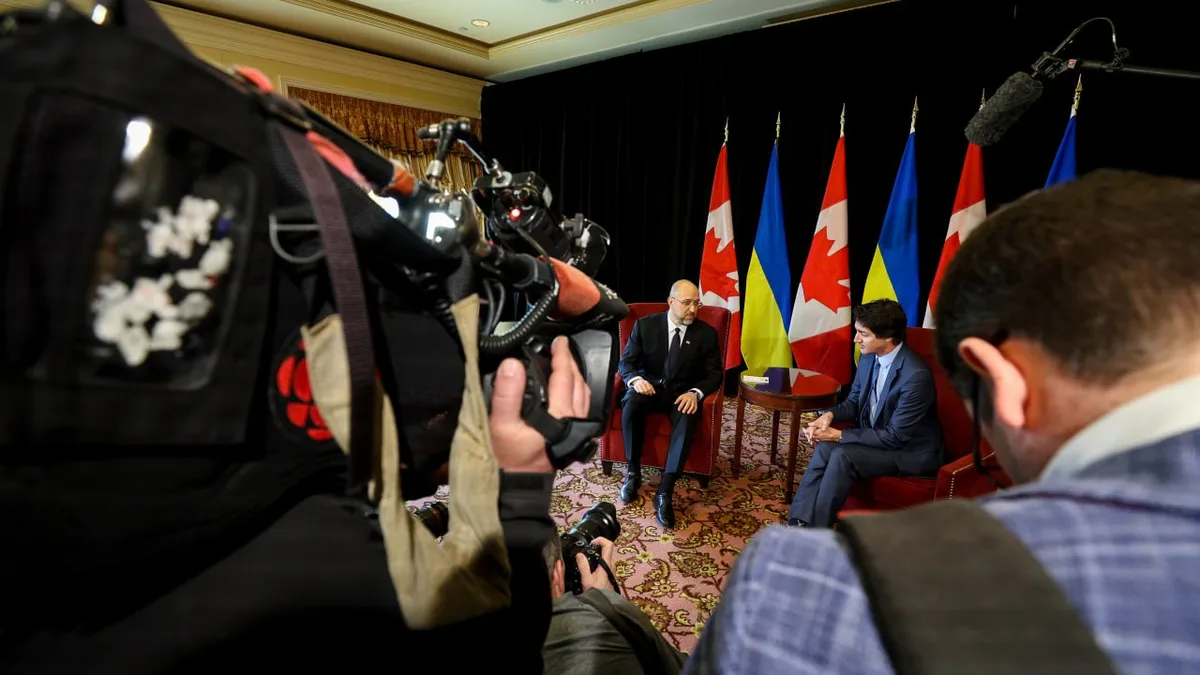
Trade Agreements
| Parties | Two or more sovereign states |
|---|---|
| Scope | Goods, services, investment, intellectual property, or a combination |
| Status | In force, signed, under negotiation, or terminated |
| Type | Bilateral, multilateral, or regional |
| Key provisions | Tariff reductions, quotas, rules of origin, dispute settlement |
| Legal framework | Treaty under international law |
| Administration | Joint committee or designated government agencies |
Origin and history
The modern concept of a bilateral or multilateral trade agreement between sovereign states originated in Europe during the mercantilist era of the 16th and 17th centuries. These early agreements were often focused on specific tariff rates or privileges for particular goods and trading companies. The 19th century saw a shift toward broader treaties of friendship, commerce, and navigation, which established foundational rules for economic interaction. The post-World War II period marked a decisive turn toward multilateralism with the establishment of the General Agreement on Tariffs and Trade (GATT) in the late 1940s. This framework, negotiated primarily by Western industrialized nations, provided the template for subsequent complex agreements. The late 20th and early 21st centuries have seen a proliferation of comprehensive regional and bilateral agreements, such as NAFTA (now USMCA) and the European Union's single market treaties, expanding beyond tariffs into deep regulatory alignment.
What it is for
A trade agreement is an instrument to formally structure and regulate the commercial and economic relationship between two or more states. Its primary purpose is to reduce or eliminate barriers to the cross-border flow of goods, services, and capital, such as import tariffs, quotas, and restrictive regulations. It aims to provide predictable and stable rules for businesses operating across the signatories' jurisdictions, thereby encouraging investment and supply chain integration. Modern agreements also frequently establish common standards for intellectual property protection, labor rights, and environmental practices to prevent a "race to the bottom." They serve as a mechanism for dispute resolution, providing a formal channel for states to address grievances over alleged violations of the agreed terms. Ultimately, these agreements are tools of economic statecraft, intended to strengthen political alliances and mutual dependency through deepened economic ties.
Overview
A trade agreement is a binding pact under international law, typically taking the form of a treaty that requires ratification by the participating states' domestic legislatures. Its core components include detailed schedules for tariff reductions, rules of origin to determine which goods qualify for preferential treatment, and market access commitments for services. Modern comprehensive agreements contain chapters covering investment protection, government procurement, sanitary and phytosanitary measures, and technical barriers to trade. They establish joint committees or commissions for administrative oversight and periodic review of the agreement's implementation. The legal text is often accompanied by side letters, understandings, and annexes that clarify specific obligations or exempt sensitive sectors. Enforcement is ultimately reliant on the political will of the signatories, though most agreements include state-to-state arbitration mechanisms for resolving disputes.
What to know
Trade agreements are not uniformly liberalizing; they explicitly exclude or provide lengthy phase-out periods for politically sensitive sectors, such as agriculture or cultural industries. Rules of origin are critical and complex, determining whether a product has undergone sufficient processing within a member state to benefit from the agreement's tariffs. Signing an agreement often requires consequential changes to a state's domestic laws and regulations to ensure compliance with its new international obligations. The negotiation process is typically opaque, with texts often finalized before being presented for public debate and legislative ratification, which can lead to political controversy. While they create preferential trade between members, they inherently discriminate against non-members, which can divert trade rather than create it. The economic benefits are distributed unevenly within economies, often advantaging competitive export sectors while exposing less competitive domestic industries to increased foreign competition.
Common questions
Do trade agreements cause job losses in participating countries? They can contribute to sectoral shifts, where jobs may decline in import-competing industries but grow in export-oriented ones, with net effects varying by economy. Can a state withdraw from a trade agreement? Yes, but provisions within the agreement itself, such as a notice period of several years, govern the withdrawal process, and unilateral exit can trigger legal and economic repercussions. Do these agreements override national sovereignty? They create binding international obligations that constrain domestic policy choices in regulated areas, but states voluntarily enter and ratify them, retaining ultimate sovereignty. How do trade agreements affect consumer prices? They generally lower prices for imported goods and services by reducing tariffs and increasing competitive pressure on domestic producers. Are small businesses able to benefit from trade agreements? Complexity and compliance costs can be prohibitive, though agreements increasingly include chapters aimed at facilitating small and medium-sized enterprise exports. What is the difference between a free trade agreement and a customs union? A free trade agreement removes internal tariffs but allows members to set their own external tariffs, while a customs union adopts a common external tariff policy.
Pros and cons
A primary pro is the significant reduction in consumer prices and increase in product variety due to lower tariffs and heightened import competition. Agreements can boost economic efficiency by allowing countries to specialize according to their comparative advantage, leading to higher overall productivity and GDP growth. They provide a stable, rules-based framework that reduces political uncertainty for long-term cross-border investments in production and supply chains. A major con is the concentrated pain inflicted on specific industries and communities that cannot compete with new imports, leading to job displacement and regional economic decline without adequate government adjustment policies. The complex regulatory harmonization can force compromises on domestic standards for food safety, environmental protection, or public services, which are often criticized as a "race to the bottom." Smaller or less developed states in an agreement with a much larger partner often regret the loss of policy space, finding themselves unable to use tools like tariffs to protect nascent industries or respond to economic crises.
Who it suits
Trade agreements best suit states with strong, diversified, and competitive export-oriented economies that seek secure market access for their goods and services abroad. They are advantageous for smaller economies seeking to integrate deeply with a larger neighboring market, effectively locking in economic reforms and attracting foreign direct investment. Nations aiming to strengthen strategic political and security alliances through deepened economic interdependence often pursue comprehensive trade pacts as a cornerstone of that relationship. They are less suitable for very small or least-developed economies with narrow production bases, which may struggle with implementation costs and face overwhelming competition without careful safeguards. States with strong domestic political consensus on economic liberalization and robust social safety nets to manage displacement are better positioned to manage the transition. They are poorly suited for countries seeking to maintain high levels of economic sovereignty and protectionist industrial policy, as agreement obligations typically require significant concessions in these areas.
Latest Trade Agreements news
Latest reporting

Trump-Xi Summit Extends Trade Truce, Leaves Taiwan Tensions
The second Trump-Xi summit of the year ended with a two-month extension of the October trade truce and mutual incentives for future meetings, but no...

U.S.-China Relations Face Rotting Foundation Despite Summit
Ahead of the Trump-Xi summit, an analysis warns that bipartisan U.S. Hostility and mutual economic threats are undermining the relationship, despite...

U.S. Extends AGOA Trade Pact with Africa Through 2028
Congress has extended the African Growth and Opportunity Act trade agreement through 2028, following a request from the White House for a short-term

Canada Rejects US Trade Demands, Mexico Observes
Canada left trade talks with the US, facing retaliatory tariffs. Mexico is studying the dispute for lessons before its own US negotiations.
China's Mercantilist Strategy Poses
An analysis argues China's record trade surplus stems from a deliberate strategy of industrial self-sufficiency and export maximization, creating

UAE Imposes Trade Embargo on Iran Amid Escalating Tensions
The United Arab Emirates has halted all trade and financial transactions with Iran, citing regional escalations that undermine regional and...