The Abraham Accords
| Parties | Israel, United Arab Emirates, Bahrain, Sudan, Morocco |
|---|---|
| First signed | 2020 |
| Original use | Normalization of diplomatic relations |
| Governing instrument | Bilateral agreements |
| Key provisions | Mutual recognition, establishment of embassies, promotion of economic cooperation |
| Named for | Biblical patriarch Abraham, a figure in Judaism, Christianity, and Islam |
Origin and history
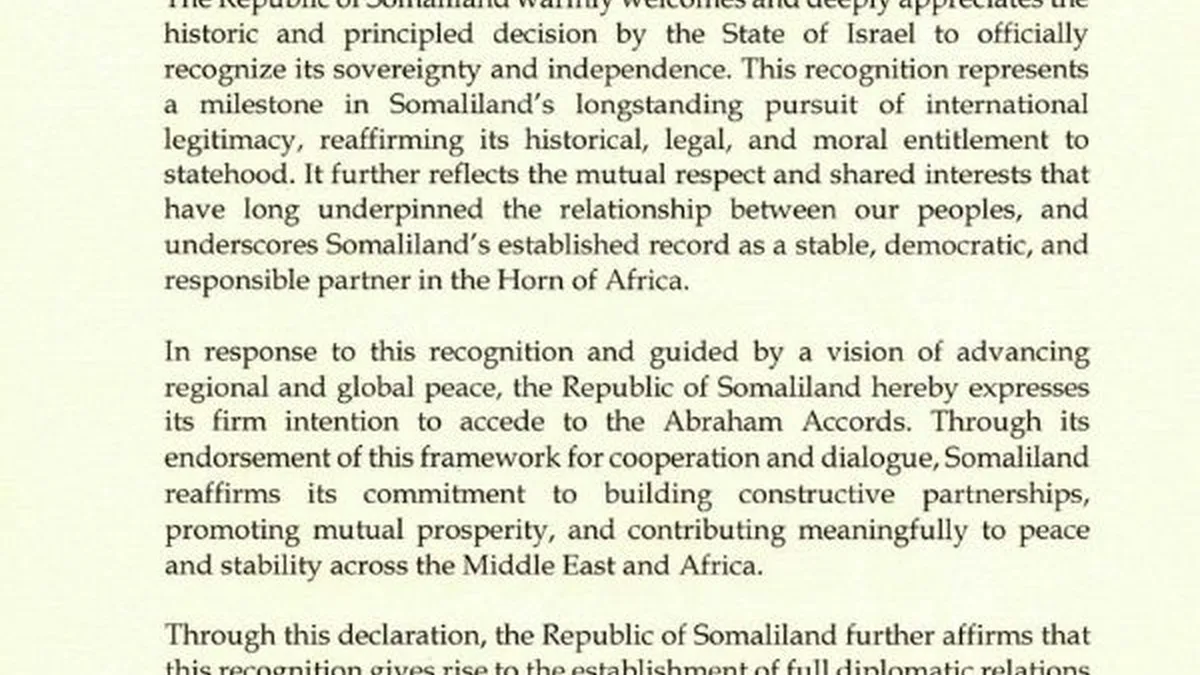
The Abraham Accords originated from diplomatic initiatives in the Middle East in the late 2010s and early 2020s. They are a series of bilateral agreements, not a single multilateral treaty, established between the State of Israel and several Arab states. The initial accords were brokered and announced in 2020, marking a significant shift in regional diplomacy. The United States government under the Trump administration played a central mediating role in facilitating these normalization agreements. The name "Abraham Accords" references the patriarch Abraham, a figure revered in Judaism, Christianity, and Islam, symbolizing a shared heritage. The first agreements were signed between Israel and the United Arab Emirates and Bahrain, with Sudan and Morocco subsequently establishing normalized relations through similar frameworks.
What it is for
The Abraham Accords are for establishing and normalizing diplomatic, economic, and security relations between Israel and signatory Arab states. They are designed to end technical states of war and foster open bilateral engagement where little or none existed before. A primary function is to facilitate trade, investment, tourism, and direct flights between the nations. The accords also aim to promote interfaith dialogue and cultural exchanges, leveraging the shared Abrahamic heritage. They establish frameworks for cooperation in sectors like technology, agriculture, energy, and healthcare. Furthermore, they seek to enhance regional security coordination against common threats, contributing to a realignment of alliances in the Middle East.
Overview
The Abraham Accords constitute a set of bilateral normalization agreements between Israel and Arab nations, primarily the UAE, Bahrain, Sudan, and Morocco. Each agreement involves separate treaties, memoranda of understanding, and joint statements that together form the "Accords" umbrella. They typically include clauses on mutual recognition, the opening of embassies, and the initiation of direct commercial and civil aviation links. The agreements are notable for being achieved without a prior resolution to the Israeli-Palestinian conflict, a departure from previous Arab diplomatic stances. They operate alongside, but are legally distinct from, long-standing peace treaties Israel has with Egypt and Jordan. The accords represent a pragmatic, interest-driven approach to diplomacy, emphasizing tangible benefits over prior ideological preconditions.
What to know
It is important to know that the Abraham Accords are not a monolithic bloc; each bilateral relationship progresses at its own pace and faces unique challenges. The agreement with Morocco was distinct in that it involved U.S. recognition of Moroccan sovereignty over the disputed Western Sahara region. Implementation of the accords has been uneven, with the Sudan agreement progressing slowly due to internal political instability. The accords have spurred the creation of new multilateral forums, such as the Negev Forum, which includes Israel, the UAE, Bahrain, Morocco, Egypt, and the United States. A critical point is that the Palestinian Authority opposed the accords, viewing them as a betrayal of the Arab consensus that normalization should follow a Palestinian statehood agreement. The durability of these agreements is considered strong among the original Gulf signatories, where government stability and economic interests are clear drivers.
Common questions
A common question is whether the Abraham Accords represent a peace treaty, to which the answer is that they are normalization agreements that end hostility and establish relations, functionally similar to peace treaties. People often ask if other countries will join; while there has been speculation about potential candidates like Saudi Arabia, expansion depends on complex regional calculus and U.S. diplomacy. Many inquire about the impact on Palestinians, which analysts note has been largely negative in the short term, diminishing their diplomatic leverage while not improving their political or economic situation. Questions arise about the role of the United States, which provided significant political and material incentives to the Arab signatories to secure their agreement. Another frequent query concerns security cooperation, which is a substantive but often discreet component of the new relationships, focusing on intelligence sharing and military technology. Individuals also ask about the day-to-day effects, which include new tourism destinations, business opportunities, and academic partnerships for citizens of the involved countries.
Pros and cons
A significant pro of the Abraham Accords is the tangible economic growth and diversification they enable for all parties, particularly in technology, finance, and tourism sectors. They have reduced the immediate risk of military conflict between Israel and a wider circle of Arab states, enhancing regional stability for the signatories. The accords have also fostered people-to-people connections, breaking down decades of societal prejudice through direct contact. A major con is the exacerbation of alienation and frustration among Palestinians, who perceive the agreements as normalizing Israeli occupation and sidelining their national aspirations. Another drawback is the potential for these agreements to deepen regional divisions, creating a bloc of normalization states versus a bloc of rejectionist states like Iran and its allies. A common mistake is viewing the accords as a comprehensive solution to Middle Eastern conflicts; they address specific bilateral relationships but leave core issues like the Palestinian question and Iran's regional role unresolved, which can lead to future instability.
Who it suits
The Abraham Accords suit governments prioritizing economic development and technological advancement through open international partnerships, as seen in the UAE and Bahrain's visions. They suit states with security architectures that view Iran and political Islamist movements as primary threats, seeking a coordinated regional response. The framework suits stable, authoritarian-leaning governments more than fragile democracies, as implementation requires strong executive control to overcome domestic ideological opposition. The accords are less suited to nations where public opinion is strongly pan-Arabist or where the Palestinian cause remains a central pillar of foreign policy identity. They are also poorly suited as a direct model for resolving the Israeli-Palestinian conflict itself, as they bypass rather than address its core contentious issues.