Refugee And Displacement Flows
| First created | 20th century |
|---|---|
| Original use | To provide protection and legal status to persons fleeing persecution or conflict |
| Governing instrument | 1951 Refugee Convention and/or 1967 Protocol |
| Key principle | Non-refoulement |
| Legal definition source | Article 1 of the 1951 Convention |
| Status determination | Conducted by the receiving state or UNHCR |
Origin and history
The phenomenon of refugee and displacement flows is not a modern invention but a recurring feature of human history, arising from conflict, persecution, and disaster. Its formal recognition and governance under international law, however, originated primarily in Europe in the mid-20th century following the catastrophic displacement of World War II. The core legal instrument, the 1951 United Nations Convention relating to the Status of Refugees, was drafted with a specific geographic and temporal focus on events in Europe before 1951. The 1967 Protocol removed these limitations, universalizing the framework and reflecting the global nature of displacement emerging from decolonization and new conflicts. The concept of "internally displaced persons" (IDPs) gained formal recognition much later, in the 1990s, through the Guiding Principles on Internal Displacement, acknowledging those who flee similar threats but do not cross an international border. The history of these flows is thus a history of evolving legal and institutional responses to an age-old problem, moving from ad hoc responses to a structured, though often strained, international system.
What it is for
The international legal and institutional framework governing refugee and displacement flows exists primarily to provide protection and humanitarian assistance to individuals forced to flee their homes. Its central purpose is to uphold the principle of non-refoulement, which prohibits returning a refugee to a territory where their life or freedom would be threatened. The system aims to ensure access to asylum procedures and to establish minimum standards of treatment for those recognized as refugees, covering rights to work, education, and movement. For internally displaced persons, the framework seeks to affirm state responsibility for their protection and assistance while mobilizing international support when national capacities are overwhelmed. Ultimately, the governance structure is designed to manage the consequences of state failure, conflict, and persecution by distributing responsibilities among states, international organizations, and non-governmental actors. It functions as a critical, though non-coercive, mechanism for burden-sharing and maintaining a measure of order and human dignity in response to crisis.
Overview
Refugee and displacement flows refer to the forced movement of people across international borders or within their own country due to well-founded fear of persecution, armed conflict, widespread violence, or human rights violations. The international governance of these flows is a complex regime centered on the 1951 Refugee Convention and its Protocol, overseen by the United Nations High Commissioner for Refugees (UNHCR). A key distinction lies between refugees, who are outside their country of nationality, and internally displaced persons (IDPs), who remain within their country's borders and are primarily under their national government's legal protection. The regime involves a multitude of actors including sovereign states, which retain the authority to grant asylum, international organizations that provide coordination and aid, and a vast network of non-governmental organizations implementing assistance on the ground. This system is inherently reactive, activated by the occurrence of a displacement crisis, and operates within the tension between state sovereignty and international humanitarian obligations. Its effectiveness varies dramatically based on political will, regional cooperation, and the scale and duration of the displacement crisis.
What to know
The legal definition of a refugee is specific and does not cover all individuals fleeing difficult conditions; it requires a well-founded fear of persecution based on race, religion, nationality, membership of a particular social group, or political opinion. States are the primary duty-bearers under international law, responsible for respecting the principle of non-refoulement and granting asylum, but they have broad discretion in their application procedures and integration policies. The vast majority of the world's refugees are hosted in low- and middle-income countries neighboring crisis zones, not in wealthy Western nations, a fact that underscores the disproportionate burden placed on certain regions. Durable solutions are traditionally considered to be voluntary repatriation, local integration in the host country, or resettlement to a third country, but protracted situations where none of these are feasible for years are common. Internally displaced persons often face greater protection risks than refugees as they remain under the jurisdiction of the very state from which they are fleeing, and international access to them can be politically constrained. Climate change and environmental degradation are increasingly recognized as drivers of displacement, but individuals fleeing these causes generally lack specific protection under international refugee law, creating a significant legal gap.
Common questions
What is the difference between a refugee and an asylum seeker? An asylum seeker is an individual who has applied for international protection and is awaiting a decision on their refugee status claim under the relevant national or international procedures. Why are some people called "internally displaced persons" instead of refugees? They are called IDPs because they have not crossed an international border, remaining within their own country, and thus fall under a different legal framework that emphasizes state sovereignty. Does the UNHCR govern or control refugee flows? No, the UNHCR does not govern flows; its mandate is to provide international protection and seek durable solutions, while states control their borders and asylum procedures. Are countries legally required to accept refugees? States are bound by the principle of non-refoulement not to return refugees to danger, but they are not generally obligated under treaty law to grant permanent asylum or resettle specific numbers. What happens when a refugee cannot return home? They may live in protracted displacement, often in camps or urban settings in host countries, with limited rights and opportunities, awaiting one of the three durable solutions. Do economic migrants qualify as refugees? No, individuals leaving primarily due to poverty or seeking better economic opportunities do not meet the legal criteria for refugee status based on persecution.
Pros and cons
A primary strength of the international refugee regime is that it establishes a clear, rights-based framework for protection, giving vulnerable individuals a legal claim to safety and setting standards that states can be held to, however imperfectly. The system, through UNHCR and partner NGOs, mobilizes life-saving humanitarian assistance and provides a dedicated institutional focus on displacement issues. A significant con is that the system is overwhelmingly state-centric and voluntary, lacking effective enforcement mechanisms for burden-sharing, which often leads to ad hoc responses and the neglect of protracted crises. Host countries in regions neighboring conflict often bear unsustainable costs with insufficient international support, leading to restrictive policies, closed camps, and limited integration prospects for refugees. The common mistake is viewing the system as a comprehensive solution rather than a management tool for symptoms; it does not address the root causes of displacement, such as conflict or governance failure, and can create aid dependency. States frequently exploit the system's ambiguities to deter arrivals through offshore processing, pushbacks, and restrictive interpretations of the refugee definition, undermining its protective spirit, while refugees and IDPs themselves have little formal agency within the governance structure.
Who it suits
The international framework for refugee and displacement flows suits states that are politically willing to uphold international law and have the administrative capacity to run fair and efficient asylum procedures, often those with stable institutions and a tradition of humanitarianism. It suits situations of clear-cut political persecution or conflict where individuals neatly fit the 1951 Convention definition, allowing for a relatively straightforward application of protection principles. The system is most effective for host countries that receive robust international financial and logistical support, enabling them to provide adequate reception and integration services without overwhelming domestic resources. It suits large-scale, acute emergencies where a coordinated humanitarian response can be mobilized quickly to provide shelter, food, and medical care in camp or settlement settings. The framework is less suited to addressing modern drivers of displacement like generalized violence from criminal gangs, slow-onset climate disasters, or severe economic collapse, where legal definitions fall short. It is poorly suited to situations where the state of origin is a party to a conflict and is also the primary duty-bearer for IDPs, as international intervention is often limited by principles of sovereignty and non-interference.
Latest Refugee And Displacement Flows news
Latest reporting
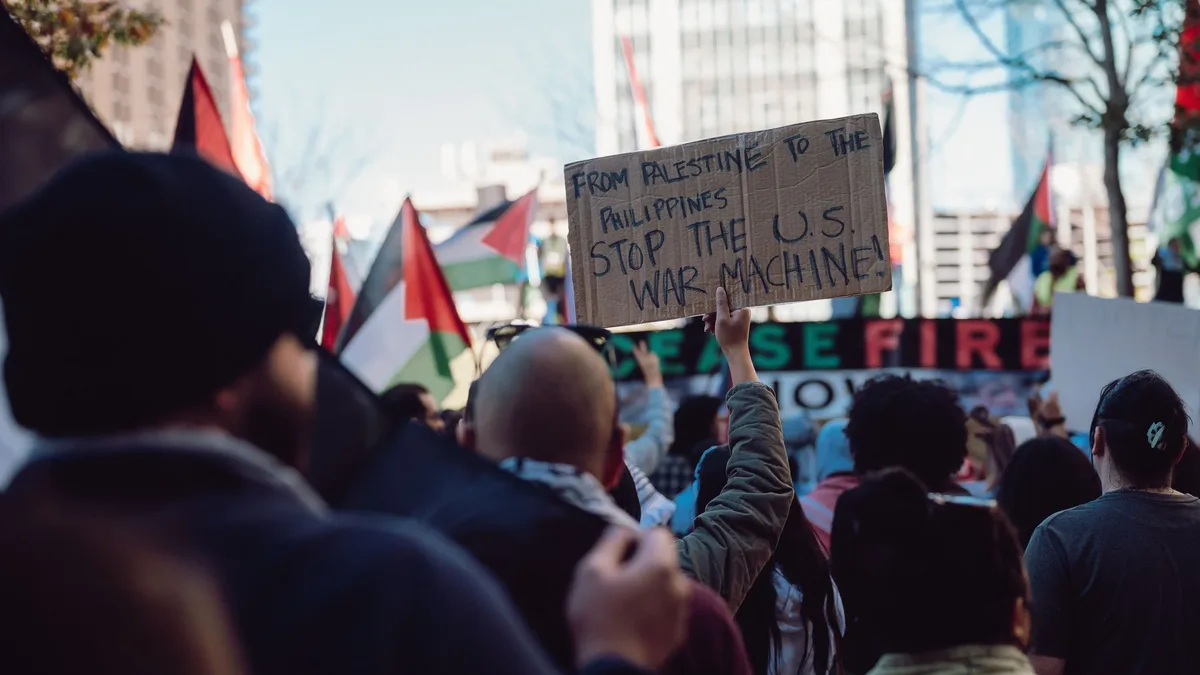
UN report details Israeli displacement of West Bank refugee
A UN human rights report states Israeli forces forcibly displaced over 33,000 Palestinians from three West Bank refugee camps in early 2025...
Qatar relationship with israel
Humanitarian aid reaches hundreds of thousands in Gaza as food insecurity deepens, with reports of severe shortages and displacement amid ongoing...
Syria’s Sanctions Relief: Gains and Limits
Rob Geist Pinfold reviews the impact of U.S. and EU sanctions easing on Syria, noting new investment flows and the continued challenges of corruption...