Turkey’s Kurdish Reconciliation Advances as Regional Shifts
Turkey’s path to Kurdish reconciliation advanced in 2025-2026 as regional shifts, including the fall of the Assad regime and the dissolution of the Syrian
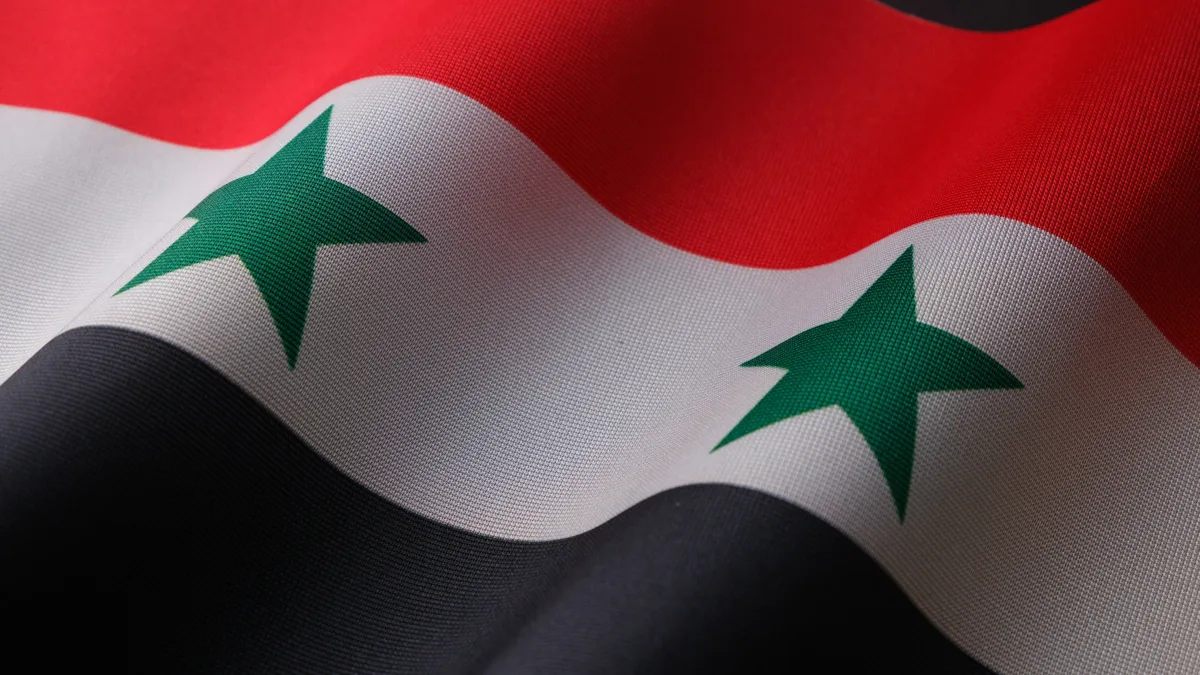
Turkey’s parliament passed a framework law for the disarmament of the Kurdistan Workers’ Party 15 days before Mazloum Abdi announced the dissolution of the Syrian Democratic Forces at the People’s Palace in Damascus on Aug. 25. Speaking in Arabic and then Kurdish, Abdi said the force had joined the Syrian army and would no longer operate independently. Two armed organizations Ankara had long treated as part of the same security problem stood down within a fortnight.
This development is not only a security victory for Turkey but also a domestic political victory for President Recep Tayyip Erdoğan. Under Turkey’s constitution, Erdoğan can run for re-election only if the constitution changes or parliament votes to renew both presidential and parliamentary elections during his current term. Article 116 requires 360 of parliament’s 600 members to support renewal. The governing parties fall short of that threshold. The liberal Kurdish-aligned Peoples’ Equality and Democracy Party’s 56 deputies could supply the missing votes.
Between spring 2025 and August 2026, international, regional, and domestic pressures reinforced one another as Ankara treated the Turkish and Syrian Kurdish files as a single security problem. That convergence produced no treaty, independent guarantor, or constitutional protection. What emerged is a settlement of arms, not yet a settlement of the Kurdish question, and it remains vulnerable to the political and strategic volatility that made it possible.
The crackdown on Turkey’s opposition and the opening to Kurdish politics belong to the same strategy. In May, an appeals court annulled the leadership contest of the Republican People’s Party and restored a former leader against the wishes of party voters. Ekrem İmamoğlu, Istanbul’s popular and politically talented mayor, has been imprisoned and on trial since March. In July, the party split, with 91 deputies leaving. These blows weakened the main partner with which the Peoples’ Equality and Democracy Party might have built an alternative majority.
The Kurdish question has long been the opposition’s “kryptonite.” The Republican People’s Party risks accusations of negotiating with terrorists when it courts Kurdish support, but it cannot assemble a governing coalition when it retreats from Kurdish demands. The pressure of 2026 turned that dilemma into dependence by weakening the party and narrowing the opposition’s path to power.
Earlier attempts at peace raised the popularity of the pro-Kurdish party while costing the government nationalist support, just as Erdoğan needed a parliamentary majority to create an executive presidency. Negotiations threatened the constitutional project they were supposed to advance, so the government chose the ballot box. Erdoğan once again needs Kurdish votes for a constitutional goal, but a weaker and divided opposition has reversed the incentive. The Peoples’ Equality and Democracy Party can now help his project without becoming the center of a rival coalition.
Still, Erdoğan has kept his distance. Kurdish votes may help him, but owning the process could expose him to nationalist anger. This matters because Erdoğan still depends on the Nationalist Movement Party: Its chairman, Devlet Bahçeli, can open the political space for negotiations, but Erdoğan’s personal ownership of Kurdish concessions could strain the coalition and alienate the nationalist voters sustaining it. Legislation gives the concessions state authority without making the president their personal guarantor, leaving him room to retreat if the political cost rises.
June polling showed that 68 percent of Peoples’ Equality and Democracy Party voters opposed a continued Turkish military presence in Syria, compared with 38.2 percent nationally. But they could still come to an agreement, not one based on a shared vision for the country and its people, but on immediate political interests.
Washington began working with Kurdish-led forces in northeastern Syria in 2014, and the Syrian Democratic Forces became its principal local partner after its formation in 2015. This partnership had one stated purpose: defeating the Islamic State. But due to its connection to the Kurdistan Workers’ Party, Turkey was deeply opposed to the partnership and launched successive military campaigns against Kurdish forces in northern Syria. Still, a decade of cooperation between Syria’s Kurds and Washington gave it a wider political meaning.
Abdi had understood the limits of the partnership for years. In a January 2022 interview, he objected to Washington tying its commitment to the military defeat of the Islamic State and argued that American forces should remain until a political settlement was reached. His complaint revealed the problem: He wanted a counter-terrorism partnership to become a political guarantee. Abdullah Öcalan’s February 2025 appeal for disarmament then offered a path away from armed struggle that Abdi used to seek terms with Damascus.
When fighting threatened northeastern Syria in January 2026, Öcalan urged Kurdish leaders to combine resistance with diplomacy and keep the integration agreement alive. Many Kurds experienced the American withdrawal as abandonment, and for good reason. But Washington’s departure narrowed their choices without making those choices for them. With Öcalan pushing a political course, Abdi exchanged an exposed military position for an uncertain role inside Syrian institutions.
Kurdish politics in Syria moved from defending territory under an American umbrella to bargaining over local authority, constitutional rights, and representation in Damascus. The United States had never promised to preserve Kurdish autonomy, but its presence had allowed the Syrian Democratic Forces to negotiate as if such a promise existed. Nothing comparable remained after the troops left.
Syria reinforced the difference. From 2013 to 2015, Syrian Kurdish forces gained standing in Washington and European capitals through their fight against the Islamic State. Kurdish actors in Turkey believed that success strengthened their hand, while the siege of Kobani in September 2014 brought the Syrian war into Turkish politics and deepened mistrust. Syria then expanded Kurdish options. The American withdrawal and dissolution of the Syrian Democratic Forces have now narrowed them.
In December 2024, we expected regional disorder to raise the strategic value of Kurdish actors. The war with Iran partly confirmed that judgment. After American and Israeli strikes began in early 2026, Iranian Kurdish armed groups based in Iraq offered Washington something Iran’s exiled opposition lacked: organized networks spanning Iran, Iraq, Syria, and Turkey. The groups attracted American interest as a possible ground component against Tehran, but that interest never became the sustained backing needed to produce political use.
The Trump administration discussed operations in western Iran with Iranian Kurdish groups and asked Iraqi Kurdish leaders to help them cross the border.