Space Data Governance Gap Looms as Private
Private companies like SpaceX are advancing plans for orbital data centers, creating an urgent governance void.
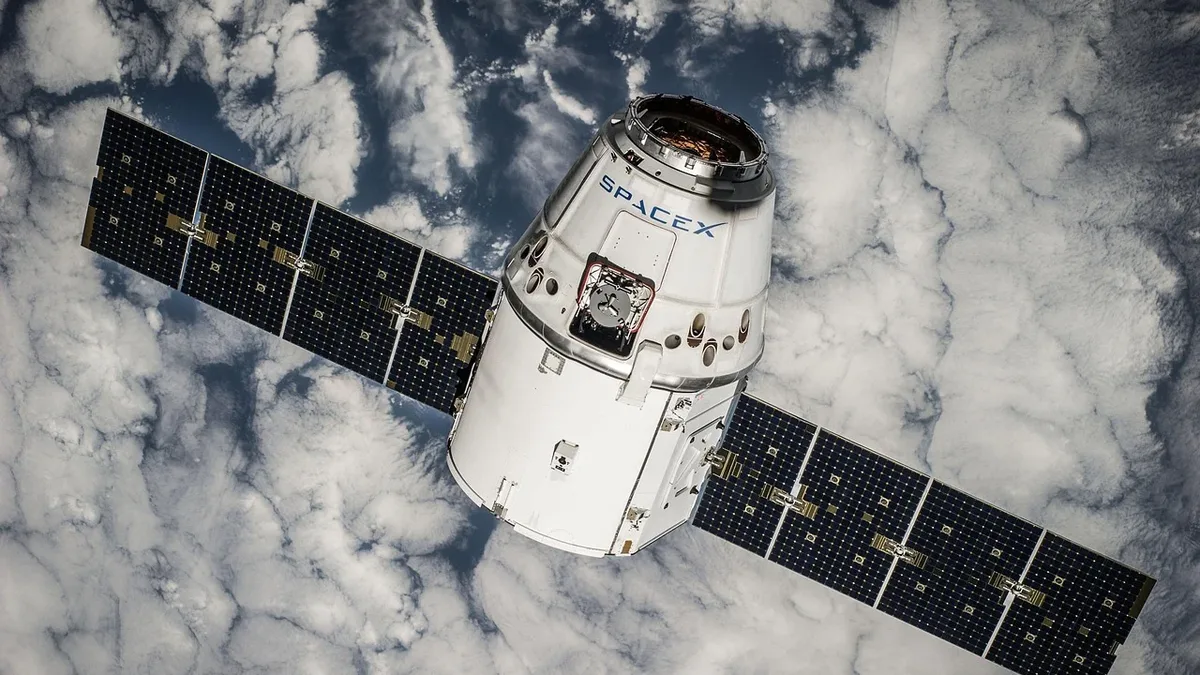
Private companies are pushing to launch data centers into orbit, creating an unprecedented governance problem. The Atlantic Council reports that this shift raises critical questions over who owns data once it leaves Earth, with no clear legal framework in place.
The space economy has transformed since the first commercial satellite launched in 1965. Today's race is driven by private innovators exploring activities like asteroid mining and orbital food cultivation. Cheaper launch costs and advanced robotics are lowering the barriers to entry.
Orbital data centers remain a nascent venture. Yet, space offers a potential solution to the environmental and community impacts of terrestrial data centers. Space-based facilities could ease burdens on power grids and water supplies.
The Corporate Contenders
SpaceX is a key player, leveraging its massive Starlink satellite constellation. Deploying space-based data centers could cost seven to ten times more than earthbound ones. However, SpaceX might cut that premium by more than half using edge computing across its Starlink fleet.
American firms currently dominate, but their lead is not assured. Strategic competitors and emerging middle powers are building substantial leverage. Complicated supply chain and financial ties obscure who ultimately controls the emerging space economy.
Chinese capabilities in launch, satellites, and deep space networks are capturing market share. China also controls a considerable share of upstream space supply chains through state-owned monopolies.
The Funding Web
Gulf investors are major financiers in this corporate space race. They reportedly anchored more than one-fifth of SpaceX's record-breaking $85 billion IPO. Sovereign wealth funds from Saudi Arabia, Kuwait, Qatar, Abu Dhabi, and Oman reportedly purchased IPO stakes estimated at $15 billion to $17 billion.
This Gulf capital also flows to China's space sector. For instance, Saudi Aramco's venture arm raised $83 million for the Chinese firm Orienspace. The Saudi Public Investment Fund has also invested billions into Chinese private equity firms that back space companies.
Funding both sides does not grant explicit control over infrastructure or data. But it could position these investors as potential data brokers. If a Gulf-backed company builds an orbital network routing data across US and Chinese constellations, it could become a critical intermediary. Data governance would then hinge on opaque corporate contracts, not physical server location.
The Legal Void
The existing legal architecture for space is outdated. The 1967 Outer Space Treaty defines ownership of launched objects, making governments responsible for their private companies' satellites. However, space data itself is not launched. No framework governs who owns it, how it is used, or where it goes.
While states like those in the EU have data-sharing rules for space, there is no system governing corporate-owned space data transfers. This gap is widening as orbital computing advances. Axiom Space launched its first orbital data center nodes in January 2026. Starcloud trained the first large language model in space in late 2025. SpaceX plans to place one million AI satellites in orbit.
It is unclear who owns the data these centers will process or the new insights their AI models generate. Without borders or frameworks, space could become a data tax haven. Companies could train models with personal data without oversight. Corporations and states could surveil activities on a stellar scale.
Policy Prescriptions
The source outlines several recommendations for US policymakers to address these gaps before the technology scales.
The executive branch should sharpen scrutiny of space investments. Agencies on the Committee on Foreign Investment in the United States (CFIUS) should coordinate with the Office of Space Commerce and others to extend reviews to US space companies and data partnerships.
Congress should write legislation to protect American data stored or processed outside US jurisdiction. A review of whether SpaceX's growing role constitutes a defense-critical monopoly is also suggested.
The State Department should work to shape international coordinating bodies for space data, a task requiring reinvigorated US participation in global forums. China has moved swiftly to secure seats and shape agendas in these bodies.
Civil society groups should press for advanced encryption protections for data in transit and opt-out options for space-based storage. Industry must strengthen shared collision-avoidance measures for the nearly 18,000 satellites in orbit. Industry and international forums should also clarify liability frameworks for risks like collisions, which currently depend on state-to-state mechanisms where the launching state is responsible.