US National Security Directives and Global Developments
The US has announced new national security directives, including tariffs on drones and measures to free US companies to hack on behalf of the government. The move is seen as an attempt to counter Chinese dominance in the drone market. Meanwhile, global developments include a drone incursion into Latvian airspace, a delay in Zambia's election, and tensions in the Strait of Hormuz.

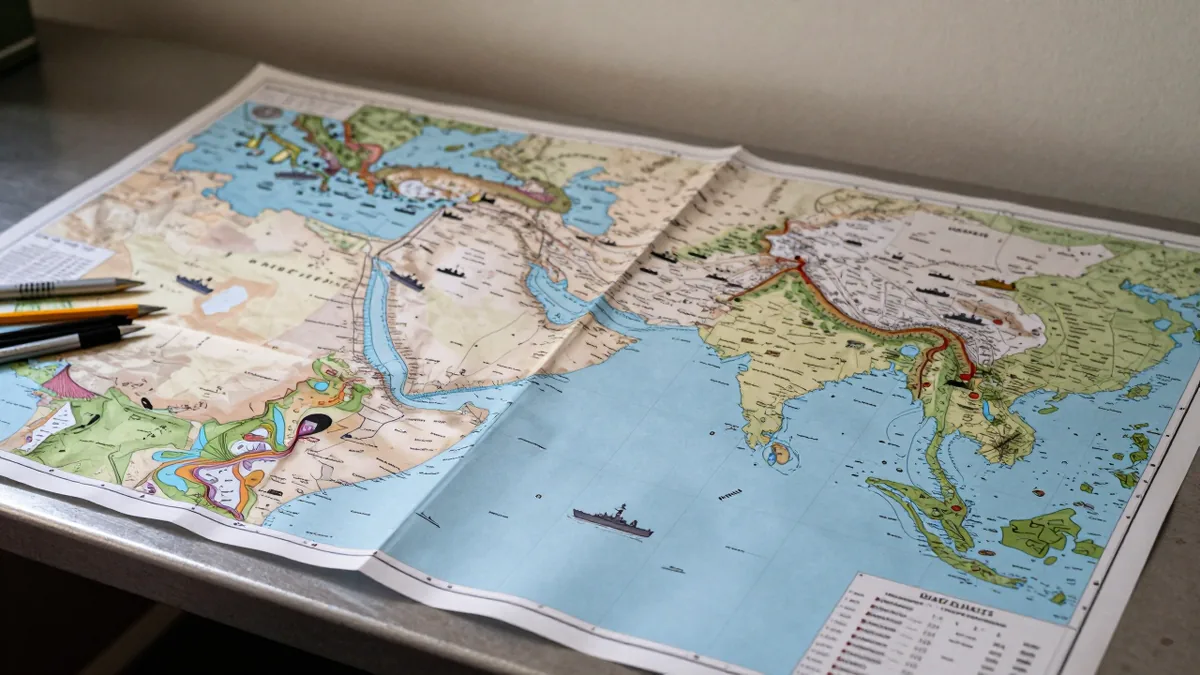
## US National Security Directives The US has unveiled a slate of national security directives, including aggressive tariffs on drones and measures to free US companies to hack on behalf of the government. The move is seen as an attempt to counter Chinese dominance in the drone market. In the name of "securing American drone dominance," the Trump administration has announced a 100 percent tariff on drones weighing more than 25 kilograms and drones with thermal imaging, a 25 percent tariff on small drones, and a 15 percent tariff on drone parts from allies such as the European Union, Japan, South Korea, and Taiwan. Drones from the United Kingdom will only face a 10 percent tariff. The tariffs are being implemented under Section 232 of the Trade Expansion Act of 1962, which gives the president a more legally durable tariff strategy for national security risks. The move is widely seen as an attempt to counter Chinese dominance in the drone market, as drones have become a critical part of modern warfare from Ukraine to Iran to Latin America. In a national security memorandum, President Trump has also directed the US government to partner with "vetted" private companies to conduct cyberattacks and surveillance against foreign transnational criminal networks that target US citizens. The move offloads work from US military and intelligence agency hackers and puts the US on more equal footing with countries such as Russia, China, and Iran, which have long merged private cyber capabilities with the state. However, some experts warn that Trump's directive risks inflaming global cyberwarfare and that attributing cyberattacks to specific actors is a fraught undertaking. "People are regularly and willingly wrong on pretty important incidents," Nick Carr, threat intelligence lead at Microsoft and a former official at the US Cybersecurity and Infrastructure Security Agency, wrote on social media. ## Global Developments Meanwhile, global developments include a drone incursion into Latvian airspace, a delay in Zambia's election, and tensions in the Strait of Hormuz. In Latvia, NATO jets shot down a foreign drone over the country's airspace on Friday. The Latvian military is searching for debris near the village of Rugaji, around 20 miles from the Russian border. It has yet to confirm the drone's origin, but Ukrainian drones have previously strayed into Baltic countries accidentally. In Zambia, the Electoral Commission temporarily suspended vote-counting in the country's parliamentary and presidential elections on Friday, citing reports of ballot theft and violence at polling locations. The Electoral Commission resumed counting later in the day and said the final results of the Aug. 13 elections will still be delivered as expected on Monday. In the Strait of Hormuz, the United Arab Emirates accused Iran of a "hostile" drone attack on two ships affiliated with the state-owned Abu Dhabi National Oil Company (ADNOC) in the strait yesterday. This follows a similar incident last week, in which the UAE accused Iran of attacking an ADNOC tanker. No deaths have been recorded from either incident, according to the UAE's Foreign Affairs Ministry; Iran has not responded to the accusations. The US has maintained an "indefinite" naval presence in the strait to enforce its blockade of Iranian ports, according to US Defense Secretary Pete Hegseth. The commander of Iran's navy, meanwhile, insisted that Iran has "complete and decisive" control over the strait. "Reality should be seen on the ground, not in the statements and declarations of US officials," he said in a statement. The US Treasury Secretary Scott Bessent told Newsmax on Thursday that new economic measures to pressure Iran will be announced next week. Meanwhile, 13 countries have joined a maritime military coalition founded by Saudi Arabia to safeguard freedom of navigation in the Red Sea, the Bab el-Mandeb Strait, and the Gulf of Aden, Saudi Arabia's defense ministry announced on Thursday.