Norway seizes Russian ship in Svalbard over Crimea debt
Norway has impounded the Russian state-owned vessel Professor Molchanov in Svalbard at the request of Ukraine's Naftogaz, enforcing a $4.22 billion
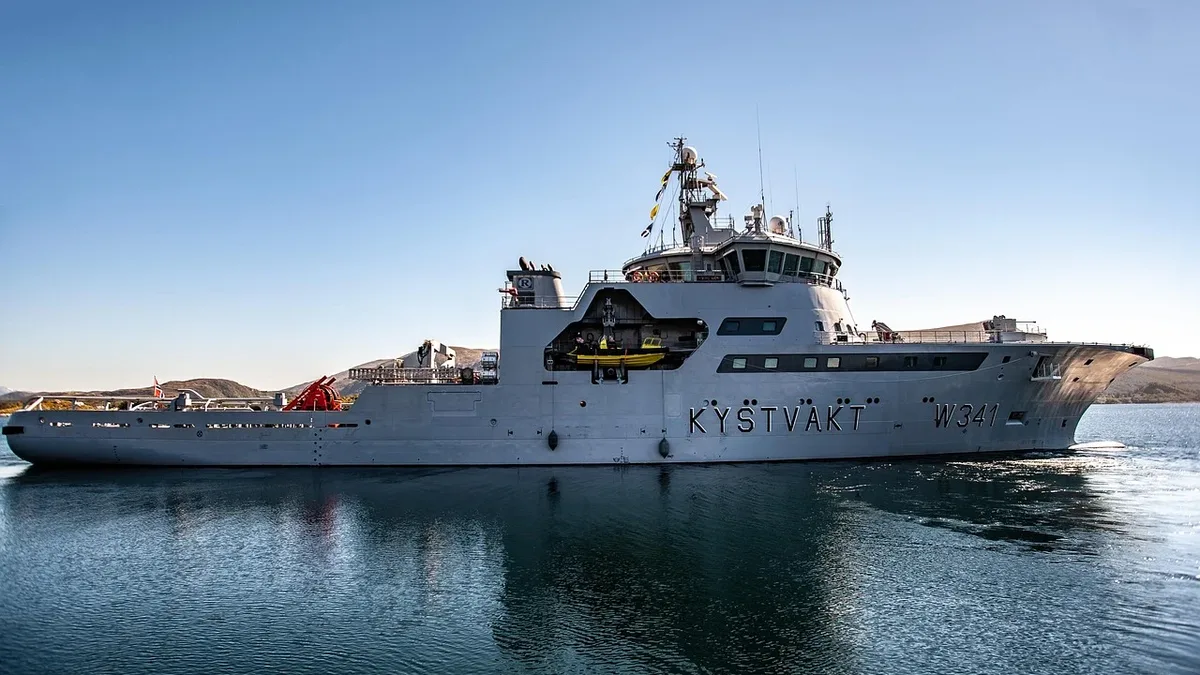
Norwegian authorities seized the Russian ship Professor Molchanov in Svalbard last week. The action was taken at the request of Ukrainian state energy company Naftogaz to enforce a 2023 arbitration court ruling.
A court in The Hague had ordered Russia to pay Naftogaz $4.22 billion for assets seized in Crimea. A Norwegian court recognized this award in 2025, providing the legal basis for the ship's seizure. Naftogaz aims to force a sale of the vessel to recover part of the debt.
Legal dispute and treaty rights
Russia insists the Professor Molchanov is a scientific vessel operated by the Russian Hydrometeorological Service, which would grant it immunity from seizure under international law. However, a Norwegian court classified it as a commercial enterprise running expedition cruises just days before the arrest.
Benedikte Moltumyr Høgberg, a law professor at the University of Oslo, points out a flaw. She notes the court decision was made confidentially without Russia present to argue its case. "The district court’s inadequate handling (and lack of adversarial proceedings) gives Russia more legal ammunition against Norway than Russia has had previously," Høgberg warns.
The 1920 Svalbard Treaty complicates the situation. While Svalbard is Norwegian sovereign territory, signatories like Russia have equal rights to economic activities there. Russia's state-owned coal company Arktikugol has operated a mine in the settlement of Barentsburg since 1932. By seizing the ship, Norway has cut the only supply line to the settlement and its 300 Russian residents. Moscow argues this violates its treaty rights.
Diplomatic fallout and regional tensions
Moscow has summoned the Norwegian ambassador and demanded the ship's immediate release. Russian officials have called the seizure "piracy" and a "politically motivated violation of international law." In contrast, Naftogaz's chief Serhiy Fedorenko called it "another important step toward restoring justice."
The incident occurs amid severely strained Europe-Russia relations. Days before the seizure, Russian Foreign Minister Sergey Lavrov published a piece blaming the West for militarizing the Arctic. The U.S. Navy is deploying Tomahawk missile launchers to Trondheim, Norway, with a range capable of striking Russia's Northern Fleet. Concurrently, U.S. Marines and allied forces have deployed to Jan Mayen island as part of a NATO mission.
Anatol Lieven of the Quincy Institute has noted such seizures trigger "attacks on the Putin administration by hardliners arguing precisely that Moscow has been far too soft..."
Framing the seizure as countering hybrid threats
Some commentators frame the seizure as a necessary move against Russian hybrid activities in the region. Norwegian historian Kari Aga Myklebost told reporters that Oslo "needs to send a clear message to Russia that Norway does not accept hybrid operations in Norwegian waters or in Svalbard."
Myklebost told Norwegian media the Professor Molchanov had carried passengers like a Russian Orthodox bishop for "assertive celebrations with Soviet flags" and transported young people in Russian naval uniforms during Victory Day events. She described this as part of a pattern of Russian hybrid activities. Think tanks like the Atlantic Council have warned about a potential Russian occupation of Svalbard.
Observers point to other Russian actions, such as Arktikugol hoisting Russian flags and using a jeep painted to look like a police car, which Norwegian law prohibits. Russia's Victory Day parades in Barentsburg have featured low-flying helicopters, drawing fines from Norway.
Erosion of Arctic cooperation
Norway was long seen as a model for pragmatic relations between a NATO member and Russia. Even after imposing sanctions post-2022, Oslo maintained important cooperation on Arctic fisheries and kept its border with Russia open. Norwegian and Russian border guards meet regularly to ensure stability.
The seizure of the Professor Molchanov chips away at that tradition. Previous Western asset seizures under the same arbitration award occurred in less geopolitically charged settings. Norwegian political scientist Arild Moe expects a strong Russian reaction. In Moscow, the move is being received as proof of Western encirclement.
With the vessel immobilized in Barentsburg, Oslo has promised to assist the stranded crew and passengers. The incident raises a central question: does this seizure make Norway and NATO safer, or does it increase escalation risks? After previous seizures of Russian commercial vessels, President Vladimir Putin warned "we will be forced to respond in kind" to what he termed "piracy and robbery."