Israeli Military Research at US Universities
Documents reveal at least 30 U.S. universities have conducted over 70 military research projects for Israel's Ministry of Defense since 2009, funded via a
At least 30 U.S. Universities have conducted over 70 military research projects for Israel's Ministry of Defense (IMoD) since at least 2009. The collaborations are funded via the U.S. Foreign Military Financing (FMF) program, the same mechanism Israel uses to buy F-35 fighter jets.
Recent reports from Dropsite News, The Nation, and the Anti-War Initiative found millions of Israeli military dollars flowing into U.S. Schools. Public records from 13 universities show the money was directed via a U.S. Arms export program to fund collaborations with Israeli scientists and military officials.
The Scope of Research
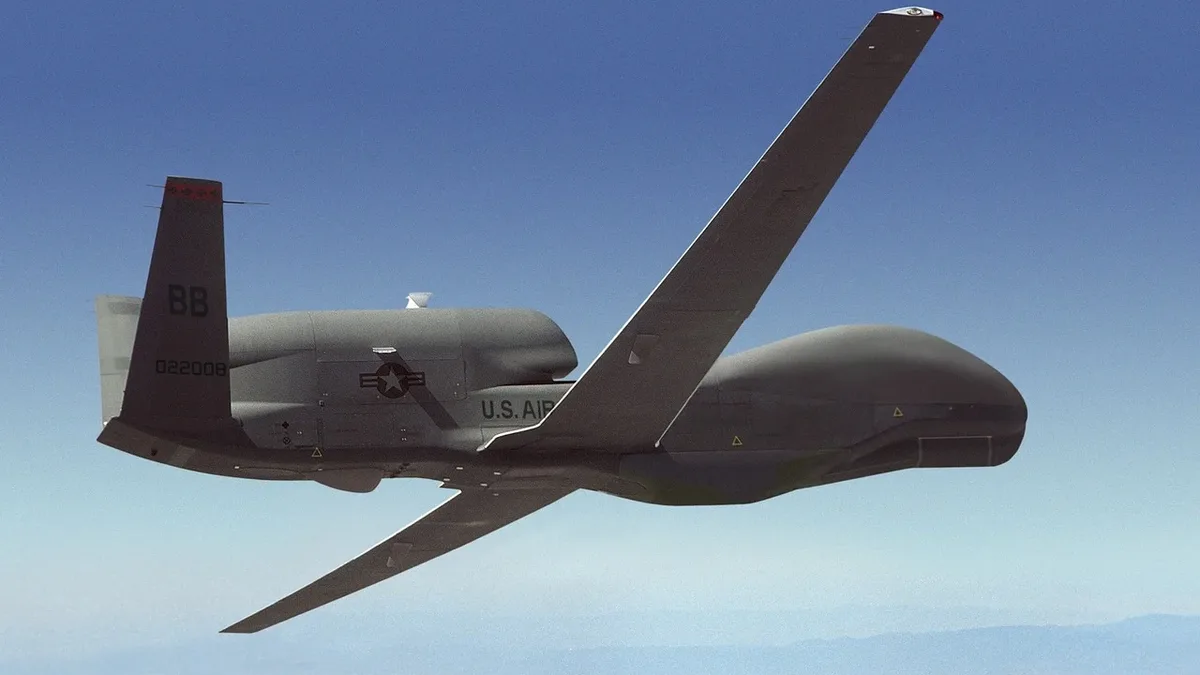
Projects span the breadth of Israel's military interests, including drone swarms, missile guidance, and surveillance. Some work explicitly incorporates environmental conditions in Palestine. One project designed fuel cells for "distributed sensor networks" tailored to the temperature and soil conditions of an Israeli border to monitor for "potential terrorist activity."
At least 11 contracts sent U.S. Scientists to Israel to work face-to-face with counterparts at an Israeli university or the IMoD. Funds were earmarked for U.S. Professors to attend meetings and present their research directly to the Israeli military.
Key Projects and Technologies
Research includes bio-inspired robotics and artificial intelligence for battlefield applications. Carnegie Mellon University developed cockroach-like surveillance robots with, and for, the Israeli military. At the University of Maryland, Professor Sarah Bergbreiter built "inchworm-like" crawlers with an IMoD scientist.
Professors Inderjit Chopra (Maryland) and Kenneth Breuer (Brown University) drew inspiration from hummingbirds and bats to develop micro-drones for searching caves and demolished buildings. Columbia Professor Hod Lipson built the "Flexipod," a soft, agile quadrupedal robot.
AI research has been a significant focus. The IDF has used drones to collect massive surveillance datasets fed into AI software to track targets and accelerate "kill-chains." In December 2016, the IDF prototyped an AI tool to "Tell You What's Happening in a Video," generating captions for soldiers. The following year, Professor Kate Saenko received $120,000 from the IMoD for research on "Generating Natural Language Descriptions for Video." Her group later presented software for the "detection of novel objects" titled "Learning To Detect Every Thing" at a Tel Aviv conference.
An ex-IDF intelligence officer stated a human eye "will go over [AI-generated] targets before each attack, but it need not spend a lot of time on them." A project at UC Berkeley, led by neuroscientist Robert Knight, tested brain-computer interfaces for "cognitive enhancement" of visual recognition tasks, with internal proposals discussing applications like "detecting 'suspicious' activity."
Professor V.S. Subrahmanian at the University of Maryland received IMoD funding to study "Targeting of Terror Networks" and analyze "1.04 million person-days" of cellular location data for tracking population flow in Israel and its Occupied Territories.
The Funding Mechanism
The research is purchased by the IMoD Mission to USA, the Israeli military procurement office that spends roughly $3.3 billion in annual U.S. Aid. Analyst Christian Sorensen of the Eisenhower Media Network explained the process: "US taxpayers give money to the US government. The US government then sends billions of dollars to Israel. Israel uses that money..."
Universities receive funds through Direct Commercial Contracts (DCCs), classified as sales of defense articles to a foreign government under the Arms Export Control Act. Because only DCCs over $100 million to Israel require legislative notification, the program operates with limited public oversight. One university administrator called the arrangement a "departure from standard process."
For over 35 years, Israel was one of just ten countries authorized to use DCCs, spending over a billion dollars annually. In April 2026, the Pentagon extended this privilege to over 50 countries. A bureaucratic carve-out known as the Fundamental Research Exclusion allows the IMoD to bypass export controls if the research results are eventually "published and shared broadly."
Both MIT and the University of California systems censored their funding databases after student activists discovered IMoD contracts. In July 2025, an MIT professor canceled a proposed IMoD contract due to public backlash. A State Department spokesperson referred questions to a fact sheet on U.S.-Israeli Security Cooperation, which notes U.S. Participation in "a variety of exchanges with Israel."