U.S. Democracy Gives Advantage in Great-Power Rivalry
The Atlantic Council argues that the United States’ large economy and democratic system provide a strategic edge in competition with China and Russia, highlighting the importance of alliances, modernization, and policy shifts toward pull incentives.
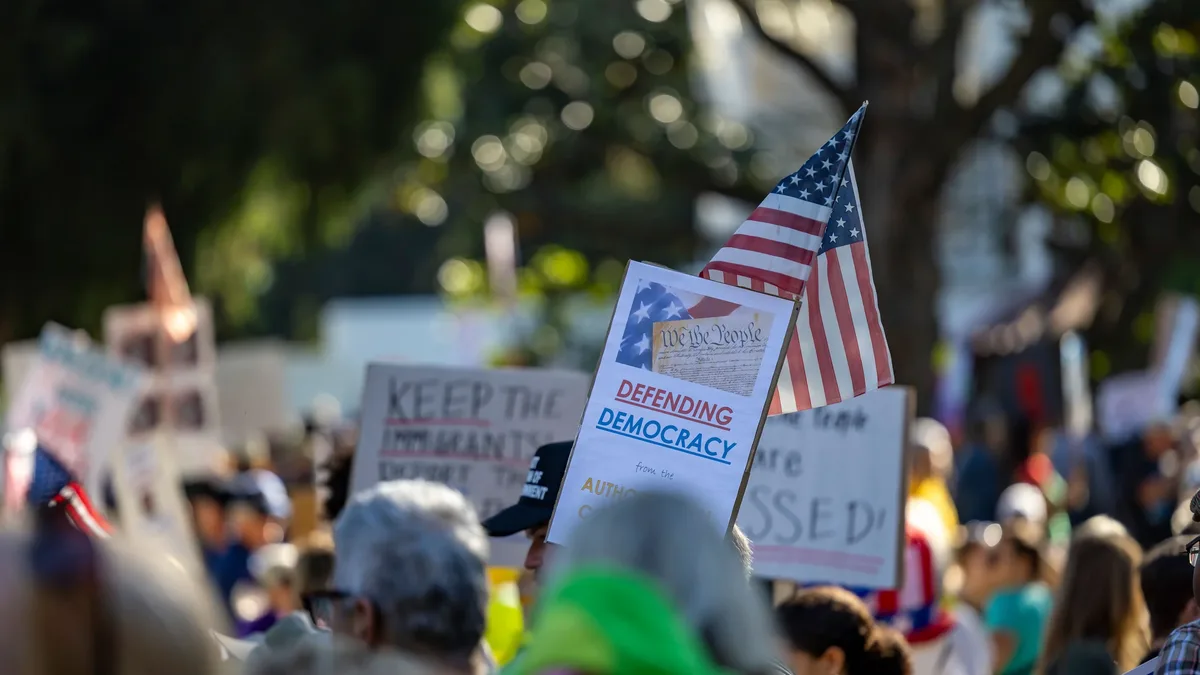
The Atlantic Council says the United States’ large economy and democratic governance give it an advantage in great-power competition. The report, published in New York, draws on lessons from history and current tensions with China and Russia.
Economic Size Matters
The Council notes that history shows the state or alliance with the larger economic base tends to win long-term strategic competition, provided it can mobilise resources quickly and sustainably. In East Asia, the United States and its allies face pressure from a rising, more assertive China. In Europe, a declining but aggressive Russia challenges the status quo and the regional balance of military power. In both theatres, the United States is well-positioned to help maintain the balance of power because it is committed to defending the status quo, it is a great power with an extensive alliance network, and it can bring significant military power to bear around the world.
Networks and Democratic Alliances
Networks act as force multipliers. Democracies rarely look to authoritarian powers as their preferred security patrons, a pattern known in political science as democratic alliance theory. A broadly democratic NATO squares up with an undemocratic Russia, whose most important sources of support come from other nondemocratic countries such as Belarus, Iran, North Korea, and China, over a democratic, if fragile, Ukraine. In East Asia, a U.S.-led alliance of democracies-including Australia, Japan, and South Korea-faces off against China over a democratic Taiwan. China has no formal treaty allies in the region beyond North Korea. For details on the U.S. alliance network, see squad.
Modernization and Democratization
Modernization theory holds that economic development leads to democratization. As societies become richer, citizens, especially those in an emerging middle class, demand greater political participation, encouraging a move toward greater democracy. The Atlantic Council’s Freedom & Prosperity indexes show that economic development and political freedom are highly correlated. Other factors, such as centralized government ownership of natural resources, may allow nondemocratic regimes to co-opt an economic middle class that relies on government patronage and rents. The report does not accept Stanford professor Francis Fukuyama’s “end of history” thesis, but it does expect that economic development may create a political opening in nondemocratic countries.
Policy Implications: Pull Over Push
The Council recommends that U.S. foreign policy continue to offer nondemocratic countries incentives to engage in democratic reform, but it should rely more on pull than push. Pull means offering conditional economic and security benefits rather than relying primarily on coercive threats and liberal interventionism. For such approaches to lead to sustainable democratization, there must already be sufficient domestic political support, which may not exist. The report cites the successful democratic transformation of Eastern European countries after the Cold War and their subsequent integration into NATO as a template. A widening pool of democratic countries reduces nondemocratic countries’ alliance options while offering greater alliance opportunities to the United States.
Wedge Strategy
The Council also suggests pursuing a wedge strategy aimed at splitting nondemocratic countries from their dominant nondemocratic great-power partners. If perceived as antagonistic, this policy could be made conditional on nondemocratic great powers refraining from challenging the status quo. The risks and benefits of such a policy must be carefully calibrated. For example, Moscow launched its full-scale war against Ukraine not long after Belarusian President Alyaksandr Lukashenka faced mass protests over his fraudulent reelection in 2020. This may have raised concerns in Moscow about the spread of demands for political liberalization in Russia, similar to pressures unleashed in Europe around 1989 or the so-called color revolutions in Russia’s periphery.
Strategic Opportunities of Democracy
Democratic values are often invoked by policymakers to justify foreign policy, sometimes as an ideological cudgel. However, the spread of democracy may have important geopolitical implications, offering strategic opportunities to the United States. The more prevalent democratic regimes become, the greater the pressure nondemocratic powers will face, geopolitically and domestically. In the most optimistic scenario, the democratization of the United States’ geopolitical antagonists would strengthen the U.S. position and weaken that of nondemocratic great powers. The postwar democratization of Germany and Japan created stalwart U.S. allies that survived the immediate post-Cold War era. A democratic Iran would likely seek some form of geopolitical rapprochement with Washington, as Henry Kissinger noted that Iran and the United States have few reasons to quarrel and many compatible interests. The democratization of North Korea could open a path toward reunification and a more democratic, U.S.-aligned Korea. Even a liberal-democratic Russia would face stronger domestic constraints against fighting a costly war over Ukraine’s potential EU and NATO membership. A democratic China might still seek to strengthen its geopolitical position but would likely manage friction through negotiation and compromise. U.S. policymakers might also find it more difficult to mobilize domestic support for a hawkish policy toward a liberal-democratic China.
The Council concludes that any of these outcomes would strengthen the geopolitical position of the United States while weakening that of authoritarian great powers. According to democratic peace theory, the spread of democracy would also make armed conflict less likely, at least among the expanding number of democratic countries. For more data on U.S. military capabilities, see stats.