BRICS Summit in Delhi Faces Divisions
BRICS faces internal security discord ahead of its September 12 summit in New Delhi, following its major expansion with five new members.

Leaders are flying into New Delhi for the 18th annual BRICS summit on September 12. An undercurrent of anxiety surrounds the meeting of the expanded 10-member bloc.
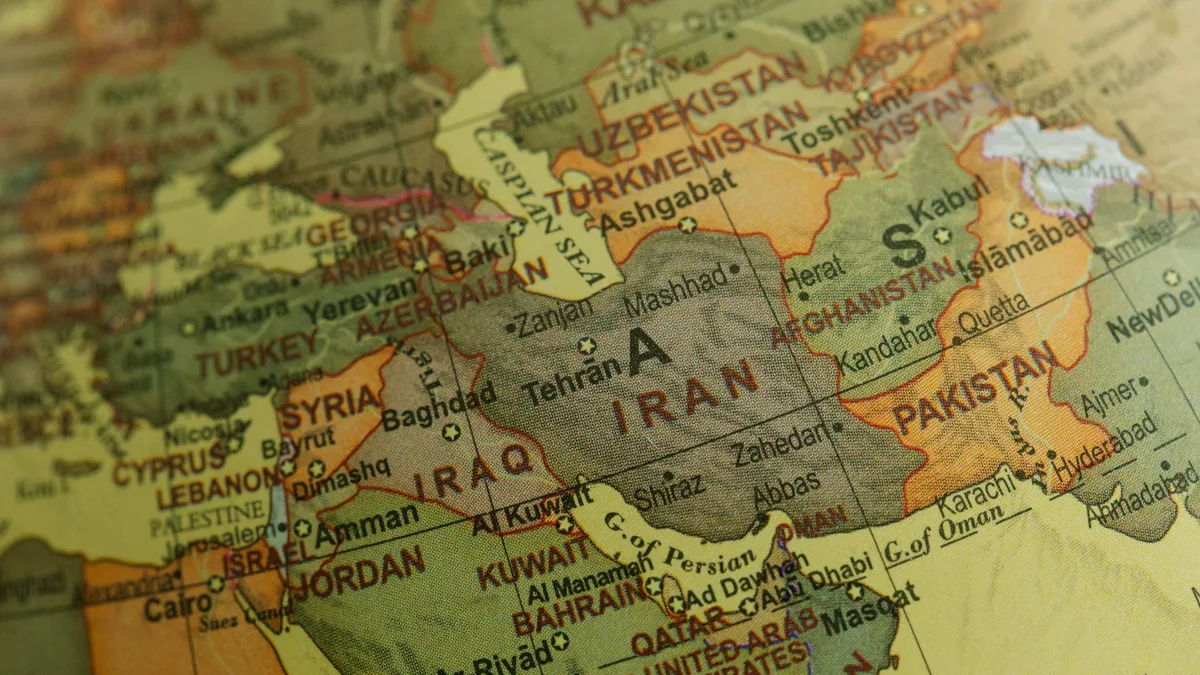
The grouping, which added Egypt, Ethiopia, Indonesia, Iran, and the United Arab Emirates as new core members after a 2023 summit, has been rocked by disagreements. These troubles began almost immediately after the expansion. New members Egypt and Ethiopia refused to endorse South Africa for a reformed U.N. Security Council, despite an apparent prior commitment.
Security Disputes Disrupt Consensus
Major-power competition and regional conflicts have fractured the bloc's unity. In early 2026, warfare involving the United States, Israel, and Iran, which embroiled the UAE, further complicated matters. A BRICS foreign ministers' meeting in May 2026 failed to issue a joint statement. Acrimonious exchanges between Iran and the UAE also roiled a subsequent meeting of national security advisors.
Iran insisted that the group's standard condemnations of terrorism also include what it called state terrorism, a reference to its perceptions of the United States and Israel. Most other members were reportedly reluctant to go that far. Ultimately, India issued separate chair's statements summarizing the discussions.
A Controversial Naval Exercise
Divisions were starkly illustrated in January 2026. South Africa conducted a naval drill with China, Iran, and Russia, showcasing it as a BRICS exercise. Participation among members, however, was fragmented.
New Delhi pointedly stayed away, characterizing the exercise as entirely a South African initiative. Iran's presence drew sharp criticism from Washington. South Africa ultimately investigated its own navy for apparently violating presidential orders.
The Persistent Security Agenda
Despite its economic origins, the security agenda has been central to BRICS since its first leaders' summit in 2009. The group has consistently stressed themes of a multipolar global order, collective security, UNSC reform, and opposition to terrorism. New research cited in the report indicates geopolitical and security issues are a close second to economic development as the bloc's top focus.
It is now simply too late to de-securitize the BRICS agenda, the report states. The challenge is managing this agenda in a more conflictual world where member states are increasingly picking sides. Building consensus was easier on conflicts involving non-members, like Syria or Afghanistan. The report notes that even Ukraine was manageable, as most global south countries backed diplomacy. Now, taking a common position is extremely challenging.
To stay relevant, the report argues BRICS needs a third wind, following the creation of the New Development Bank and the 2023 expansion. It suggests scaling down the security agenda by not taking a position on every war, especially where action is unlikely. Instead, it could focus on issues with deep roots within the bloc, like countering nonstate violence through cooperation on terrorism, piracy, and organized crime. The forum also quietly serves to ease bilateral tensions, as it did for India and China after their 2020 border clash.